
What Determines Winding Speed Limits
When evaluating a winding machine, most procurement managers initially ask: “What is the maximum speed?” In practice, the better question is: What determines the real winding speed limit in stable production? Rated RPM on a specification sheet rarely reflects sustainable output on a factory floor. True speed limits are defined by thermal behavior of the wire, mechanical stability, tension control precision, insulation carrier tolerance, and downstream assembly compatibility. Understanding these factors prevents overinvestment in unnecessary speed while avoiding costly underperformance in mass production.
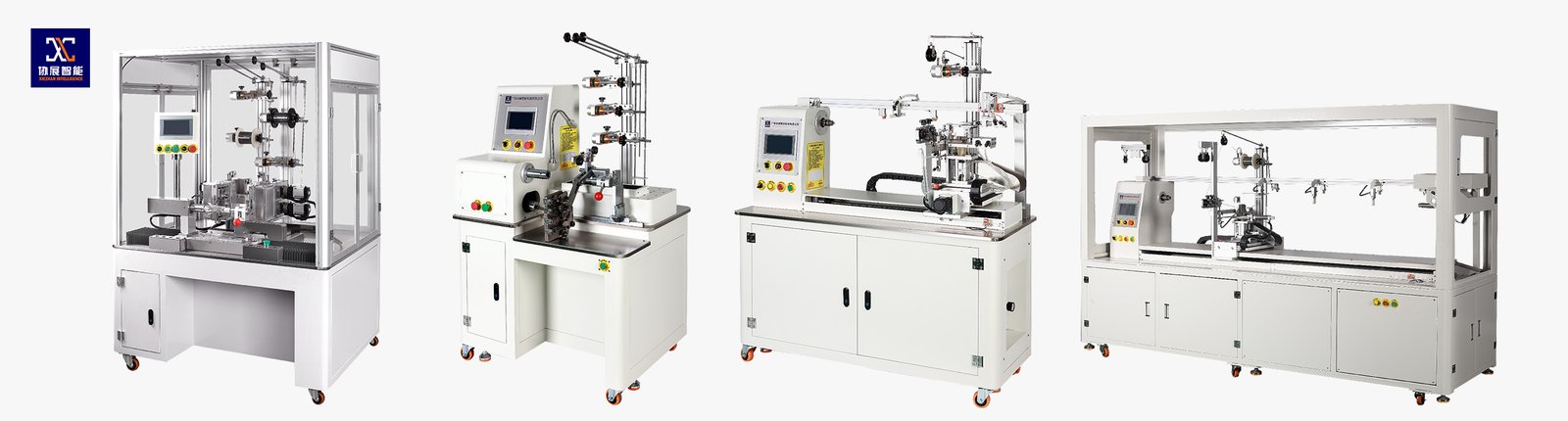
Breaking the First Myth: “Higher RPM Always Means Higher Output”
In many sourcing discussions, speed becomes the primary comparison metric. Suppliers may advertise higher rotational speeds as proof of superior engineering. However, in heating element manufacturing — especially for hair dryers, hot air guns, electric heaters, and microwave ovens — excessive rotational speed can destabilize the entire production chain.
Speed in coil winding is not a standalone parameter. It interacts with:
- Wire tensile strength and diameter
- Spindle dynamic balance
- Programmable tension feedback accuracy
- Mica carrier dimensional stability
- Subsequent eyelet riveting tolerance
Engineering studies on resistance wire forming consistently show that dimensional consistency degrades when rotational inertia exceeds the elastic recovery capacity of nichrome or FeCrAl wire. In practical terms, once vibration amplitude crosses a narrow threshold, coil pitch uniformity drops, increasing rejection rates downstream.
Experienced buyers understand that 10% more theoretical speed can create 20% more variability if system damping and servo coordination are not matched correctly.
What Actually Determines the Real Winding Speed Limit?
1. Wire Material Behavior Under Dynamic Stress
Heating wires are not passive conductors; they respond elastically and plastically under acceleration. Thin-diameter resistance wires used in compact heating assemblies are particularly sensitive. At high speed:
- Micro-stretching alters resistance values
- Surface oxidation risk increases due to friction heat
- Residual stress affects long-term thermal expansion
The practical speed limit is therefore tied to maintaining electrical resistance tolerance within design range.
2. Tension Control Architecture
A modern winding machine must maintain dynamic tension equilibrium. Mechanical brake systems alone cannot ensure stability at higher speeds. Servo-driven tension modules with closed-loop control significantly extend usable speed range.
However, even advanced systems have thresholds. When acceleration curves are too aggressive, feedback delay causes micro-oscillation. These oscillations are invisible at low RPM but amplified at higher speeds.
3. Mechanical Rigidity and Spindle Balance
Many factories underestimate mechanical resonance. At certain RPM bands, frame vibration amplifies naturally. Without structural reinforcement and precision machining, pushing speed leads to:
- Coil geometry inconsistency
- Noise increase
- Bearing fatigue
- Premature maintenance cycles
This is why mature buyers evaluate frame construction thickness, machining tolerance, and spindle alignment — not only control panels.
4. Integration With Mica Carriers and Assembly Processes
Speed is also limited by how the wound coil integrates into mica sheets and subsequent eyelet riveting for circuit boards. If coil pitch varies, assembly machines require adjustment. That reduces overall line efficiency.
A winding section operating 15% faster but creating 5% extra rework is not economically efficient.
Second Myth: “Our Product Requires High Speed to Stay Competitive”
In global heating appliance manufacturing, cost competitiveness comes more from yield stability than peak cycle time.
Let us consider two production models:
| Model | RPM | Defect Rate | Net Daily Output |
|---|---|---|---|
| High-Speed Focus | 100% | 6% | 94% |
| Stability-Focused | 88% | 1.5% | 86.7% |
When labor, inspection, and rework are included, the stability-focused approach often produces better long-term profitability.
How Experienced Buyers Evaluate Speed Specifications
From direct cooperation with international appliance manufacturers, we observe that engineering managers typically assess:
- Stable operating RPM range (not peak RPM)
- Thermal resistance deviation after winding
- Coil pitch tolerance repeatability
- Mean time between maintenance
- Compatibility with downstream eyelet riveting systems
At Guangdong Xiezhan, as a specialized manufacturer and factory focusing on heating element production equipment, machine design starts from production flow integration rather than isolated performance figures.
Field Reality: What Happens During Machine Debugging?
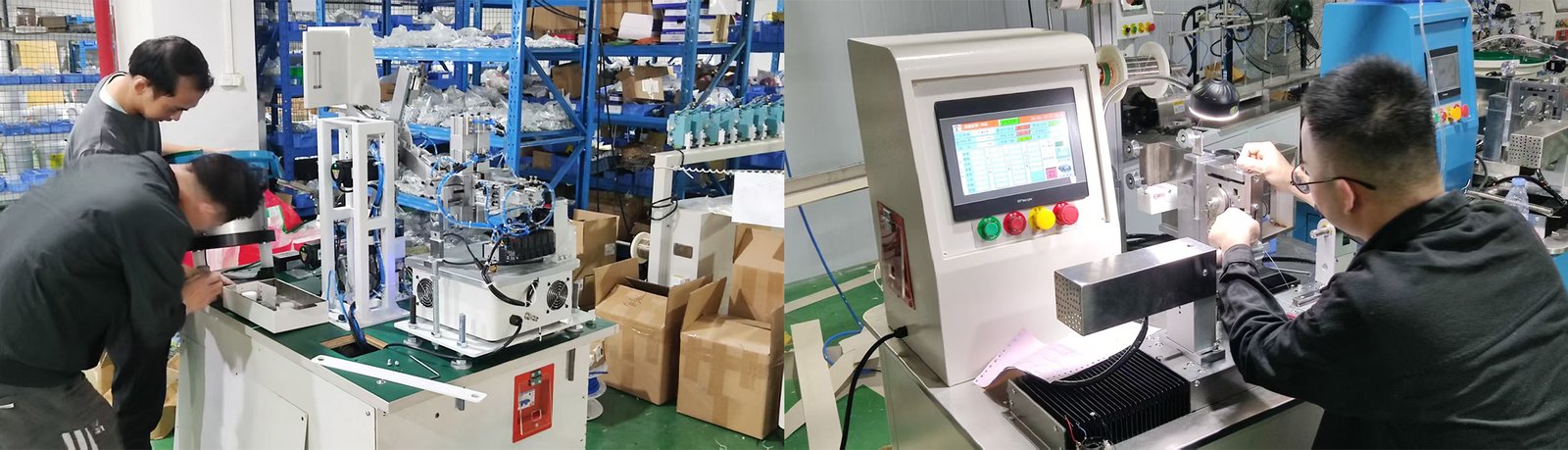
During on-site commissioning, true limits emerge. Acceleration profiles are adjusted gradually while monitoring:
- Wire elongation percentage
- Coil diameter consistency
- Noise and vibration spectrum
- Operator handling load
This is why buyers reviewing client cooperation cases often focus on production scale data rather than catalog specifications.
Market Comparison: Generic High-Speed Machines vs. Process-Oriented Design
Generic suppliers often optimize only spindle RPM. Process-oriented manufacturers consider:
- Integrated tension algorithms
- Material-specific winding profiles
- Modular adaptation for mica carriers
- Downstream riveting synchronization
The difference becomes visible after 6–12 months of operation, when maintenance cost and scrap rates begin to diverge.
Frequently Asked Questions
1. Are your winding machines certified?
Our equipment complies with standard electrical safety and industrial manufacturing requirements applicable to export markets. Specific certifications can be aligned with destination country standards upon request.
2. Can winding speed be customized for different wire diameters?
Yes. Servo parameters, tension modules, and spindle configurations are calibrated according to resistance wire diameter and target application.
3. What is the typical lead time?
Standard models generally require 20–35 production days, depending on configuration complexity and testing requirements.
Final Perspective for Decision Makers
The real question is not how fast a winding machine can rotate. It is how fast it can operate sustainably while protecting electrical precision, mechanical integrity, and downstream compatibility.
For procurement leaders seeking long-term stability rather than short-term performance claims, evaluating system balance is essential. If you are reviewing new heating element production capacity or replacing outdated equipment, discussing real production parameters is more valuable than comparing maximum RPM figures.
You may reach our engineering team directly through the contact page to evaluate your current production targets and material specifications.