
Why Coil Pitch Consistency Matters
Many buyers assume coil pitch is a minor geometric detail that can be corrected later during assembly. In practice, inconsistent pitch is one of the most common hidden causes of resistance drift, uneven heating zones, fixture misfit, and premature element failure. For manufacturers producing heating elements at scale, pitch stability directly affects electrical performance, product safety margins, and downstream assembly efficiency. Understanding why pitch consistency matters — and how it is realistically controlled in production — is essential when selecting a winding process or winding machine.
The common misconception: pitch is just spacing
In many procurement discussions, coil pitch is treated as a dimensional tolerance similar to outer diameter or coil length. This view comes from manual winding heritage, where operators visually adjust spacing. However, modern heating element production shows that pitch is not merely physical spacing — it is an electrical, thermal, and mechanical parameter combined.
Pitch consistency influences three coupled characteristics:
- Resistance distribution along the coil length
- Heat flux uniformity during operation
- Mechanical seating inside ceramic or mica supports
When pitch varies, these three domains deviate simultaneously. The result is not just cosmetic variation but measurable performance drift.
Why does pitch variation immediately affect heating performance?
The electrical resistance of a heating coil is proportional to wire length per unit span. When pitch compresses locally, wire density increases, raising local resistance and heat concentration. When pitch expands, the opposite occurs. Even small pitch deviation accumulates along multi-turn coils.
Observed effects in factory testing
| Pitch condition | Thermal behavior | Typical result |
|---|---|---|
| Compressed sections | Localized overheating | Hot spots / burnout risk |
| Expanded sections | Lower heat density | Cold zones |
| Irregular pitch | Thermal imbalance | Uneven airflow heating |
In products such as hair dryer heaters or heat gun elements, airflow passes across the coil length. Thermal imbalance directly translates to unstable outlet temperature — a quality issue often attributed incorrectly to wire alloy or power control.
If pitch can be adjusted during assembly, why control it in winding?
This is a persistent belief in factories transitioning from manual processes: that pitch correction can occur when inserting coils into mica sheets or ceramic carriers. In reality, post-winding pitch correction introduces more variability than it removes.
Mechanical reality of formed resistance wire
Once resistance wire is wound, it contains plastic deformation memory. Attempting to stretch or compress pitch later creates:
- Residual stress along turns
- Local diameter distortion
- Wire surface micro-damage
These effects reduce fatigue life and alter resistance locally. Mature heating element manufacturers therefore aim for final pitch directly from the winding stage rather than correction downstream.
How pitch inconsistency propagates into assembly problems
Pitch errors rarely remain isolated to winding. They propagate through fixtures, insulation carriers, and final product integration.
Typical downstream impacts
- Mica slot misalignment
- Ceramic groove seating force increase
- Lead spacing mismatch
- Assembly deformation during insertion
- Element length tolerance failure
These issues increase manual adjustment time and scrap rates. In high-volume heating appliance production, assembly stability is often a stronger economic driver than winding speed itself.
Root causes: why pitch variation occurs in winding
From field observation across multiple factories, pitch inconsistency originates from four interacting factors rather than a single machine parameter.
1. Wire tension instability
Tension fluctuation changes elongation and elastic recovery, altering turn spacing after release.
2. Mandrel feed synchronization error
Pitch equals feed distance per revolution. Any mismatch between rotation and axial feed directly creates spacing drift.
3. Wire material variability
Different batches of nichrome or resistance alloys exhibit varying springback and yield behavior.
4. Fixture geometry inconsistency
Mandrel wear or diameter variation shifts effective pitch.
In manual or semi-controlled processes, these factors combine unpredictably. Modern winding machine systems address them through synchronized motion and tension control.
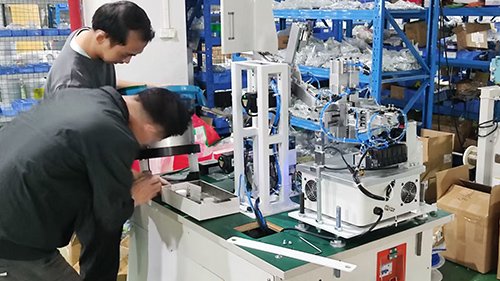
What distinguishes stable-pitch winding equipment?
For procurement engineers comparing equipment suppliers, pitch stability is rarely listed explicitly in specifications. Instead, it emerges from mechanical and control architecture.
Key design features affecting pitch consistency
| Feature | Impact on pitch |
|---|---|
| Closed-loop tension control | Reduces elastic spacing drift |
| Servo-synchronized feed | Maintains constant pitch ratio |
| Precision mandrel machining | Uniform coil diameter |
| Rigid spindle support | Prevents vibration spacing error |
These factors differentiate industrial heating element winding equipment from general coil winding machines used in motors or transformers.
Regional terminology differences: same issue, different names
During international procurement discussions, pitch consistency problems are described using different terms:
- Europe: “coil pitch uniformity”
- North America: “turn spacing consistency”
- India / Southeast Asia: “coil gap control”
- China manufacturing: “pitch stability”
Despite wording differences, buyers are referring to identical winding quality behavior. Recognizing this helps align technical communication with global partners.
Why mature buyers prioritize pitch over speed
Entry-level equipment marketing often highlights winding speed. Experienced heating element manufacturers instead evaluate pitch repeatability first. The reason is economic rather than theoretical.
Cost impact comparison
| Factor | Low-pitch stability | High-pitch stability |
|---|---|---|
| Assembly time | High | Low |
| Scrap rate | Frequent | Rare |
| Thermal test failure | Common | Stable |
| Field reliability | Variable | Predictable |
Over production lifetime, pitch stability reduces total manufacturing cost more than speed increases output.
Our industry observation: pitch stability is process integration
From the perspective of a heating element winding machine manufacturer, pitch consistency does not originate from a single mechanism. It is the result of coordinated design across tension, motion, and tooling.
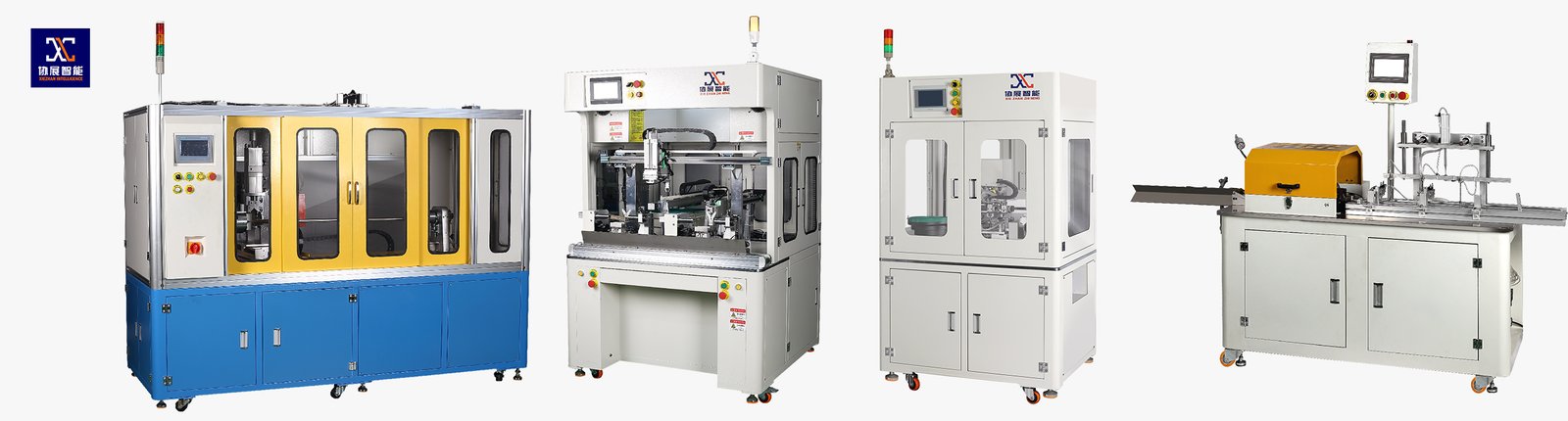
At Xiezhan, equipment development has focused on maintaining repeatable pitch across different resistance wires and heater geometries used by appliance manufacturers. This includes synchronized feed control, stable tension paths, and mandrel precision suited to heating coil tolerances.
Manufacturers seeking consistent heating performance typically evaluate equipment through sample winding trials rather than nominal specification comparison. This approach aligns with long-term cooperation models described in our client cooperation framework.
How to evaluate pitch consistency during machine selection
Procurement teams can assess pitch stability practically without specialized instruments.
Simple factory evaluation method
- Wind identical coils continuously for ≥30 cycles
- Release coils from mandrel
- Place on flat reference plate
- Visually compare turn spacing drift
- Measure overall length variance
Machines with stable pitch show minimal progressive spacing change across cycles.
Why pitch consistency matters more in modern heaters
Contemporary electric heating products increasingly use compact, high-power density elements. Examples include high-speed hair dryers and compact heat guns. These designs operate closer to material thermal limits.
As power density rises, allowable pitch variation margin shrinks. Small spacing errors that were tolerable in legacy heaters now produce overheating risk. This trend explains why manufacturers upgrading products often also upgrade winding equipment.
Selecting a partner for stable winding processes
Pitch consistency ultimately depends on process understanding rather than machine price level. Experienced heating element winding machine manufacturers integrate mechanical precision with real production behavior.
Xiezhan’s equipment design and manufacturing approach is outlined in our about us section, reflecting long-term specialization in heating element winding rather than general coil machinery. Buyers evaluating winding solutions are encouraged to discuss application details through our contact us channel to determine suitable pitch-stable configurations.
FAQ
Is pitch consistency mainly controlled by CNC systems?
No. CNC motion improves feed synchronization, but pitch stability also depends on tension path design, mandrel accuracy, and structural rigidity.
Can semi-automatic winding achieve stable pitch?
Yes, if feed and tension are mechanically synchronized and fixtures are precise. Many industrial heating elements are still produced on semi-automatic systems.
Does wire alloy affect pitch repeatability?
Different resistance alloys exhibit varying springback. Stable winding equipment compensates through controlled tension and feed coordination.
Coil pitch consistency is often underestimated because it appears geometrically simple. In heating element manufacturing, however, it governs electrical stability, thermal uniformity, assembly efficiency, and product reliability simultaneously. For manufacturers aiming at predictable heater performance, consistent pitch is not a detail — it is a foundational process parameter shaped at the winding stage.