
How to Choose an Eyelet Riveting Machine for Heating Element Manufacturing
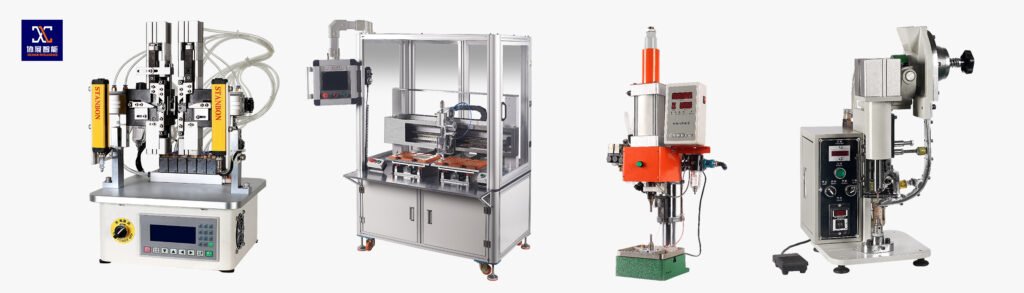
How to Choose an Eyelet Riveting Machine for Heating Element Manufacturing
Selecting an eyelet riveting machine is not simply a decision about production speed or equipment price. For heating element manufacturers, the riveting process directly influences electrical conductivity, mechanical strength, long-term reliability, and product consistency. A machine that performs well in one factory may create unnecessary costs or quality risks in another because production volume, conductor materials, eyelet specifications, and process requirements vary widely. Before comparing specifications, procurement teams should first understand which production problem they are trying to solve. Once that question is answered, choosing the right equipment becomes a practical engineering decision rather than a purchasing gamble.
How Do You Choose the Right Eyelet Riveting Machine for Heating Element Production?
When discussing heating element assembly with experienced production engineers, the conversation rarely starts with machine speed. Instead, it usually begins with one simple question: Can every riveted joint maintain stable electrical and mechanical performance throughout the product’s service life?
This question matters because every eyelet joint becomes part of the electrical circuit. If the rivet is too loose, electrical resistance increases. If excessive force is applied, the copper terminal, resistance wire, or insulation components may deform. Neither problem is immediately visible during production, but both can shorten product life after installation.
From a procurement perspective, this explains why selecting an eyelet riveting machine should never be separated from the final application of the heating element. Manufacturers producing fan heater elements, mica heating assemblies, industrial tubular heaters, or customized resistance heating products all face different process windows. The equipment should match those requirements rather than forcing production to adapt to the machine.
Professional Judgment: Start with Process Stability Instead of Machine Specifications
Many buyers naturally compare motor power, cycle time, or machine dimensions first because these values are easy to read from a quotation sheet. However, experienced factories usually evaluate the riveting process in the opposite order.
The reasoning is straightforward.
Reason → Heating elements operate through repeated thermal expansion and contraction. Every heating cycle introduces small mechanical stresses at the riveted connection.
Mechanical Principle → During riveting, controlled deformation of the eyelet generates a consistent clamping force between conductive materials. If deformation remains within the designed range, electrical contact stays stable even after thousands of heating cycles.
Result → Stable riveting pressure reduces contact resistance fluctuations, minimizes localized overheating, and lowers the probability of early field failures.
This cause-and-effect relationship explains why professional manufacturers often invest more effort in validating riveting consistency than in pursuing the highest theoretical production speed.
During equipment evaluations, requesting sample production with your own copper terminals, resistance wire, and insulation materials usually reveals more useful information than reviewing standard demonstration samples. Even slight differences in material hardness or terminal thickness can noticeably affect riveting performance.
Why Does Production Volume Change the Best Equipment Choice?
One of the most common procurement mistakes is assuming that higher automation always produces a better return on investment. In practice, automation level should match production demand rather than become the purchasing objective itself.
Factories manufacturing several hundred heating elements each shift have very different priorities from facilities producing tens of thousands of assemblies every day. Purchasing identical equipment for both operations rarely produces the best financial outcome.
The selection logic becomes much clearer when production volume is analyzed together with labor availability, operator skills, product variation, and quality control requirements.
For example, manufacturers producing many customized heating elements often perform frequent product changeovers. In those situations, a semi automatic eyelet machine may actually achieve higher overall productivity because setup times remain short while operators can quickly adapt to different terminal configurations.
On the other hand, factories supplying standardized heating elements to appliance manufacturers generally benefit from automated eyelet riveting because product dimensions remain stable over long production runs. Once tooling is optimized, automatic feeding reduces operator intervention and keeps cycle time consistent.
This explains why equipment decisions should be based on annual production strategy instead of daily output alone.
Looking Beyond Purchase Price
Experienced procurement managers often calculate equipment value using total production cost rather than machine cost.
A less expensive machine may initially reduce capital investment, but if it requires additional operators, frequent adjustments, or produces inconsistent riveting quality, the overall manufacturing cost gradually increases.
Conversely, equipment with higher initial investment may lower operating expenses by reducing inspection work, minimizing scrap, shortening operator training, and improving process repeatability over several years of production.
This broader financial perspective frequently changes which machine appears to be the most economical option.
| Machine Type | Typical Production Volume | Process Flexibility | Labor Requirement | Recommended Application |
|---|---|---|---|---|
| Manual Riveting Machine |
Prototype production Small batches | Very High | High | Product development, maintenance work, trial production |
| Semi Auto Riveting Machine | Medium production | High | Medium | Multiple product models with frequent changeovers |
| Fully Automated Riveting System | High-volume manufacturing | Moderate | Low | Continuous production of standardized heating elements |
Rather than identifying one option as universally better, the comparison illustrates that the “right” machine depends on production objectives. This is precisely why many manufacturers begin by reviewing complete Heating Element & Assembly Machines solutions before narrowing their equipment selection to a specific riveting process.
What Determines Riveting Quality Beyond Machine Accuracy?
One misconception appears repeatedly during equipment evaluations: if a riveting machine advertises high positioning accuracy, the finished joint will automatically meet quality expectations. In reality, positioning accuracy is only one variable in a much larger process.
A reliable riveted connection depends on how pressure is transferred through the eyelet, terminal, conductor and supporting fixture at exactly the same moment. Even if the ram stops at the correct position every cycle, slight variations in material hardness, terminal thickness or fixture wear can produce different deformation results.
This is why experienced engineers pay closer attention to process repeatability than to a single precision specification printed in a brochure.
Reason → Mechanical Principle → Result
Reason → Copper terminals and eyelets are not perfectly identical. Manufacturing tolerances, material batches and surface treatments naturally introduce small differences from one component to another.
Mechanical Principle → During riveting, the eyelet plastically deforms and distributes pressure across the contact surface. A machine with stable stroke control and consistent force application compensates for these normal material variations, allowing every joint to reach nearly identical clamping conditions.
Result → Electrical resistance remains stable from batch to batch, inspection becomes easier, and downstream product reliability improves without increasing manual adjustment.
For this reason, a precision riveting machine should be evaluated by the consistency of hundreds or thousands of consecutive cycles—not by the appearance of a single sample.
When conducting factory acceptance tests, avoid approving equipment after inspecting only a few finished samples. Instead, request continuous production over several hundred cycles and compare the variation in riveting height, pull-out strength and electrical resistance. Stable trends are far more meaningful than isolated good results.
How Should Copper Wire Riveting Be Evaluated During Equipment Selection?
In heating element manufacturing, the riveting process is rarely limited to joining two metal parts. More commonly, the operation creates the electrical transition between the resistance wire, copper terminal and external connection. This makes copper wire riveting one of the most critical quality checkpoints throughout the assembly process.
A suitable copper wire riveting machine should therefore be evaluated not only for mechanical performance but also for its influence on electrical characteristics.
Many procurement teams focus primarily on whether the eyelet appears symmetrical after riveting. While appearance is important, experienced quality engineers usually begin with different questions:
- Does the joint maintain low and stable contact resistance?
- Does the rivet remain secure after repeated thermal expansion?
- Is conductor deformation kept within an acceptable range?
- Can operators reproduce the same result across multiple production shifts?
These questions reveal far more about long-term production capability than visual inspection alone.
For manufacturers producing high-volume appliance heating elements, selecting the right copper end riveting device often reduces both warranty risk and inspection workload because stable electrical joints require fewer corrective actions later in production.
Why Stable Riveting Pressure Matters More Than Maximum Force
It may seem logical that applying greater force would always create a stronger joint. However, this assumption overlooks how conductive materials behave under compression.
Excessive riveting pressure can flatten the eyelet unevenly, damage copper strands or introduce stress into nearby insulation materials. Insufficient pressure creates the opposite problem by leaving microscopic gaps between conductive surfaces.
Neither extreme supports long-term electrical stability.
The objective is controlled plastic deformation—not maximum deformation. A well-designed high precision riveting tool allows force to be applied consistently within a defined process window, ensuring reliable electrical contact without introducing unnecessary mechanical stress.
| Quality Control Item | Recommended Inspection | Why It Matters | Potential Issue | Production Impact |
|---|---|---|---|---|
| Riveting Height | Digital gauge measurement | Confirms consistent deformation | Loose or over-compressed joints | Inconsistent assembly quality |
| Contact Resistance | Micro-ohm resistance test | Verifies electrical continuity | Local overheating | Reduced service life |
| Pull-out Strength | Tensile testing | Checks mechanical retention | Terminal separation | Field failure risk |
| Visual Deformation | Magnified inspection | Detects uneven forming | Cracks or burrs | Assembly rejection |
What Industry Trends Are Influencing Riveting Equipment Decisions?
Over the past several years, manufacturers have gradually shifted their investment priorities. Instead of asking only how many parts a machine can produce per hour, procurement teams increasingly evaluate how consistently it can perform over months of continuous operation.
This shift is closely related to broader manufacturing automation trends. According to data published by the International Federation of Robotics (IFR), global investment in factory automation continues to expand as manufacturers respond to labor shortages, higher quality expectations and increasing production complexity. While automation levels differ across industries, the direction is consistent: manufacturers are seeking processes that reduce variation rather than simply increase output.
For heating element producers, this trend reinforces an important purchasing principle. Equipment that delivers repeatable riveting quality often creates greater long-term value than equipment designed solely to achieve the fastest production cycle.
Which Eyelet Riveting Machine Is Best for Different Production Scales?
After defining quality requirements and production volume, the next question becomes much more practical: Which machine configuration actually matches your manufacturing environment? The answer is rarely found by comparing specifications alone. Instead, it comes from understanding how each machine fits daily production, operator experience, product diversity, and future expansion plans.
A factory manufacturing several heating element models with frequent changeovers has very different priorities from one producing a single standard product around the clock. Selecting the wrong equipment often results in underutilized capacity or unnecessary labor costs—even if the machine itself performs exactly as designed.
XZ-M800 Bowl Type Semi-Automatic Eyelet Riveting Machine
For medium- to high-volume manufacturers, the XZ-M800 Bowl Type Semi-Automatic Eyelet Riveting Machine provides an effective balance between productivity and operational flexibility.
Its bowl feeding mechanism automatically delivers eyelets to the riveting position, reducing repetitive manual loading while allowing operators to maintain control over component placement. This configuration is particularly suitable when heating element assemblies vary in shape or when production involves several product families throughout the day.
From a process perspective, bowl feeding contributes more than labor savings.
Reason → Manual eyelet loading naturally introduces differences in orientation and feeding rhythm.
Mechanical Principle → Automatic feeding presents eyelets in a consistent position before each riveting cycle, minimizing interruptions caused by incorrect loading or operator fatigue.
Result → Production becomes smoother, cycle consistency improves, and operators can focus on assembly quality instead of repetitive handling tasks.
XZ-Q218 Semi-Automatic Eyeleting Machine
The XZ-Q218 Semi-Automatic Eyeleting Machine is often selected by manufacturers seeking greater process stability while maintaining flexibility for multiple product specifications.
Instead of replacing operators entirely, this type of semi auto riveting machine allows skilled personnel to control positioning while the equipment performs the critical riveting operation with repeatable force.
This approach is especially valuable when different eyelet diameters, copper terminal designs, or heating element structures are processed on the same production line.
Factories producing multiple customized heating elements generally recover equipment investment faster by reducing changeover time rather than maximizing theoretical production speed. A machine that adapts quickly between product models often creates greater annual output than a faster system requiring lengthy setup adjustments.
XZ-M705 Anti-Pressure Hand Desktop Manual Riveting Machine
Not every production environment requires automation. The XZ-M705 Anti-Pressure Hand Desktop Manual Riveting Machine remains a practical solution for laboratories, prototype development, maintenance departments, and small-batch manufacturing.
Because operators directly control the riveting sequence, engineers can easily evaluate new product designs, verify tooling, or test different terminal configurations before moving to larger-scale production.
This flexibility is particularly useful during new product introduction, where engineering changes occur frequently and production volumes remain relatively low.
XZ-M905 Anti-Pressure Hand Eyelet Rivet Machine
The XZ-M905 Anti-Pressure Hand Eyelet Rivet Machine is designed for applications requiring controlled manual riveting while protecting delicate components from excessive compression.
Heating elements often combine conductive materials with ceramic or mica insulation, both of which can be damaged by inconsistent force. Anti-pressure designs help operators achieve repeatable deformation without placing unnecessary stress on surrounding materials.
For manufacturers producing specialty heaters, custom industrial heating assemblies, or engineering samples, this controlled manual approach frequently provides better process confidence than forcing low-volume production onto highly automated equipment.
What Questions Should Buyers Ask Before Requesting a Quotation?
Many quotation requests focus almost entirely on machine price, delivery time and payment terms. While these factors certainly matter, they rarely determine whether the equipment will perform successfully after installation.
Experienced procurement teams usually prepare technical questions before discussing commercial details because the quality of the answers often reveals far more about a supplier’s manufacturing capability than the quotation itself.
Consider asking questions such as:
- Has this machine processed heating elements similar to our products?
- Can the tooling accommodate future product upgrades?
- What process parameters are adjustable during production?
- How are replacement parts standardized?
- Can production samples be tested using our own copper terminals and eyelets?
- What operator training is included after installation?
These discussions move the conversation away from simple equipment sales and toward long-term manufacturing compatibility.
Another useful indicator is whether the supplier is willing to analyze your production process before recommending a machine. Suppliers with real manufacturing experience typically begin by asking about product drawings, annual output, material specifications and assembly sequence rather than immediately recommending their highest-priced model.
If you review successful industrial projects, you will notice that long-term cooperation usually starts with process evaluation instead of equipment promotion. Seeing practical production cases through the Client Cooperation page can provide valuable reference when comparing different equipment suppliers and understanding how similar manufacturing challenges have been addressed in real production environments.
How Can You Evaluate a Riveting Machine Supplier Beyond the Equipment Itself?
Once the machine configuration has been determined, another purchasing decision becomes equally important: choosing the supplier behind the equipment. In heating element manufacturing, machines rarely operate as isolated products. They become part of an entire production line that includes wire winding, insulation processing, assembly, inspection and packaging. A supplier who understands only the riveting machine may struggle to solve problems that originate elsewhere in the process.
This is why experienced buyers often evaluate a supplier’s manufacturing background before comparing quotations. A supplier that has participated in complete heating element production projects generally understands how riveting quality affects downstream testing, electrical performance and final product consistency.
Reason → Mechanical Principle → Result
Reason → Every riveting station is connected to upstream and downstream production processes. Even a perfectly functioning machine cannot compensate for unsuitable material flow, incorrect tooling selection or inconsistent component dimensions.
Mechanical Principle → When equipment is designed with the entire manufacturing process in mind, feeding accuracy, fixture positioning, tooling life and operator workflow are coordinated instead of optimized independently.
Result → Manufacturers experience shorter commissioning periods, fewer unexpected production interruptions and a more stable overall assembly process.
This is also why procurement decisions should consider engineering support, process consultation and after-sales responsiveness alongside technical specifications.
In many equipment replacement projects, the biggest improvement does not come from installing a faster machine. It comes from eliminating small process variations that operators have learned to work around for years. Removing those hidden inefficiencies often produces a more noticeable increase in productivity than increasing machine speed alone.
Why Do Long-Term Manufacturers Focus on Total Production Reliability?
Equipment procurement is a long-term investment. Most heating element manufacturers expect a riveting machine to operate reliably for many years while supporting new product development and changing production requirements.
Because of this, experienced engineering managers rarely define a successful purchase simply as acquiring a machine that meets today’s production target. Instead, they evaluate whether the equipment can continue delivering stable performance as order volumes increase, product specifications evolve and customer quality requirements become more demanding.
A dependable eyelet riveting machine contributes value throughout the entire manufacturing lifecycle:
- More consistent electrical connections between resistance wire and terminals.
- Reduced inspection and rework caused by unstable riveting quality.
- Improved repeatability across multiple production shifts.
- Lower maintenance costs through stable mechanical performance.
- Greater flexibility when introducing new heating element designs.
These advantages are rarely visible during the first week after installation, but they become increasingly significant over thousands of production hours.
Final Thoughts
Choosing an eyelet riveting machine is ultimately a process of matching equipment capability with manufacturing reality. Production volume, product diversity, material characteristics and quality expectations all influence which solution delivers the best long-term value.
Rather than selecting equipment solely because it offers higher speed or a lower purchase price, manufacturers should evaluate how consistently the machine performs under real production conditions. Stable riveting force, repeatable positioning, adaptable tooling and reliable engineering support usually have a greater impact on manufacturing performance than headline specifications alone.
At Guangdong XieZhan Machinery, our engineering team has spent years working with manufacturers producing a wide range of heating elements and resistance heating components. This experience allows us to recommend equipment based on practical production requirements rather than one-size-fits-all solutions. If you would like to learn more about our manufacturing capabilities, production philosophy and technical experience, you can visit our About Us page.
If you are currently comparing equipment for a new production line or planning to upgrade an existing heating element assembly process, sharing your production requirements before making a purchasing decision often leads to a more suitable solution. Our engineering team can evaluate your application and recommend an appropriate machine configuration based on your products, capacity targets and assembly process. You are welcome to Contact Us for a technical discussion.