
Why Manual Winding Still Exists in Some Factories
Many procurement managers assume that once a factory reaches a certain scale, manual winding should disappear entirely. In reality, that assumption is not always aligned with production economics. Manual winding still exists in some heating element factories because it offers flexibility, lower upfront investment, and practical advantages in low-volume or frequently changing product environments. The key question is not whether manual winding is outdated, but whether it still makes sense for a specific production scenario.
Is Manual Winding Simply a Sign of Outdated Production?
It is easy to equate automation with progress and manual processes with inefficiency. However, in heating element manufacturing—especially for resistance wire and small coil assemblies—the reality is more nuanced.
In factories producing limited batches, customized heater structures, or trial orders for new appliances, manual or semi-manual winding remains practical. Operators can quickly adjust pitch, tension, and forming direction without complex reprogramming. For product development teams, this flexibility often outweighs the slower cycle time.
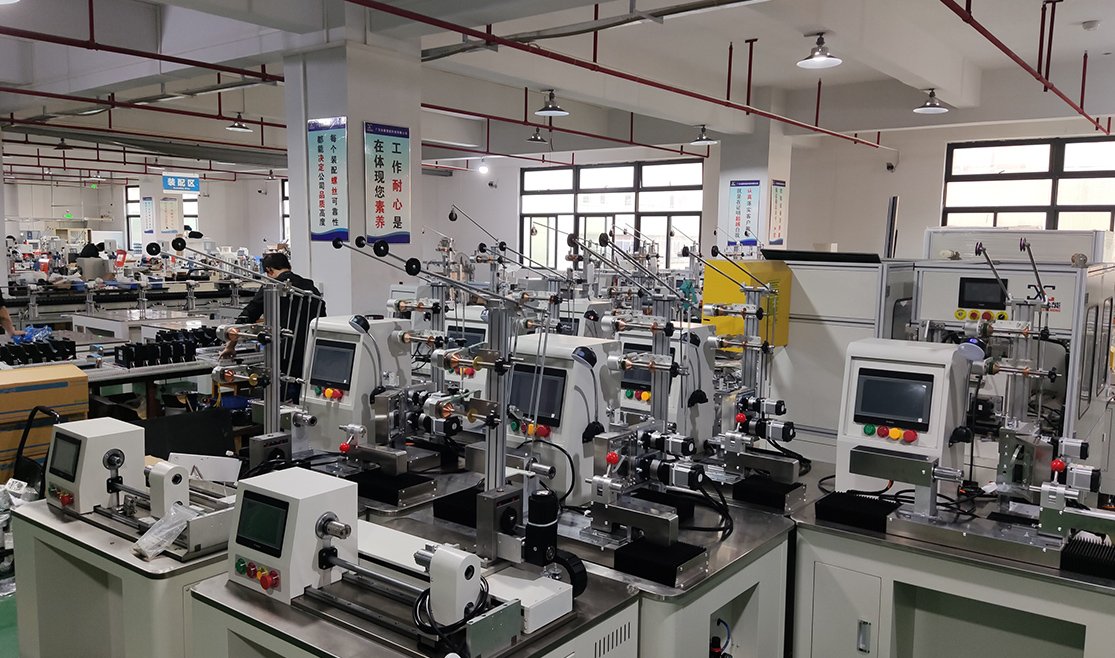
In several Asian and Eastern European facilities producing replacement heating components, manual winding is used alongside automatic equipment. It serves as a complementary method rather than a competing one.
What Practical Factors Keep Manual Winding in Use?
1. Low Initial Investment
A fully automatic winding machine with CNC control requires capital investment not only in equipment, but also in training, maintenance capability, and sometimes facility layout adjustments. For small or mid-sized manufacturers, especially in developing markets, manual setups offer a manageable entry point.
2. Product Variety and Short Production Runs
Factories producing multiple heating element specifications—different diameters, wire gauges, or coil lengths—may find that frequent machine adjustments reduce efficiency gains from automation. In such cases, skilled operators can change setups faster than reprogramming complex systems.
3. Skilled Labor Availability
In regions where experienced operators are readily available and labor cost remains stable, manual winding can still meet quality requirements when supported by proper inspection and resistance testing procedures.
Where Manual Winding Falls Short
While manual winding persists for valid reasons, its limitations become clear in high-volume and high-precision environments.
- Inconsistent wire tension across long production shifts
- Variation in coil pitch affecting resistance stability
- Higher defect rates under continuous operation
- Limited scalability for export-driven production
When producing heating elements for global appliance brands, tolerance control becomes critical. Even minor pitch deviation can alter resistance value and heat distribution. This is where automated and programmable systems provide measurable advantages.
How Do Mature Manufacturers Balance Manual and Automatic Winding?
Rather than eliminating manual winding entirely, many experienced manufacturers adopt a hybrid approach:
| Production Scenario | Recommended Approach |
|---|---|
| Prototype development | Manual or semi-automatic winding |
| Small batch orders | Flexible semi-automatic systems |
| High-volume standardized models | Automatic or CNC winding machines |
| Export-oriented production | Programmable tension-controlled systems |
This layered approach allows factories to maintain agility while building long-term stability.
When Should a Factory Transition to Automatic Winding?
The shift typically becomes necessary when:
- Monthly output exceeds stable manual capacity
- Customer audits require documented repeatability
- Resistance tolerance must meet stricter international standards
- Labor variability impacts quality consistency
At this stage, investing in a reliable winding machine with programmable control and stable mechanical structure is not about replacing people—it is about protecting product consistency.
Why Equipment Reliability Matters More Than Automation Alone
Not all automated systems deliver the same level of stability. Mature buyers evaluate structural rigidity, component sourcing, control transparency, and after-sales support before committing to a supplier.
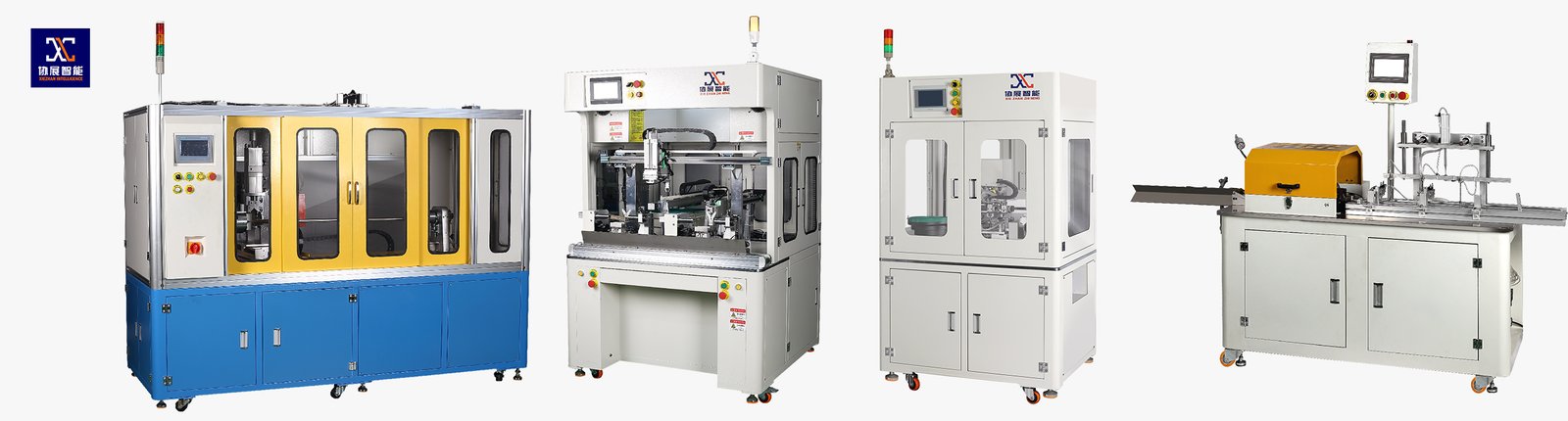
As a specialized heating element winding machine manufacturer and factory, Xiezhan focuses on mechanical durability, stable wire tension control, and long-term serviceability rather than excessive complexity. Our engineering background and production philosophy can be reviewed on our about us page.
For buyers requiring compliance documentation, relevant certifications are available through our certificates section.
Common Misconceptions About Manual vs Automatic Winding
“Automation Always Reduces Cost”
Automation reduces cost only when production volume and stability justify the investment. Under low utilization, capital equipment may increase cost per unit.
“Manual Winding Cannot Meet Quality Standards”
With skilled operators and proper inspection, manual winding can achieve acceptable quality for certain applications. The issue arises when production scale increases beyond human consistency.
FAQ for Procurement Decision-Makers
1. Are your winding machines certified?
Yes. Our equipment complies with relevant safety and export requirements. Documentation can be provided through our certificates page upon request.
2. Do you support customized winding solutions?
Yes. We configure machines according to wire material, coil structure, output expectations, and integration requirements for existing production lines.
3. What is the typical delivery time?
Standard models generally require several weeks depending on configuration. Customized systems are scheduled according to technical complexity and production planning.
Final Consideration for Decision-Makers
Manual winding continues to exist because production reality is not binary. Automation should be introduced when it strengthens consistency, scalability, and compliance—not simply because it appears modern.
For factories evaluating the right balance between manual processes and automated systems, early technical discussion helps clarify long-term direction. You are welcome to reach us through our contact us page to explore practical solutions aligned with your production goals.