
Why Some Heating Elements Require Secondary Forming
In most procurement projects, secondary forming becomes necessary when the original coil shape produced by a winding process cannot fully meet installation geometry, thermal distribution, or assembly tolerance requirements. Buyers typically encounter this in compact appliances, shielded heaters, or multi-layer mica structures where post-winding shaping ensures dimensional stability and repeatable performance. In practical sourcing terms, secondary forming is less about complexity and more about ensuring that the heating element integrates reliably into the final product without manual adjustment, deformation during transport, or uneven heat zones.
The Emerging Shift: Heating Elements Are No Longer “Simple Coils”
Across appliance, automotive, and industrial heating applications, buyers are witnessing a gradual transition: heating elements are moving from basic wound components toward highly integrated structural parts. This trend is driven by three converging forces:
- Compact product architectures and thinner insulation stacks
- Automated assembly requirements in high-volume manufacturing
- Thermal uniformity expectations under energy-efficiency regulations
In earlier designs, a coil produced by a standard winding machine could often be manually adjusted during assembly. Today, automated lines and precision housings no longer allow that tolerance. The element must already match its final geometry before it reaches the production line.
This is where secondary forming enters as a structural stabilization stage rather than an optional adjustment step.
Why Do Modern Heating Elements Require Secondary Forming?
From a procurement standpoint, the need usually appears in projects with one or more of the following characteristics:
1. Complex Installation Geometry
Appliance and HVAC buyers increasingly specify serpentine, folded, or stepped heater layouts to fit constrained enclosures. Direct winding alone cannot consistently achieve these shapes without elastic rebound.
Secondary forming locks the geometry so that:
- Installation becomes drop-in rather than adjusted
- Spacing between turns remains uniform
- Clearance to insulation barriers stays controlled
2. Thermal Distribution Control
Heating uniformity is rarely determined only by wire pitch. In mica heaters or shielded elements, final shape influences heat density and airflow exposure. Secondary forming ensures that coil sections remain positioned exactly as thermal modeling intended.
Without this step, buyers often report:
- Localized overheating
- Premature insulation discoloration
- Inconsistent appliance heating zones
3. Automated Assembly Compatibility
Manufacturers shifting to robotic or fixture-based assembly lines cannot accommodate elastic coil deformation. Secondary forming creates a mechanically stable element that behaves like a rigid component during placement.
What Happens If Secondary Forming Is Skipped?
Buyers sometimes consider eliminating this step to reduce tooling cost or lead time. In practice, this decision often transfers cost downstream rather than removing it.
| Observed Issue | Typical Root Cause | Production Impact |
|---|---|---|
| Element misalignment | Elastic coil rebound | Manual adjustment time |
| Uneven heat zones | Turn spacing variation | Product inconsistency |
| Transport deformation | Insufficient shape fixation | Incoming QC rejection |
Experienced procurement teams recognize that secondary forming is often cheaper than downstream correction.
How Secondary Forming Integrates with Winding Technology
Modern element production increasingly treats winding and forming as a unified process chain rather than separate operations. In global terminology, buyers may encounter different naming conventions:
- EU: coil forming stage
- US: post-winding shaping
- Asia: secondary forming or shaping press
Regardless of naming, the functional role is identical: stabilizing the geometry produced by the winding stage.
In advanced heater production, a precision winding machine establishes accurate pitch and diameter, while secondary forming locks the spatial configuration required by the final assembly.
Future Design Direction: Heating Elements as Structural Components
Looking forward, heating elements are increasingly expected to serve structural roles within products rather than remaining flexible subcomponents. This shift is visible across multiple sectors:
- Hair dryer mica heaters integrating airflow channels
- Automotive cabin heaters matching molded housings
- Industrial cartridge assemblies requiring positional rigidity
In these designs, secondary forming becomes intrinsic to the element’s identity. The coil is no longer merely wound wire—it is a shaped thermal module.
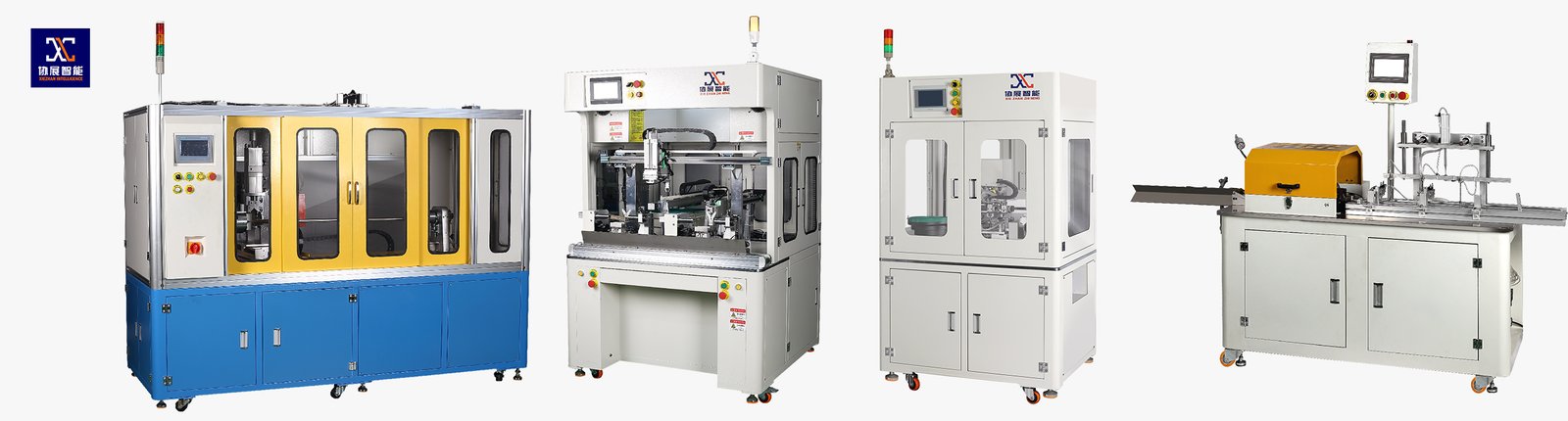
Why Mature Buyers Specify Secondary Forming Early
Seasoned engineering buyers increasingly define forming requirements at RFQ stage rather than leaving them to supplier interpretation. This practice reduces redesign cycles and ensures cross-supplier comparability.
Typical specification items include:
- Final coil envelope dimensions
- Allowable springback tolerance
- Forming radius limits
- Fixture compatibility points
Manufacturers with in-house forming capability can validate these parameters during prototype iterations rather than after tooling commitment.
Secondary Forming Capability as a Supplier Differentiator
From a sourcing perspective, the presence of integrated forming expertise often distinguishes specialized heater equipment manufacturers from general coil equipment suppliers.
A mature heating element equipment manufacturer typically provides:
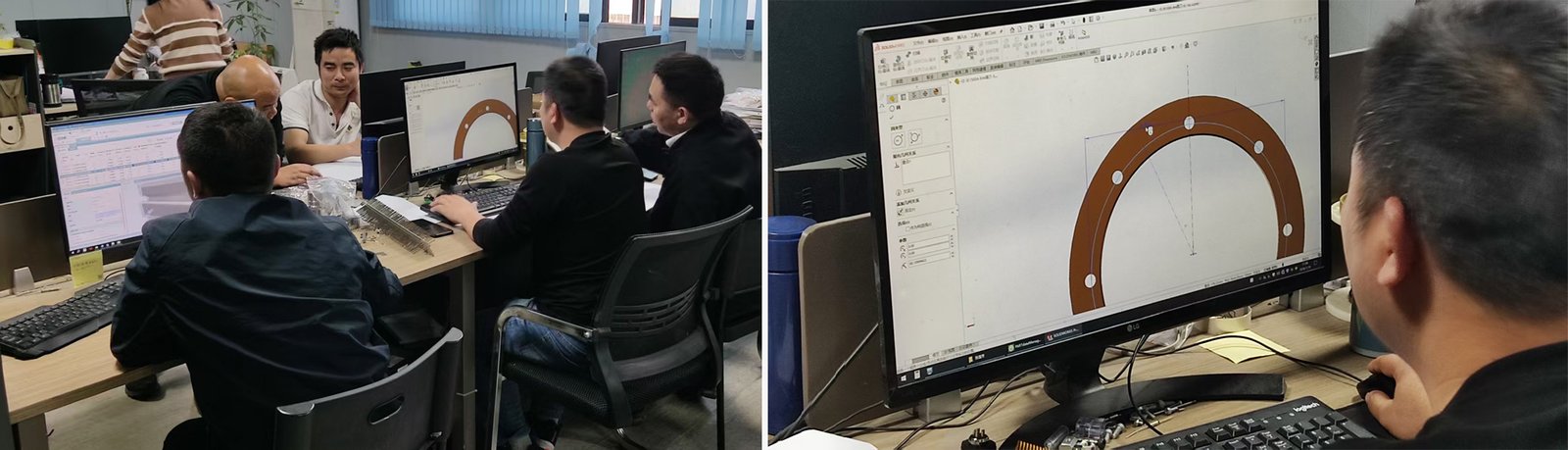
- Coil deformation modeling experience
- Tooling design for springback compensation
- Material-specific forming parameters
- Integration with winding automation
This integration reduces the risk of mismatch between winding output and final geometry.
Global Terminology Differences Buyers Should Recognize
Procurement teams working across regions often encounter terminology differences that mask the same technical requirement.
- “Coil shaping” in European appliance projects
- “Post-forming” in North American heater sourcing
- “Secondary forming” in Asian equipment specifications
Understanding that these refer to the same stabilization stage prevents misinterpretation during supplier comparison.
Why Integrated Equipment Manufacturers Are Increasingly Preferred
Buyers increasingly favor equipment suppliers who combine winding and forming expertise within a single engineering team. The reason is straightforward: coil behavior after winding depends heavily on how it will be formed.
At Xiezhan heating equipment manufacturer, this integration is handled through coordinated process design between winding and forming stages, reducing trial cycles and ensuring consistent element geometry across production batches.
You can review typical project workflows in our client cooperation examples, where forming requirements were defined alongside winding specifications.
Common Market Limitations Buyers Encounter
Procurement teams frequently report three recurring constraints when sourcing forming-capable equipment:
- Standalone winding suppliers lacking forming expertise
- Manual forming solutions unsuitable for automation
- Inconsistent shape retention across batches
These limitations often appear only after production ramp-up, when element deformation becomes visible under thermal cycling or transport vibration.
FAQ for Procurement and Engineering Teams
Do secondary-formed heating elements affect certification?
No. Forming changes geometry rather than material composition. Certification such as CE or UL depends primarily on insulation system and electrical design. Forming stability can actually improve compliance repeatability.
Can forming be customized for different heater models?
Yes. Forming tooling is typically designed per geometry. Integrated equipment factories develop forming dies alongside winding parameters to maintain dimensional accuracy across product variants.
Does secondary forming extend lead time?
Initial tooling adds setup time, but production often becomes faster because assembly no longer requires manual adjustment. Net project timelines usually improve after stabilization.
A Procurement Perspective on Long-Term Trend
From a long-term sourcing viewpoint, secondary forming is likely to transition from optional capability to baseline expectation in heating element production. As product architectures tighten and automation expands, coil geometry will increasingly be defined by final assembly requirements rather than winding convenience.
Buyers evaluating future equipment investments should therefore consider forming integration not as an accessory feature but as a core process stage within heating element manufacturing.
To understand how forming-integrated winding solutions can align with your heater designs, you may review our about us background or discuss application details with our engineering team via the contact us page.