
What Happens If Tension Is Not Controlled
Short answer for buyers: If winding tension is not controlled, heating coils will not form consistently. This leads to resistance variation, unstable heating performance, frequent wire breakage, and high rejection rates during assembly or testing. In real production environments, uncontrolled tension rarely shows up as an obvious machine fault—it appears as scattered quality issues across batches. That is why experienced manufacturers treat tension control not as a machine parameter, but as a core process condition that directly determines coil reliability and product safety.
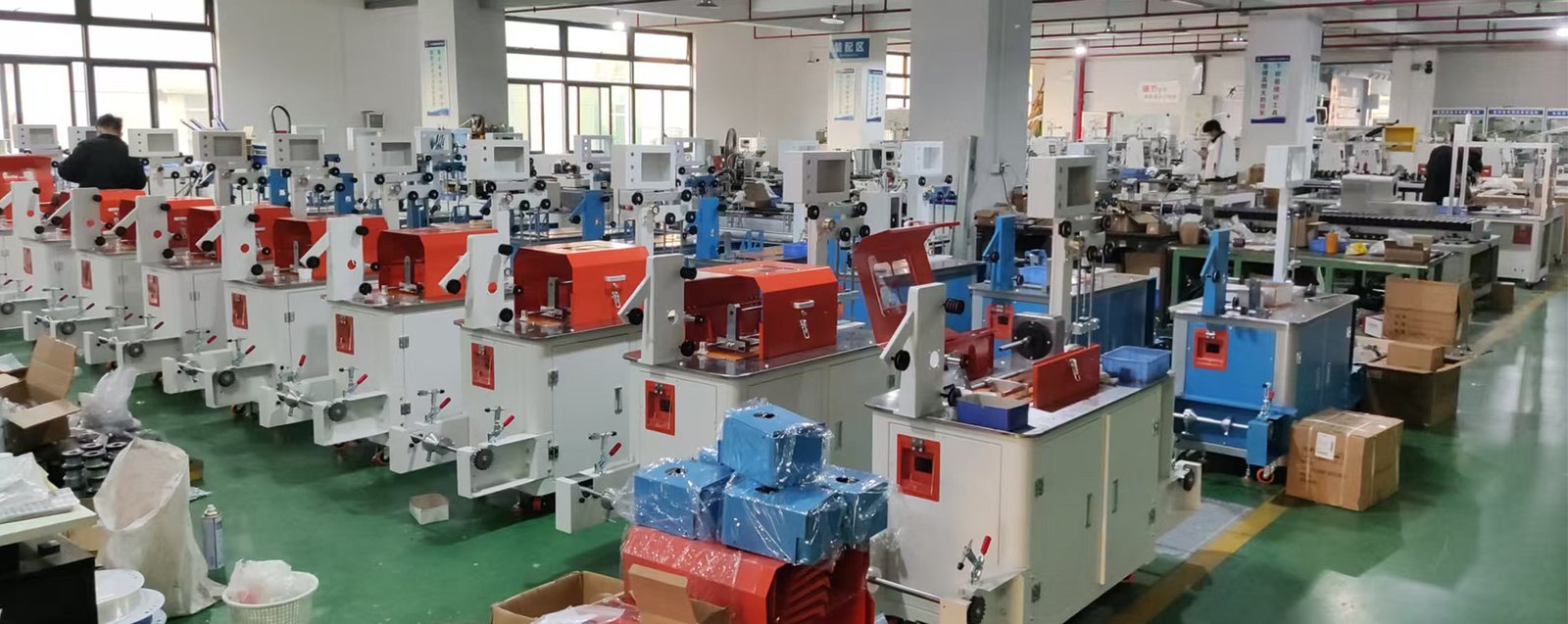
Why Tension Control Is the Hidden Variable in Winding Quality
Across different regions, buyers describe winding equipment differently. European manufacturers often refer to it as a coil forming machine, Southeast Asian factories call it a heater coil winder, while many Chinese and Middle Eastern plants use the general term winding machine. Regardless of naming, all heating element production relies on one physical principle: controlled plastic deformation of resistance wire around a mandrel or fixture.
Tension determines how the wire stretches, seats, and stabilizes during forming. When tension fluctuates—even slightly—the coil geometry changes in ways that are not always visible immediately but affect downstream performance.
- Coil pitch variation
- Diameter inconsistency
- Residual internal stress
- Elastic springback after forming
- Micro-cracks in alloy wire
In heating applications such as hair dryers, heat guns, and industrial heaters, these small variations translate into measurable resistance differences and thermal imbalance. Over long operating cycles, they also accelerate oxidation and localized overheating.
What Happens If Tension Is Not Controlled During Winding?
From a procurement perspective, uncontrolled tension rarely appears as a single failure mode. Instead, it creates a cluster of production and quality problems that increase cost and reduce yield.
1. Resistance Variation Between Coils
Resistance wire elongates under tension. If tension varies between coils, wire length per turn changes slightly, causing resistance deviation. Even a 1–2% elongation difference can push finished heaters outside specification tolerance.
| Tension Condition | Wire Elongation | Resistance Stability | Heating Uniformity |
|---|---|---|---|
| Stable | Consistent | Within tolerance | Uniform |
| Fluctuating | Variable | Batch deviation | Hot spots |
2. Frequent Wire Breakage During Production
Excessive or unstable tension creates cyclic stress concentration, especially in nichrome and FeCrAl alloys. Breakage often occurs at:
- Start and end points of winding
- Mandrel transition zones
- Guide pulley edges
- Fixture contact points
Factories sometimes attribute this to “wire quality,” but field audits show that tension instability is the dominant cause in most cases.
3. Coil Geometry Drift After Winding
If tension is too low, coils expand after release from the mandrel. If too high, coils contract or distort. This affects:
- Insertion into mica or ceramic supports
- Pitch alignment in heater assemblies
- Automated assembly compatibility
Assembly workers then compensate manually, introducing further variation.
4. Long-Term Heating Instability in End Products
Residual stress from uncontrolled winding accelerates grain growth and oxidation during heating cycles. Over time, this causes:
- Localized hot spots
- Resistance drift
- Premature coil failure
This is why some heater products pass initial testing but fail durability tests or field use.
Why Many Factories Underestimate Tension Problems
In procurement discussions, tension control is often treated as a simple adjustable parameter. In reality, it is a system condition influenced by multiple machine and process factors.
Common Misconceptions Seen in Audits
- “Manual adjustment is sufficient.”
- “Wire supplier variation is the main cause.”
- “If coils look uniform, tension is fine.”
- “Breakage equals operator error.”
These assumptions persist because tension effects are cumulative and distributed across production stages rather than immediately visible.
Root Causes of Uncontrolled Tension in Winding Systems
From an engineering standpoint, tension instability originates from mechanical, dynamic, and material interaction factors.
Mechanical Factors
- Inconsistent brake torque on wire spool
- Guide pulley friction variation
- Mandrel surface wear
- Fixture alignment deviation
Dynamic Factors
- Acceleration and deceleration spikes
- Speed fluctuation in drive system
- Start-stop winding cycles
Material Factors
- Wire diameter tolerance
- Surface condition
- Alloy ductility variation
Only when machine design stabilizes all three dimensions can tension remain consistent across long production runs.
How Controlled Tension Improves Heating Element Manufacturing
Experienced buyers evaluate winding equipment based on how reliably it maintains tension under real factory conditions rather than nominal speed.
Process Benefits Observed in Production Lines
- Resistance deviation reduced by 30–60%
- Wire breakage incidents reduced significantly
- Coil insertion yield improved
- Assembly time shortened
- Durability test pass rate increased
These improvements typically appear after switching from basic mechanical tension methods to stabilized or controlled systems.
How Mature Buyers Evaluate Tension Capability in a Winding Machine
When sourcing a winding machine, experienced procurement teams focus on structural and dynamic indicators rather than parameter lists.
Key Evaluation Points
- Spool braking stability over long runs
- Guide path smoothness and alignment
- Mandrel surface finish and wear resistance
- Drive motion continuity
- Fixture positioning repeatability
Machines designed for heating element production typically incorporate reinforced mechanical rigidity and smoother tension transmission paths compared with generic coil winders.
Why Established Manufacturers Control Tension Differently
Factories specializing in heating coils design equipment around continuous thermal-mechanical stress conditions rather than intermittent winding tasks.
For example, at Xiezhan heating element winding machine manufacturer, machine structure and tension path are developed specifically for resistance wire behavior during long production cycles. This includes fixture stability, mandrel durability, and motion continuity optimized for heater coil forming.
Buyers working with specialized suppliers often report fewer unexplained quality deviations compared with general winding equipment sources.
Process Comparison: Controlled vs Uncontrolled Tension
| Production Aspect | Uncontrolled Tension | Controlled Tension |
|---|---|---|
| Coil geometry | Variable | Repeatable |
| Resistance tolerance | Wide | Stable |
| Wire breakage | Frequent | Rare |
| Assembly yield | Inconsistent | High |
| Field reliability | Variable | Predictable |
Why Buyers Choose Specialized Heating Coil Winding Manufacturers
Mature procurement decisions prioritize long-term process stability rather than initial machine price. Suppliers focused on heating element winding typically provide:
- Application-specific machine geometry
- Fixture and mandrel customization
- Stable long-run tension behavior
- Process integration support
This is why many OEM heater producers prefer working with dedicated heating coil winding machine factory partners rather than general automation vendors. You can see typical cooperation cases here: client cooperation.
FAQ for Procurement and Engineering Teams
Do tension control requirements change with wire material?
Yes. Nichrome and FeCrAl alloys differ in ductility and springback. Machines must maintain stable tension across these materials to keep coil geometry consistent.
Can existing winding machines be improved for tension stability?
In some cases, fixture upgrades or guide path optimization help. However, structural limitations in generic machines often prevent fully stable tension during long production runs.
How do we verify a supplier’s tension capability?
Request long-run coil samples, resistance consistency data, and production case references. Reviewing supplier background and engineering approach also helps: about us.
Conclusion: Tension Control Defines Coil Reliability
In heating element manufacturing, uncontrolled winding tension is not a minor adjustment issue—it is a primary driver of resistance stability, coil geometry, and long-term heater performance. Many production problems attributed to materials or operators originate from tension fluctuation during winding.
For procurement and engineering teams evaluating equipment, the key question is not whether a winding machine can form coils, but whether it can maintain stable tension under continuous factory conditions. That distinction ultimately determines product reliability and manufacturing efficiency.
If you are evaluating winding equipment for heating element production, you can discuss your application with our engineering team here: contact us.