
Common Wire Break Issues During Winding
In heating element production, wire break during winding is rarely caused by a single factor. For most factories, it results from the interaction between wire material behavior, tension control, tooling alignment, and operator adjustments under real production conditions. Understanding where and why breaks occur is essential for buyers selecting or upgrading a winding machine, because equipment stability directly determines whether winding can remain continuous across long production runs.
Across different regions and manufacturing cultures, resistance wire winding equipment is described in various ways—coil winding machine, heater wire forming machine, nichrome wire winder, or heating element winding system. Regardless of terminology, the production challenge remains consistent: maintaining stable wire deformation without fracture while achieving required coil geometry and resistance characteristics.
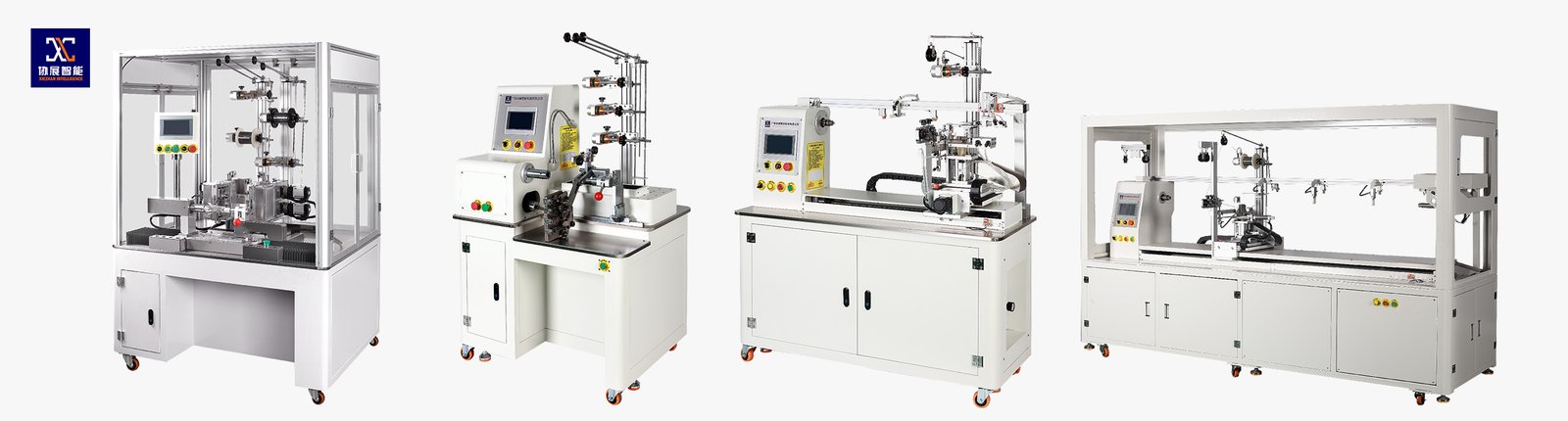
Where Wire Break Typically Occurs in Real Production
From factory observations and customer feedback across appliance, industrial heating, and component manufacturing sectors, wire break rarely happens randomly. It concentrates at specific stages of the winding cycle.
1. Initial Feeding and Tension Stabilization
When resistance wire first enters the forming zone, unstable tension equalization can produce sudden localized stress. This is common in semi-automatic winding setups or older manual-assisted systems where operators guide wire entry.
2. Pitch Transition or Diameter Change
During coil pitch variation or diameter adjustment, deformation strain increases. If tooling geometry or servo response is slightly misaligned, brittle alloys such as nichrome or FeCrAl may fracture.
3. Exit Release and Cut-off Stage
After forming, residual stress release can trigger break at the final turn. This is often misinterpreted as wire quality issues, but frequently originates from mandrel or guide misalignment.
Why Modern Factories Still Experience Wire Break
Even with CNC or programmable winding machines, wire fracture remains a common complaint. The causes are rarely obvious because they combine material science and mechanical behavior.
| Primary Factor | Engineering Mechanism | Typical Misjudgment |
|---|---|---|
| Wire material variability | Microstructure hardness variation | Blamed on machine |
| Tension instability | Dynamic load fluctuation | Seen as operator error |
| Guide/tool misalignment | Localized bending stress | Misread as wire defect |
| Servo response delay | Transient strain spikes | Ignored |
Experienced buyers recognize that wire break is rarely solved by replacing wire suppliers alone. Production stability depends on how the winding system manages deformation energy throughout the coil forming cycle.
How Equipment Design Influences Wire Break Risk
From a manufacturer’s perspective, the difference between stable winding and frequent breakage often lies in structural details rather than headline machine specifications.
Tension Path Continuity
In well-designed winding machines, the wire path remains smooth with minimal angular deviation. Each bend introduces localized strain concentration. Machines with fragmented guide geometry amplify break probability.
Mandrel and Guide Concentricity
Even small eccentricity between forming mandrel and guide elements causes cyclic bending stress. Over thousands of turns, this leads to fatigue fracture.
Dynamic Response Matching
Servo drive acceleration must match material deformation limits. Over-aggressive motion profiles generate transient tension peaks invisible to operators but critical to wire integrity.
How Different Industries Experience Wire Break
Wire break patterns vary significantly across applications, which is why mature buyers evaluate equipment within their specific product context.
- Hair dryer heating coils: small diameter + high pitch density → sensitive to tension spikes
- Industrial heater elements: thick wire + high forming force → guide alignment critical
- Heating rope production: multi-strand deformation → synchronization stability required
- Medical or micro coils: ultra-fine wire → material consistency dominates
This application-dependent behavior explains why generic winding machines often struggle across diverse product lines.
What Experienced Buyers Check Before Blaming Wire
In practical procurement and troubleshooting discussions, engineering teams typically evaluate the winding system before changing material suppliers.
Key Stability Checks
- Guide alignment and wear condition
- Tension control consistency across speed range
- Servo acceleration profile smoothness
- Mandrel surface condition
- Wire feeding straightness
Factories that ignore these checks often cycle through multiple wire batches without solving break issues.
Why Mature Manufacturers Reduce Break Frequency
Experienced winding machine manufacturers focus less on nominal speed and more on deformation stability. This is why some production lines run for months with minimal wire fracture while others experience daily stoppages.
At Guangdong Xiezhan, equipment development emphasizes continuous tension path design and forming alignment stability. Practical manufacturing feedback from global clients (client cooperation) shows that stable mechanical geometry often reduces break incidence more effectively than simply lowering winding speed.
Our engineering approach, detailed in the about us section, prioritizes repeatable deformation behavior across different resistance wire alloys and coil geometries.
Common Market Misconceptions About Wire Break
Across many factories, several persistent assumptions delay effective solutions:
- “Wire quality is the main cause.”
- “Lower speed prevents break.”
- “Operator skill solves it.”
- “All CNC winding machines behave similarly.”
In reality, deformation stability is governed by mechanical alignment and tension continuity—parameters embedded in machine structure rather than operator adjustment.
FAQ for Buyers Evaluating Winding Stability
Does certification guarantee low wire break?
Certification confirms safety and compliance, not forming stability. However, verified manufacturing quality systems (certifications) indicate controlled mechanical accuracy, which indirectly supports stable winding.
Can machines be adapted to different wire alloys?
Yes. Mature winding equipment allows adjustment of tension path geometry, servo profile, and tooling configuration to match nichrome, FeCrAl, or other resistance materials.
Does higher automation always reduce break?
Automation improves consistency only when mechanical alignment and tension design are correct. Poorly designed automatic machines may increase break frequency due to higher dynamic loads.
When to Consider Equipment Upgrade
From procurement experience across heating element factories, repeated wire break under normal material conditions usually indicates structural limitations of the winding system.
Typical upgrade indicators:
- Break occurs at consistent coil position
- Different wire batches show same failure
- Tension adjustments have limited effect
- Speed reduction does not eliminate fracture
These patterns suggest mechanical geometry rather than material variability is driving failure.
Final Engineering Perspective
Wire break during winding is not simply a material defect or operator issue. It reflects how effectively a winding machine manages deformation energy while forming resistance wire into stable coil geometry.
Factories achieving low break frequency typically rely on equipment designed around continuous tension paths, concentric forming alignment, and matched motion response. These structural characteristics define long-term winding stability more than nominal machine speed or automation level.
For manufacturers seeking to reduce production interruption and improve coil consistency, evaluating winding system mechanics is often more decisive than changing wire suppliers. Technical discussions about application-specific winding conditions can be explored through the contact us channel.