
Heating Element Winding for Hair Dryer OEM Factories
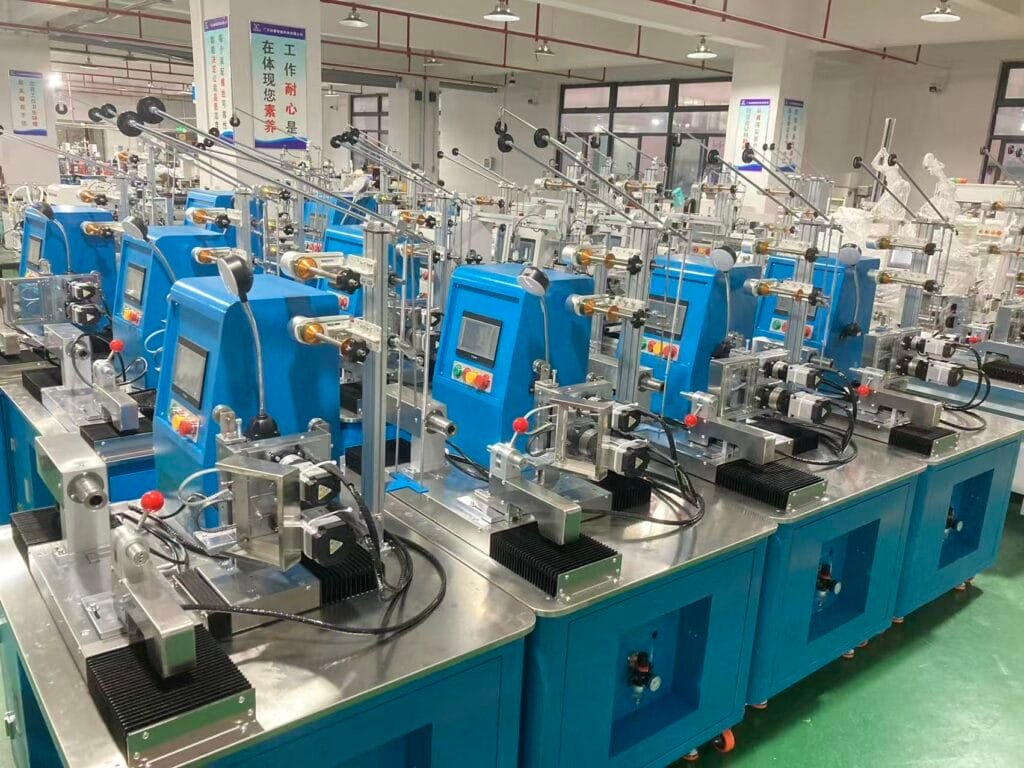
Improving Heating Coil Consistency in High-Volume Hair Dryer Production
If you are sourcing winding equipment for hair dryer heating elements, the real question is not speed—it’s consistency. Most OEM factories struggle with unstable coil spacing, uneven resistance values, and frequent manual adjustments. These issues directly impact product safety, airflow heating efficiency, and long-term durability. From what I’ve seen working with appliance manufacturers, the right CNC ripple winding setup can reduce defect rates by over 30% in continuous production.
Why Hair Dryer Heating Coil Production Is Harder Than It Looks?
Hair dryer heating elements seem simple—just a coil of resistance wire. But in production, several variables interact at once:
- Wire elasticity changes during heating
- Ripple depth affects airflow resistance
- Coil pitch determines power distribution
- Manual feeding causes inconsistency
Traditional semi-manual winding setups often fail here. Operators adjust tension by feel, not data. Over time, this leads to:
- Inconsistent ripple shape
- Deviation in resistance value
- Higher rejection rates during QC
What Actually Improves Stability in OEM Production?
From a production standpoint, three factors matter more than anything else:
1. Controlled Ripple Forming
Machines designed for ripple heating wire forming must maintain fixed forming depth (typically 4–8mm for hair dryers). Too shallow, and heat transfer drops. Too deep, and structural stability weakens.
2. Constant Wire Tension
Servo-controlled tension avoids stretching the nichrome wire. This directly stabilizes resistance values across batches.
3. Repeatable CNC Parameters
Once a production recipe is set (pitch, length, resistance), it should run without manual correction.
Factories that switch from manual adjustment to CNC-controlled ripple forming typically see immediate improvement in yield consistency within the first production cycle.
Typical Machine Configurations for Hair Dryer Heating Elements
| Machine Type | Application | Key Capability | Production Advantage |
| Ripple Wire Forming Machine | Hair dryer coils | 4–8mm ripple depth control | Improved airflow heating efficiency |
| CNC Spring Winding Machine | Coil shaping | Servo pitch control | Stable resistance value |
| Multi-wire Winding Machine | Parallel coil production | Dual or triple wire feeding | Higher output per shift |
How Our Equipment Fits Hair Dryer OEM Production
Based on actual factory setups, most customers use a combination of ripple forming and CNC winding machines. In our case as a manufacturer, we typically configure solutions based on production scale:
For Small to Mid-Scale OEMs
- Model group similar to XZ-B360P
- Compact footprint
- Stable ripple forming for standard coils
For High-Volume Production Lines
- Model group similar to XZ-B450P / XZ-B460P
- Higher speed servo control
- Better consistency for 24/7 operation
Do not choose machine size based only on output. Match ripple depth range and wire diameter capability to your exact heating element design.
Where Many Buyers Make the Wrong Decision
I’ve seen this mistake repeatedly: buyers focus on machine price and RPM, but ignore process stability.
- High speed without tension control → unstable coils
- Low-cost forming dies → inconsistent ripple shape
- No resistance monitoring → hidden quality issues
This usually leads to higher long-term costs:
- Frequent machine recalibration
- More rejected batches
- Higher labor dependency
Stable production is not about maximum speed. It’s about repeatability over long runs—especially in OEM supply chains.
Production Data: What Changes After Upgrading?
| Metric | Before Upgrade | After CNC Upgrade | Impact |
| Defect Rate | 8–12% | 2–4% | Lower scrap cost |
| Output Consistency | Manual dependent | Program controlled | Stable batches |
| Labor Requirement | High | Reduced | Lower operating cost |
According to appliance manufacturing benchmarks, automated coil winding can improve production efficiency by around 25–35% depending on product complexity.
Why Experienced Buyers Choose a Reliable Manufacturer
From a sourcing perspective, the machine itself is only part of the decision. What matters more:
- Whether parameters are tested with real samples
- Whether the supplier understands your heating element design
- Whether after-sales support can solve production issues quickly
If you want to understand how real projects are delivered, you can review our client cooperation cases.
You can also learn more about our engineering background on the about us page.
For a full overview of available winding solutions, check the winding machine category.
If you already have drawings or sample coils, it’s better to discuss directly. You can reach us here: contact us.