
What Production Capacity Should a Mica Processing Line Have?
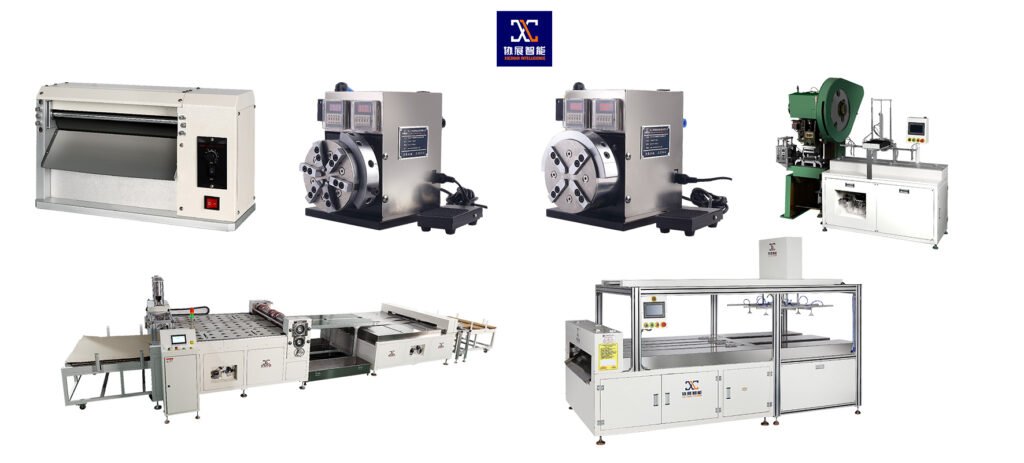
Planning the Right Capacity for Your Mica Manufacturing Production Line
The correct production capacity of a mica processing line depends on more than the number of parts a machine can process per hour. For manufacturers, the real question is whether the equipment can continuously support order demand, product quality requirements and future growth. A small heater component supplier and a large industrial insulation manufacturer have completely different capacity needs. The best production line is the one that balances output, stability and investment according to the factory’s actual manufacturing situation.
Why Should Production Capacity Be Calculated Before Choosing Equipment?
Many buyers start equipment selection by asking about machine speed, but experienced manufacturing teams usually begin with production planning. The reason is simple: machine capacity only creates value when it matches the factory’s real production requirements. A machine with excessive capacity may increase investment and operating costs, while insufficient capacity can create delivery delays and limit business expansion.
The mechanical principle behind capacity planning involves the relationship between processing cycle time, material flow and production scheduling. Every mica component must pass through different operations, including cutting, trimming, stamping, forming and assembly. If one process operates slower than the others, it becomes the production bottleneck regardless of how fast the other machines are.
For example, a factory may purchase a high-speed stamping machine but still experience low overall output because material preparation or cutting accuracy cannot support the same production rhythm. Therefore, capacity should always be evaluated as a complete manufacturing system rather than a single machine specification.
In practical factory planning, stable production flow usually creates more value than maximum machine speed. A production line running at 85% capacity with consistent quality often performs better than a faster system frequently stopped for adjustment, maintenance or material preparation.
How Do Different Factory Scenarios Require Different Mica Processing Capacities?
The ideal capacity depends heavily on the manufacturer’s business model. A factory producing customized mica insulation components for different customers requires flexibility, while a supplier producing standardized heating elements for large appliance manufacturers requires repeatability and continuous output.
The reason is related to production variation. Customized products create more frequent tooling changes and parameter adjustments, so flexibility becomes more important than maximum speed. High-volume standardized production has fewer changes, allowing automated equipment to operate closer to its designed capacity.
Based on years of equipment communication with international manufacturers, production planning can usually be divided into three common scenarios:
| Factory Type | Typical Production Need | Main Challenge | Suitable Equipment Direction | Priority Factor |
|---|---|---|---|---|
| Small and medium heater manufacturers | Multiple product types, moderate output | Frequent product changes | Flexible semi-automatic or automatic machines | Adaptability |
| Heating element mass production factories | Large quantity standardized components | Maintaining stable output | Automated mica processing systems | Repeatability |
| Industrial insulation manufacturers | Large mica boards and thicker materials | Large-size processing stability | High-volume mica handling machine solutions | Processing capability |
Before selecting equipment, calculate your required monthly output, working days, shift hours and expected growth rate. These basic production numbers provide a more reliable foundation than choosing a machine based only on maximum speed.
How Does an Automated Mica Board Machine Improve Production Capacity?
Automation improves production capacity mainly by reducing process variation rather than simply increasing movement speed. In mica processing, consistent feeding, accurate positioning and stable cutting pressure directly influence the number of qualified parts produced from each sheet of material.
The mechanical reason is that automated systems replace repeated manual positioning with controlled movement sequences. This reduces differences between operators and creates a predictable production rhythm. The result is higher utilization of materials, fewer rejected components and easier production planning.
Which Mica Processing Machines Match Different Production Volume Requirements?
When manufacturers evaluate production capacity, the equipment combination is usually more important than the output of one individual machine. The reason is that mica processing involves several connected steps, and each machine influences the efficiency of the next operation. A balanced production line prevents one process from becoming a bottleneck.
From a mechanical perspective, each machine is designed around a specific processing task. Cutting machines focus on dimensional accuracy, stamping machines focus on repeated forming, feeding systems focus on material flow, and molding equipment focuses on shape consistency. Matching these functions with production demand creates a smoother manufacturing process.
For example, a factory producing large mica insulation boards for industrial heaters may require a large-format cutting solution, while a manufacturer producing compact heating elements may need precise stamping and forming equipment. Choosing according to application avoids unnecessary investment and improves equipment utilization.
| Equipment Model | Main Function | Technical Parameters | Suitable Production Scenario | Capacity Advantage |
|---|---|---|---|---|
| XZ-J730D Mica Paper Molding Machine | Mica paper roll round forming |
220VAC 50Hz 200W Mica thickness 0.4-1mm Width 10-300mm | Hair dryer heaters and compact heating components | Stable forming quality with compact structure |
| XZ-SL300 Automatic Stamping and Feeding Machine | Mica sheet stamping and automatic feeding |
220VAC 50Hz 1800W Board width 30-300mm Storage 100-200pcs | Medium and high-volume heating element production | Reduces manual loading time and improves workflow |
| XZ-JB1212 Fully Automatic Mica Board Cutting Machine | Automatic mica board cutting |
380VAC 50Hz 3800W 120×120cm board size Thickness 0-3mm Accuracy ±0.2mm | Standard mica insulation component production | Improves cutting consistency for repeated orders |
| XZ-XB1300 Fully Automatic Four Edge Trimming and Cutting Machine | Large mica board trimming and cutting |
380VAC 50Hz 5800W 130×130cm board size Thickness 0-6mm Accuracy ±0.2mm | Industrial heaters and large insulation boards | Handles larger materials with stable accuracy |
These machines represent different production requirements rather than a simple ranking from low to high. A larger machine is not always the better choice. The correct selection depends on whether the equipment matches the actual size, thickness and quantity of mica components required by the factory.
In many factory projects, production expansion problems do not come from insufficient machine speed. They often come from an unbalanced process sequence where cutting, forming or feeding capacity does not match the main production demand. A complete process review before purchasing equipment can prevent this issue.
How Should Manufacturers Design a High Volume Mica Handling Process?
High-volume mica production requires more than installing automatic machines. The production line must be designed around material movement, operator workflow and quality control points. The reason is that mica sheets are valuable insulation materials, and inefficient handling can increase waste even when machine capacity appears sufficient.
The mechanical principle is based on reducing unnecessary movement between processes. When cutting, stamping and forming operations are arranged logically, materials spend less time waiting between stations. The result is higher production efficiency without increasing machine load.
For manufacturers planning a complete mica processing system, reviewing different equipment combinations is usually more effective than selecting isolated machines. Our Mica Sheet & Mica Board Processing Machines solutions cover different processing stages, helping factories build equipment configurations according to their actual production requirements.
Do not calculate production capacity only by machine speed. Include material loading time, tooling replacement, quality inspection and maintenance intervals. These factors determine the real daily output of a production line.
How Can Manufacturers Balance Current Capacity and Future Expansion?
When investing in a mica processing line, manufacturers should consider not only today’s production orders but also future market changes. The reason is that equipment usually remains in service for many years, while product demand, heater designs and customer requirements can change much faster.
The mechanical principle behind flexible production is the ability to adjust processing parameters, tooling and workflow without replacing the complete system. A production line with reasonable expansion capability allows factories to increase output, introduce new mica components or improve automation gradually.
The result is lower long-term investment risk. Instead of purchasing the largest possible machine at the beginning, manufacturers can build a production system that grows together with their business.
What Production Indicators Should Buyers Evaluate Before Investment?
Professional buyers normally evaluate production capacity through several indicators instead of relying on one number. The reason is that real manufacturing performance depends on the interaction between equipment, operators, materials and production planning.
For a mica processing project, the following factors are usually more meaningful:
- Daily qualified output: The number of finished mica components that meet quality requirements, not only processed pieces.
- Material utilization rate: How efficiently mica sheets and boards are used during cutting and forming.
- Process stability: Whether the machine maintains consistent accuracy during long production periods.
- Changeover efficiency: How quickly the production line adapts to different heater models.
- Maintenance requirements: Whether downtime can be controlled during continuous operation.
These indicators explain why two factories using similar machines may achieve different production results. The difference is often not the machine itself, but how well the equipment matches the production process.
In industrial equipment purchasing, production capacity should be measured by stable output over months, not by short-term maximum performance during testing. Long-term consistency is usually the factor that determines actual profitability.
Why Is Supplier Engineering Support Important for Mica Processing Projects?
Selecting a machine is only one part of building a successful production line. The reason is that mica processing involves many practical details, including material characteristics, tooling adjustment, production sequence and operator training.
A supplier with manufacturing experience can identify potential problems before installation. For example, different mica thicknesses may require different processing settings, and different heater structures may influence cutting or forming requirements.
The result is a smoother production startup and fewer unexpected adjustments after delivery. This is especially important for international buyers who need reliable communication and technical support during project implementation.
When evaluating raw material requirements and production planning, many manufacturers also review mica material sources and industry applications. Understanding the relationship between material suppliers and processing requirements can help buyers make better equipment decisions. You can also refer to our guide about Top 13 Mica Sheet Manufacturers in China for additional industry reference.
Before confirming a production line, provide your supplier with actual product drawings, mica specifications, target output and production environment information. A recommendation based on real data is usually more reliable than a standard equipment package.
How Should You Choose the Right Mica Processing Capacity for Your Factory?
The best production capacity is not the highest number shown on a machine specification sheet. It is the capacity that supports stable manufacturing, reasonable investment and future business development.
The reason is that every factory has different production conditions. A small manufacturer may benefit more from flexible equipment that handles multiple products, while a large heating element producer may need a highly automated system designed for continuous operation.
The mechanical conclusion is straightforward: when equipment capability, material handling and production requirements are matched correctly, the production line can achieve better efficiency with fewer interruptions.
Choose equipment based on your complete manufacturing process instead of only focusing on output figures. The right production line should solve today’s capacity needs while keeping enough flexibility for tomorrow’s growth.
At Xiezhan Machinery, we help manufacturers evaluate mica processing requirements from the perspective of actual production. By understanding heater types, material specifications and expected output, we provide practical equipment recommendations instead of one-size-fits-all solutions.
If you are planning a new mica processing line or upgrading an existing production system, our engineering team can discuss your application requirements through Contact Us and help identify a suitable production approach.
Conclusion: Build Capacity Around Your Manufacturing Reality
A successful mica processing line is created by matching machine capability with real production requirements. Capacity planning should consider product type, material handling, quality expectations and future expansion rather than simply choosing the fastest equipment available.
For manufacturers producing heating elements and insulation components, an automated mica board machine can provide stronger consistency and production control when the equipment is correctly matched to the application. The goal is not maximum speed, but reliable production performance that supports long-term business growth.