
How CNC Mica Sheet Forming Machines Improve Precision Manufacturing
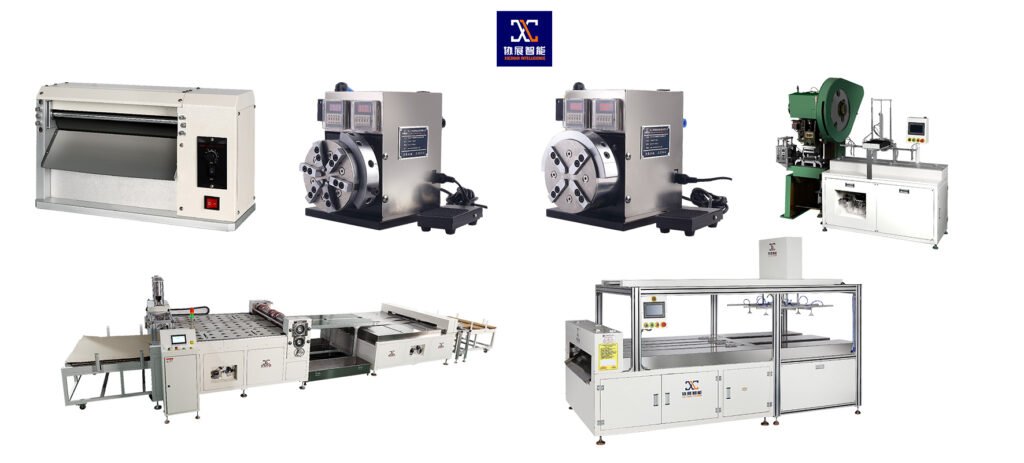
Why Precision Control Matters in Modern Mica Component Manufacturing
When buyers evaluate a CNC mica sheet forming machine, the real question is rarely about whether the machine can cut or shape mica materials. Most modern equipment can do that. The real concern is whether the production system can maintain stable dimensional consistency across long operating cycles while handling different insulation structures without creating excessive scrap, assembly variation, or downtime. In practical heater manufacturing, precision mica processing directly affects assembly quality, insulation reliability, and production efficiency.
Over the past several years, manufacturers producing heating elements, industrial heaters, and thermal insulation assemblies have been under growing pressure to improve both precision and flexibility. Product structures are becoming more compact, component tolerances are getting tighter, and production batches are becoming increasingly diversified.
This is one reason CNC-controlled mica board shaping machines are gradually replacing traditional semi-manual processing systems in many export-oriented factories.
Insight
Factories upgrading to CNC-controlled industrial mica machining systems are usually not chasing machine speed alone. Most are trying to stabilize production quality while reducing operator-dependent variation that becomes increasingly difficult to control at larger production volumes.
Why Traditional Mica Processing Methods Struggle with Precision Manufacturing
Many manufacturers still rely on semi-automatic processing methods developed years ago when product tolerances were less demanding and labor costs were significantly lower.
Those systems often work reasonably well for basic production. The problem appears when production scale increases or product structures become more complicated.
In actual factory operations, traditional processing methods usually encounter several recurring issues:
- Manual alignment inconsistency
- Unstable positioning accuracy
- Variable cutting dimensions
- Operator-dependent production quality
- Higher scrap generation during continuous operation
For electrical insulation production, even relatively small dimensional deviations can create downstream assembly problems. This becomes especially important in compact heater structures where spacing tolerances directly affect thermal behavior and insulation stability.
As a result, manufacturers are increasingly adopting CNC mica sheet forming machine solutions capable of maintaining repeatable dimensional control throughout large production batches.
How CNC Mica Sheet Forming Machines Improve Production Stability
The biggest advantage of CNC-controlled equipment is not simply automation. The real advantage is repeatability.
Modern precision mica processing systems combine:
- Servo-driven positioning
- Programmable dimension control
- Stable feeding coordination
- Consistent movement synchronization
- Multi-specification processing capability
These functions reduce production variability significantly compared with manual processing methods.
For example, in heating element factories producing multiple insulation configurations, CNC-controlled mica board shaping machines allow operators to adjust production specifications more efficiently without introducing excessive dimensional variation between batches.
| Production Factor | Traditional Processing | CNC Processing | Manufacturing Impact |
|---|---|---|---|
| Positioning Accuracy | Operator-dependent | Program controlled | Better repeatability |
| Batch Consistency | Variable | Stable | Reduced rejection rates |
| Specification Switching | Slow | Faster | Higher flexibility |
| Labor Dependency | High | Lower | More stable output |
What Types of Factories Benefit Most from CNC Mica Forming Systems?
Not every factory requires the same production structure. However, based on actual export manufacturing projects, CNC-controlled industrial mica machining systems are especially valuable for several production environments.
Heating Element Manufacturers
Factories producing heating coils, mica heaters, or insulation assemblies usually require tighter dimensional control because insulation alignment directly affects assembly consistency.
High-Mix Production Factories
Manufacturers handling multiple product specifications often benefit from CNC programming flexibility because production adjustments can be completed faster without extensive manual recalibration.
Export-Oriented Appliance Suppliers
Factories supplying international appliance brands usually face stricter quality consistency requirements. CNC mica sheet forming machines help improve dimensional repeatability during large production cycles.
You can explore additional related equipment on our Mica Sheet & Mica Board Processing Machines page.
Why Mature Buyers Focus on Long-Term Stability Instead of Machine Speed Alone
One important difference between experienced industrial buyers and first-time equipment purchasers is how they evaluate manufacturing performance.
Less experienced buyers often compare:
- Maximum production speed
- Initial equipment price
- Basic machine dimensions
More experienced factories usually pay closer attention to:
- Continuous operational stability
- Servo system reliability
- Production repeatability
- Component compatibility
- Long-term maintenance accessibility
In real manufacturing environments, stable performance over thousands of production cycles creates far greater long-term value than short-term peak speed numbers.
This is why professional buyers evaluating precision mica processing equipment increasingly focus on system integration quality rather than standalone machine specifications.
| Buyer Concern | Short-Term Thinking | Long-Term Manufacturing Thinking | Factory Result |
|---|---|---|---|
| Machine Speed | Peak output focus | Stable cycle consistency | Lower downtime |
| Machine Price | Lowest initial cost | Lifecycle operating value | Better ROI stability |
| Precision | Single-test accuracy | Batch repeatability | Reduced rejection |
| Maintenance | Reactive repairs | Predictable servicing | Stable production planning |
How Guangdong Xiezhan Supports Precision Manufacturing Projects
At Guangdong Xiezhan, discussions with clients usually begin with production structure analysis rather than simply recommending standard machine models.
This matters because different factories face completely different manufacturing realities:
- Some focus on high-volume repetitive production
- Some require flexible specification switching
- Some prioritize compact insulation structures
- Others focus heavily on export quality consistency
A mature equipment manufacturer understands that successful industrial mica machining depends not only on machine hardware but also on workflow coordination, material behavior, and long-term production stability.
This is one reason experienced buyers increasingly prefer working directly with specialized mica processing machine manufacturers rather than general-purpose equipment traders.
You can learn more about our engineering experience and factory background on the About Us page.
Several international project references are also available in our Client Cooperation section.
What Will the Future of Precision Mica Processing Look Like?
Several manufacturing trends are already becoming visible across the heating element industry.
Factories are moving toward:
- Higher product customization
- Smaller dimensional tolerances
- More automated material handling
- Integrated digital production control
- Reduced operator dependency
As these trends continue, CNC mica sheet forming machines will likely become increasingly important not simply because they improve speed, but because they help factories maintain stable production quality under more demanding manufacturing conditions.
Factories that continue depending heavily on inconsistent manual adjustment methods may eventually struggle to maintain repeatability as customer expectations continue rising.
Final Thoughts from an Industrial Manufacturing Perspective
Precision manufacturing is no longer only about producing accurate parts. It is about maintaining stable accuracy continuously across large production cycles while adapting efficiently to changing product requirements.
That is where CNC mica sheet forming machine systems provide their greatest value.
Manufacturers investing in precision mica processing are usually building stronger long-term production capability rather than simply upgrading equipment.
If you are currently evaluating mica board shaping machine solutions or planning a new industrial mica machining project, you can contact our engineering team through the Contact Us page for technical discussions and production recommendations.