
How Operators Influence Winding Results
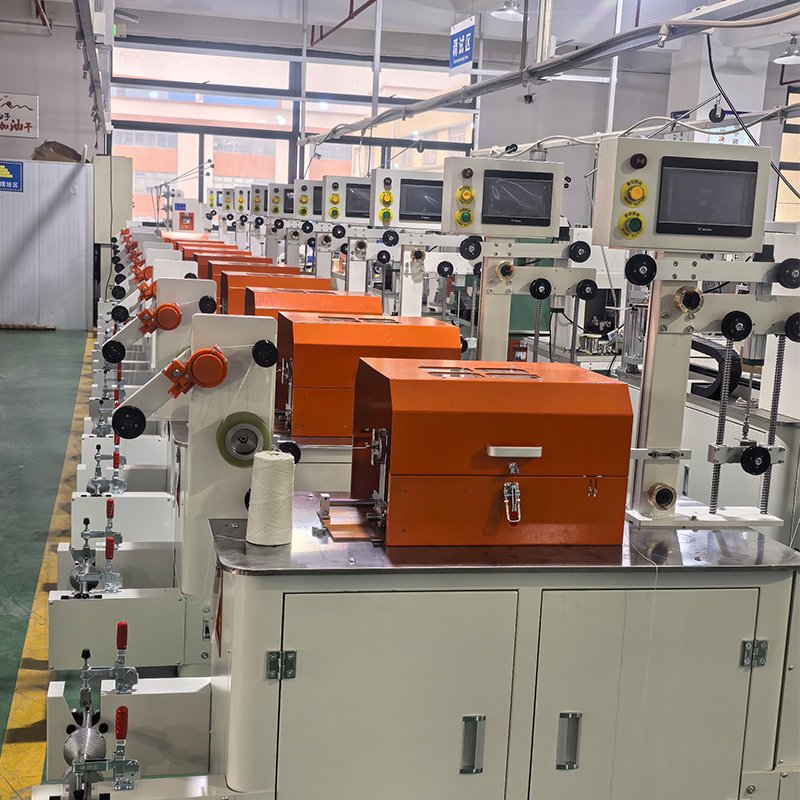
Why Operator Skill Still Matters in Modern Coil Winding
When manufacturers invest in a new winding system, a common question comes up during factory discussions: “Once the machine is installed, will the results depend mostly on the equipment—or the operator?” In practice, both matter. Even with highly automated equipment, operator decisions still influence coil stability, production consistency, and defect rates. Understanding how human operation interacts with machine capability helps procurement teams choose equipment that performs reliably across shifts, operators, and production environments.
Across industries—from heating element production to cable forming and micro coil manufacturing—the relationship between equipment and operator behavior remains critical. Manufacturers often focus on machine specifications first, but experienced production engineers know that winding quality frequently reflects operator setup discipline, process understanding, and troubleshooting experience.
How Operators Influence Winding Results in Daily Production
A winding machine may run thousands of cycles per day, but every shift begins with human decisions. Operators determine parameters, material alignment, and tension adjustments. Small changes here can affect the entire batch.
In most factories, operator influence appears in three main stages of production:
- Machine setup and parameter adjustment
- Material handling and feeding accuracy
- Monitoring coil consistency during production
For example, resistance wire tension must remain stable throughout winding. If tension is set incorrectly—even slightly—the resulting coil may show uneven spacing or deformation during heating cycles.
This is one reason experienced buyers evaluate not only machine capability but also how intuitive the machine interface is for operators.
Why Automation Does Not Completely Remove Human Impact
Automation reduces repetitive work and improves consistency, but it does not eliminate human involvement. Most modern winding machines include programmable control systems, yet operators still perform critical tasks.
Parameter Interpretation
Machines follow programmed instructions. However, operators must interpret coil specifications—wire diameter, pitch, and coil diameter—before setting the correct parameters.
Material Variations
In real production environments, materials are rarely perfectly consistent. Resistance wire, PU cables, or micro wires may vary slightly between suppliers or batches.
Operators adjust feeding tension and alignment to compensate for these variations. Without that intervention, even advanced machines can produce unstable coils.
Process Observation
Experienced operators notice early signs of instability—small vibration changes, abnormal sound patterns, or slight pitch variations. These signals often appear before defects become visible.
Factories with trained operators typically reduce scrap rates significantly compared with plants that rely solely on automation.
Typical Operator Decisions That Affect Coil Quality
During discussions with production managers across Europe and Southeast Asia, several common operator decisions repeatedly appear as key factors influencing winding results.
| Operator Action | Potential Impact |
|---|---|
| Wire tension adjustment | Affects coil spacing and structural stability |
| Guide alignment | Determines uniformity of winding path |
| Material feeding method | Influences coil deformation risk |
| Speed adjustment | Balances efficiency and precision |
These actions demonstrate that coil quality results from both mechanical accuracy and operational judgment.
How Equipment Design Can Reduce Operator Dependency
Although operator influence cannot disappear entirely, machine design can reduce variability between different operators.
Manufacturers selecting equipment often look for systems that simplify setup and maintain stable operation across multiple shifts.
For example, many factories prefer machines with automatic tension systems and digital parameter storage. Such features help ensure consistent results even when operators change.
Companies exploring equipment options can review available solutions in the winding machine category, where different configurations address specific production requirements.
How Procurement Teams Evaluate Operator-Friendly Equipment
From a purchasing perspective, selecting winding equipment involves more than comparing motor power or speed ratings.
Experienced procurement managers often focus on three practical questions:
- How easy is the machine for operators to learn?
- Does the control system allow parameter recall for repeat orders?
- Can the machine maintain stable tension automatically?
These factors determine whether production remains stable even when new operators join the team.
Lessons From Global Manufacturing Practices
Different regions often describe winding equipment in slightly different ways. European engineers may refer to “coil forming systems,” while many Asian manufacturers simply call them “winding machines.”
Despite terminology differences, the operational principles remain similar: stable tension, precise guiding, and controlled speed.
Factories that maintain strong operator training programs usually achieve the most consistent results regardless of machine brand.
Over the past decade, many international manufacturers have worked with specialized equipment factories to refine production processes. Some examples of industry collaboration can be seen in the partnerships shown on the client cooperation page.
FAQ: Questions Buyers Often Ask
Do winding machines require special operator training?
Most modern machines are designed with user-friendly control systems. However, operators still benefit from training in wire handling, tension adjustment, and troubleshooting techniques.
Can machines be customized for different coil types?
Yes. Many manufacturers require equipment configured for specific materials or coil geometries. A specialized manufacturer or factory can adjust guides, feeding systems, and tooling to match production needs.
What is the typical delivery time for winding equipment?
Delivery times depend on configuration complexity. Standard machines may ship within several weeks, while customized systems typically require additional engineering and testing time.
Balancing Machine Capability and Human Expertise
In the end, coil quality rarely depends on just one factor. Reliable production emerges from a combination of well-designed equipment, stable materials, and trained operators.
Companies evaluating suppliers often prefer manufacturers that combine engineering experience with real production insight. Information about the development background of such manufacturers can be found on the about us page.
For procurement teams comparing winding solutions, discussing real production conditions with equipment engineers can reveal far more than specifications alone.
Discussing Your Production Requirements
Every winding application—whether heating elements, micro coils, or spiral cables—presents different operational challenges. Understanding how operators interact with equipment helps ensure long-term stability after installation.
If your team is currently evaluating equipment or planning a new production line, it may be useful to discuss your coil specifications, materials, and production targets with experienced engineers. You can reach the team through the contact us page to explore suitable solutions.