
Equipment Preferences of European Appliance Manufacturers
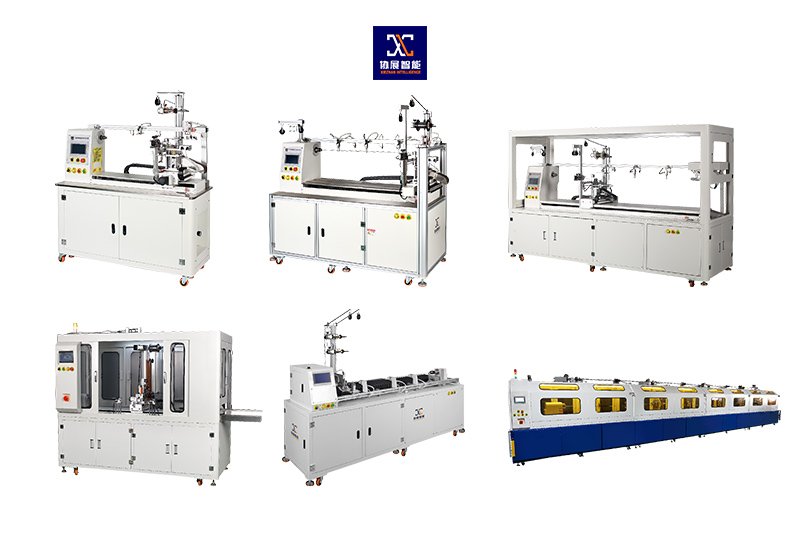
Why European Appliance Factories Choose Different Winding Equipment Than Asian Plants
European appliance manufacturers rarely buy equipment based on price alone. Their decisions usually revolve around repeatability, compliance stability, maintenance predictability, and operator consistency over long production cycles. In practical terms, they prefer winding systems that reduce process variation, simplify technician training, and integrate smoothly into existing production environments. This is why many European buyers lean toward structured semi-automatic or CNC-supported winding solutions instead of heavily manual production layouts.
Over the past few years, appliance production across Europe has shifted under pressure from rising labor costs, stricter energy efficiency standards, and increasing traceability requirements. That shift has changed how procurement managers evaluate heating element manufacturing equipment.
European buyers are usually less interested in “maximum speed” and more focused on whether the machine can maintain stable output for years with minimal variation between operators and production batches.
Why Are European Manufacturers Moving Toward Flexible Automation?
Ten years ago, many factories still accepted operator-dependent winding quality. Today, that tolerance is disappearing quickly.
European appliance brands increasingly require:
- Consistent coil pitch accuracy
- Lower defect rates
- Repeatable thermal performance
- Reduced operator dependency
- Cleaner production documentation
This is especially visible in products such as:
- Hair dryer heating elements
- Industrial air heaters
- Electric kitchen appliances
- Heating rope assemblies
- Compact thermal modules
Factories supplying these industries increasingly favor machines like the XZ-T2201 five-axis CNC spring winding machine because it improves dimensional repeatability during long production runs. Meanwhile, mid-sized suppliers often choose XZ-T2103 or XZ-T240P because they provide a balance between precision and operational simplicity.
If your product mix changes frequently, avoid over-automating every process step. European factories often gain better long-term efficiency from modular winding cells than from rigid full-line automation.
What Equipment Features Matter Most to European Buyers?
One common misunderstanding among Asian suppliers is assuming European customers only care about machine sophistication. In reality, they care more about production predictability.
A procurement manager in Germany or Italy may ask fewer questions about speed and more questions about:
- Servo stability after 18 months
- Ease of replacing wear parts
- Programming consistency
- Downtime recovery speed
- Compatibility with different wire materials
| Priority Area | What European Buyers Prefer | Common Low-End Limitation | Recommended Models | Operational Impact |
|---|---|---|---|---|
| Precision | Stable servo positioning | Pitch inconsistency | XZ-T2201 | Lower rejection rate |
| Flexibility | Fast specification switching | Manual recalibration | XZ-T2103 | Shorter downtime |
| Thermal Stability | Uniform wire shaping | Uneven heat zones | XZ-B450P | Longer product life |
| Maintenance | Accessible mechanical layout | Complex disassembly | XZ-C1040P | Reduced service interruption |
| Labor Efficiency | Simplified operation flow | High operator dependency | XZ-SM800 | Lower training pressure |
How Labor Costs Are Changing Equipment Decisions
Labor economics now shape nearly every appliance manufacturing investment in Europe.
According to Eurostat manufacturing data, average hourly labor costs in parts of Western Europe have continued rising steadily in recent years, especially in Germany, France, Belgium, and the Netherlands. That trend directly affects how factories evaluate winding equipment.
Instead of hiring more operators, many factories now invest in:
- Multi-axis CNC winding systems
- Semi-automatic riveting integration
- Programmable forming stations
- Dual-station production layouts
Machines such as the XZ-C650P double-station heating rope winding machine are attractive because they improve output without doubling labor requirements.
European factories often calculate machine value based on labor savings over three to five years, not initial purchase price alone.
Why European Factories Still Avoid Some Fully Automatic Lines
This surprises many suppliers. Even highly automated European manufacturers sometimes reject completely automated solutions.
Changeovers Are Still Expensive
Appliance production batches in Europe are frequently smaller than in Asia. Product variations are higher. Fully rigid lines may actually reduce efficiency when specifications change weekly.
Maintenance Teams Prefer Mechanical Transparency
European engineering teams often prefer systems they can diagnose internally. Machines with unnecessarily complex structures can create frustration, especially when spare part delivery times become unpredictable.
Energy Consumption Is Being Watched Closely
Power efficiency matters more now than before. Some buyers compare idle consumption, servo load behavior, and compressed air usage before approving purchases.
When presenting equipment to European buyers, explain maintenance logic and production flexibility first. Machine speed should come later in the discussion.
What Production Layouts Are Becoming More Common?
Instead of long single-direction production lines, many European factories are shifting toward compact modular production cells.
A typical setup may include:
- One CNC spring winding station
- One corrugated wire station
- Independent riveting cell
- Separate testing position
- Flexible operator crossover
This approach reduces downtime risk because one issue does not stop the entire line.
For example, a medium-sized heating element factory may combine:
- XZ-T2103 for spring coil forming
- XZ-B460P for deep U corrugated shaping
- XZ-GJ006 for riveting
- XZ-DX009 for dry burn testing
That structure is becoming increasingly common among appliance component suppliers serving premium European brands.
How Mature Buyers Evaluate Manufacturers and Factories
Experienced European buyers rarely select suppliers after looking at a single machine page. They evaluate the manufacturer’s engineering understanding.
Typical concerns include:
- Can the supplier recommend a complete process flow?
- Do they understand appliance certification pressure?
- Can they adapt machines for specific wire materials?
- Will they support future production scaling?
This is why many buyers prefer working with a manufacturer that already understands heating element production rather than a generic automation supplier.
If you want to review available machine categories and production applications, you can explore them here: winding machine
Why Long-Term Cooperation Matters More Than Low Initial Pricing
One pattern becomes obvious after years in export business: European buyers remember post-sale support much longer than they remember negotiation pricing.
Factories value suppliers who:
- Reply quickly during troubleshooting
- Provide stable spare parts support
- Help improve production efficiency later
- Understand future expansion needs
This is especially true when production volumes increase after successful appliance launches.
Real-world cooperation examples can be seen here: client cooperation
What Trends Will Shape European Equipment Purchasing Over the Next Five Years?
Several trends are already influencing procurement strategy across Europe.
1. More Compact Production Systems
Factories want higher output from smaller floor areas.
2. Reduced Dependence on Skilled Operators
Younger industrial labor shortages are pushing factories toward easier-to-operate systems.
3. Greater Demand for Traceable Production
Production consistency documentation is becoming more important for appliance suppliers serving premium markets.
4. Hybrid Automation Will Continue Growing
Completely manual production is declining, but fully rigid automation is not replacing everything either. Flexible semi-automatic production remains highly practical.
Final Thoughts from a Procurement Perspective
European appliance manufacturers are becoming increasingly selective, but not necessarily more complicated. Their priorities are actually quite practical:
- Stable production
- Predictable maintenance
- Lower labor dependence
- Flexible product switching
- Reliable long-term support
Factories that understand these priorities usually build stronger supplier relationships and scale faster over time.
If you want to understand the production background and engineering capability behind these machine solutions, you can learn more here: about us
And if you are currently comparing winding equipment for appliance production, you can discuss your product specifications directly here: contact us