
Spring Coil Resistance Wire Winding Machine Guide
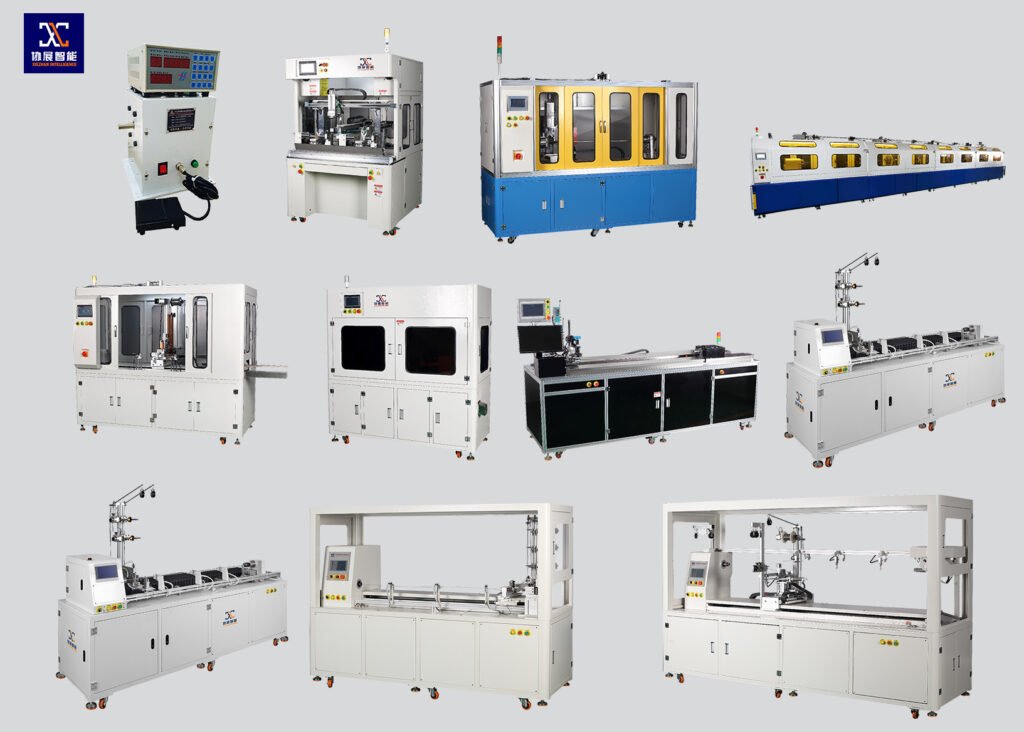
Spring Coil Resistance Wire Winding Machine Guide
Most buyers reach this equipment stage already knowing they need a spring coil resistance wire winder — the product decision was made earlier, when the heating element design was finalized. What’s usually still unresolved is a quieter question: does the machine in front of you actually understand spring coil behavior, or was it adapted from a general-purpose winder that happens to also produce something spiral-shaped? Those two things look similar in a specification sheet and behave very differently once real production starts.
Why This Coil Structure Is Harder to Wind Than It Looks
A spring coil isn’t just a spiral shape — it needs to retain elasticity after winding, so the wire can expand slightly during heating cycles without losing its geometry over repeated use. That elastic memory depends heavily on how tension was managed during the winding process itself. Wind it too tightly and the coil loses spring-back; wind it too loosely and pitch spacing drifts, which directly affects resistance consistency. A machine built for straightforward coil winding — where the goal is simply a tight, uniform wrap — doesn’t necessarily account for this elastic behavior at all.
This is the detail that tends to separate equipment on paper from equipment in practice. If you’re currently comparing a few winding machine options, it’s worth asking directly whether tension control was designed with spring-back behavior in mind, or whether it was carried over from a standard winding configuration and simply adjusted for a smaller mandrel.
The Question That Reveals More Than a Spec Sheet
Here’s a simple test worth running during supplier evaluation: ask how the machine performs when wire diameter changes mid-product-line, not just within a single fixed batch. Many heater manufacturers don’t run one spring coil design — they run several, each with slightly different wire gauge, pitch, and coil diameter depending on the appliance. A machine genuinely built for this application should handle that variation with a straightforward adjustment. A machine adapted from general coil winding often requires re-calibration, sometimes even a tooling change, every time the product spec shifts even slightly.
That difference rarely shows up in a one-time demonstration using a single sample wire. It shows up over weeks of production, when your product mix inevitably changes.
| What You’re Checking | Signs of a General-Purpose Adaptation | Signs of a Spring-Specific Design | Why It Matters | Worth Asking |
|---|---|---|---|---|
| Tension control | Fixed tension setting, adjusted manually per batch | Dynamic tension profile that accounts for elastic recovery | Determines whether spring-back holds after winding | “How is tension adjusted for elasticity, not just tightness?” |
| Wire diameter changeover | Requires tooling swap or long recalibration | Adjustable within a defined range without major downtime | Affects how easily you can run a mixed product line | “What’s the changeover time between two diameters?” |
| Pitch consistency under load | Drifts as batch size increases | Holds steady across long continuous runs | Directly tied to resistance value stability | “Can I see pitch data from an hour-long run, not just a sample?” |
| Alloy compatibility | Optimized mainly for one wire type, tested informally on others | Documented performance across nichrome, FeCrAl, and similar alloys | Different alloys respond differently under identical tension | “Has this been tested on the specific alloy I’m running?” |
| Post-winding elasticity | Not measured, assumed to be fine if the coil looks uniform | Checked against a defined spring-back tolerance | A coil can look correct and still lose elasticity over time | “How is elasticity actually verified after winding?” |
A Sample Run Tells You More Than a Conversation Ever Will
Talking through tension control and pitch tolerance is useful, but it’s still just a description until you’ve seen output. Before committing to an order, it’s worth requesting a small sample batch using your actual wire specification — not a generic demonstration wire the supplier is most comfortable with. Take a handful of coils from that batch and check two things yourself: whether pitch spacing is consistent piece to piece, and whether the coil retains its spring shape after a light compression test, rather than staying permanently deformed.
This kind of verification takes a little longer than reviewing a quotation, but it catches the exact problem that specification sheets can’t show — because “precise pitch control” printed on a datasheet doesn’t tell you whether that precision was designed around your specific alloy and diameter, or whether it was measured under easier conditions.
Why Factory Background Actually Matters Here
There’s a real difference between a supplier who builds winding equipment broadly and one whose engineering process has been shaped specifically around heating wire behavior. A Guangdong Xiezhan manufacturer background means tension profiles and pitch control systems were developed by observing how nichrome and FeCrAl wire actually respond under sustained winding — not adapted afterward from a machine built for a different material entirely. That distinction tends to matter most exactly at the point you’re at now: comparing whether a machine’s claimed flexibility is genuine or simply a marketing description.
As a Guangdong Xiezhan factory working across multiple heating element formats — including corrugated structures, mica-based assemblies, and spring resistance coils specifically — the engineering approach has been to treat each wire type’s elastic behavior as a distinct design problem, rather than assuming one tension profile works universally across all of them.
What Changes Once You’re Running Multiple Product Lines
A single-product buyer can sometimes get away with a machine that’s only “good enough” for one specific coil spec. That flexibility question becomes unavoidable the moment you’re running two or three heater designs through the same production line — hair dryer elements alongside industrial heater coils, for example, each with different wire gauge and pitch requirements. At that point, a machine’s changeover time and adjustment range stop being a minor convenience and start directly affecting your daily output capacity.
This is usually the stage where buyers start reviewing a supplier’s actual production history with other manufacturers, rather than relying on a single conversation or demo. Examples of how equipment has performed across different client production lines are outlined on the client cooperation page, which tends to give a clearer picture than a specification comparison alone.
A Few Questions Buyers Ask at This Stage
Can the same machine handle both nichrome and FeCrAl wire without modification?
Often yes within a defined range, but tension settings usually need adjustment between alloys since they respond differently under identical pressure — this is worth confirming for your specific materials rather than assuming universal compatibility.
How is spring-back or elasticity actually tested after winding?
Typically through a compression or extension test on sample coils, checking whether the coil returns to its original pitch spacing rather than remaining permanently stretched or compressed.
Is it normal for pitch tolerance to vary slightly between production batches?
Minor variation is common, but a well-designed process keeps that variation within a consistent, documented range rather than drifting unpredictably batch to batch.
Should I request a sample run before finalizing an order?
It’s a reasonable step for any specialized coil structure, and most established manufacturers can accommodate a small sample batch using your actual wire specification before you commit to a full order.
What’s a realistic changeover time between two different coil specifications?
This varies by machine design, but it’s worth asking for an actual time estimate rather than a general “quick and easy” answer, especially if your production runs multiple heater designs.
If you’re weighing whether a specific machine can genuinely handle your spring coil specification — wire alloy, diameter range, and pitch tolerance included — our engineering background is outlined on the about us page, and you’re welcome to send your exact wire specification through contact us for a more specific response.