
Mechanical Stability vs Electronic Control in Winding Accuracy
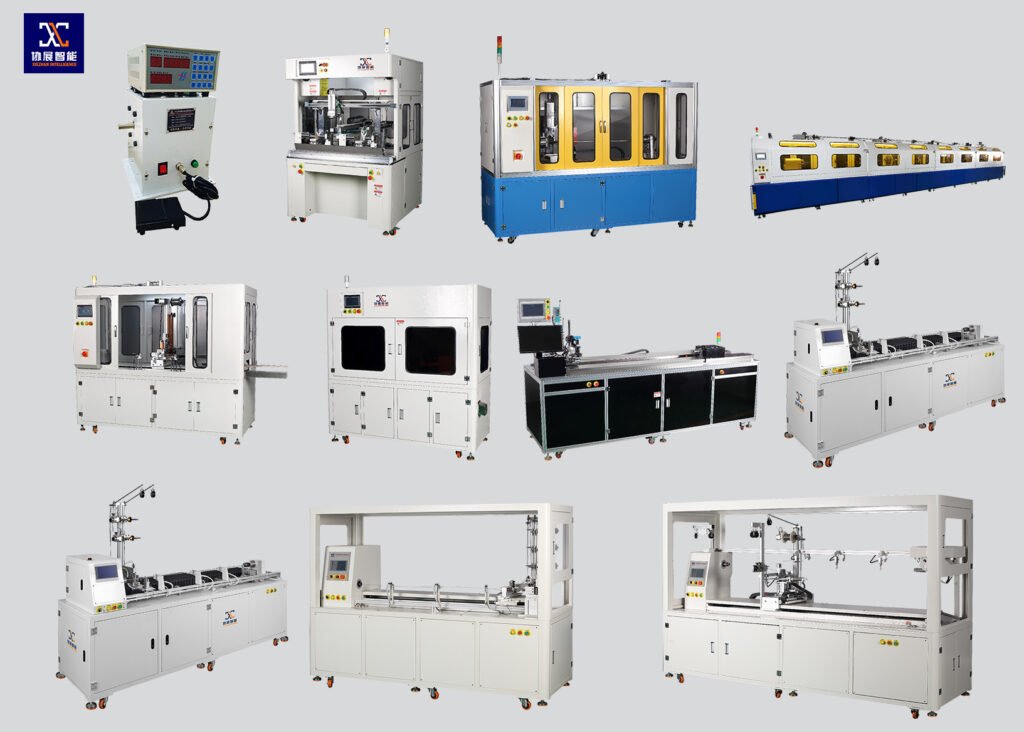
When evaluating winding accuracy, most buyers ask: should I prioritize advanced electronic control or robust mechanical design? In real production, this is the wrong way to frame the decision. Accuracy is not created by software alone, nor by structure alone—it is the result of how both interact under continuous load. From my experience working with heating element manufacturers, machines fail not because of missing features, but because mechanical stability and control systems are not balanced properly.
Mechanical Stability vs Electronic Control: What Really Drives Accuracy?
Both factors contribute to winding precision, but they influence different aspects of the process.
- Mechanical stability determines whether the machine can physically maintain consistent motion
- Electronic control determines how precisely that motion is adjusted and synchronized
If either side is weak, accuracy degrades—especially in high-speed or long-duration production.
| Factor | Mechanical Stability | Electronic Control | Impact on Output |
|---|---|---|---|
| Role | Physical consistency | Motion precision | Overall accuracy |
| Failure Mode | Vibration, deformation | Timing mismatch | Inconsistent coils |
| Long-Term Effect | Wear, instability | Drift, calibration loss | Quality decline |
| Optimization Focus | Rigidity, alignment | Algorithms, feedback | Stable production |
Why Do Many Machines Rely Too Much on Electronic Control?
In recent years, many suppliers have emphasized servo systems, PLC control, and automation features. While these are important, they are often used to compensate for weak mechanical design.
Common signs include:
- Frequent parameter adjustments needed during production
- Performance drops at higher speeds
- Inconsistent results despite advanced control systems
In practice, no control system can fully compensate for mechanical vibration or structural deformation.
What Happens When Mechanical Stability Is Insufficient?
Mechanical issues are often underestimated during procurement because they are not immediately visible.
However, over time:
- Frame vibration affects coil pitch consistency
- Spindle misalignment alters coil diameter
- Wear increases maintenance frequency
According to manufacturing studies, mechanical instability can account for up to 40% of variation in coil geometry under continuous operation.
Is Electronic Control Still Critical?
Yes—but its role is different from what many assume.
Electronic systems are responsible for:
- Synchronizing spindle and guide motion
- Maintaining consistent tension through feedback loops
- Adapting to different wire materials and coil designs
Without proper control, even mechanically stable machines cannot achieve precise winding.
Research in automated manufacturing shows that integrating feedback-based control systems can improve process consistency by 20–30% when combined with stable mechanical structures.
Why Balance Matters More Than Individual Performance?
In real production environments, machines operate continuously—not under ideal test conditions.
This is where imbalance becomes visible:
- Strong control + weak structure → unstable output
- Strong structure + weak control → limited precision
The best-performing systems are those where mechanical and electronic components are designed together.
How Do Experienced Buyers Evaluate This Balance?
After working with multiple factories across Asia and Europe, I’ve seen that experienced buyers rarely focus on specifications alone. Instead, they test how machines behave over time.
Key evaluation points include:
- Consistency after several hours of continuous operation
- Resistance deviation across production batches
- Vibration levels at different speeds
- Stability when switching between product types
This approach reveals whether the machine is truly balanced or just optimized for demonstration.
Where Do Most Market Solutions Fall Short?
From a procurement perspective, many machines fall into two extremes:
- Low-cost machines with basic mechanics and minimal control
- High-spec machines with advanced electronics but weak structural design
Both approaches lead to long-term inefficiencies.
This is why many manufacturers eventually shift to specialized systems such as winding machine solutions designed specifically for heating element production.
What Makes a Well-Balanced Machine?
At Guangdong Xiezhan, the design philosophy is based on balancing structure and control from the start.
As a manufacturer and factory focused on heating element equipment, the approach includes:
- High-rigidity machine frames to minimize vibration
- Precision spindle systems for consistent geometry
- Integrated control systems tuned for resistance wire behavior
- Adaptation to mica heating element assembly requirements
This balance is reflected in real production environments documented in client cooperation cases.
How Should You Make the Final Decision?
Instead of asking whether mechanical stability or electronic control is more important, ask:
- Can this machine maintain accuracy over long production cycles?
- Does it perform consistently across different materials?
- Is the system designed as a whole, or assembled from separate components?
If you are comparing suppliers, it also helps to review broader market positioning through resources like heater coil winding machine manufacturers.
FAQ for Industrial Buyers
1. Do your machines meet international standards?
Yes, machines are typically built to comply with CE and ISO9001 requirements, depending on project specifications and export destination.
2. Can machines be customized for different heating element designs?
Customization is standard practice. Machine configuration is adjusted based on wire type, coil structure, and production capacity requirements.
3. What is the typical delivery time?
Lead time depends on machine complexity, but for most standard configurations, production and delivery can be arranged within a reasonable industrial timeframe after confirmation.
Final Perspective from a Procurement Standpoint
Winding accuracy is not determined by a single factor. It is the result of how well mechanical stability and electronic control work together under real production conditions.
Machines that prioritize one at the expense of the other may perform well in demonstrations but struggle in daily operation.
If you are evaluating solutions for your production line, you can discuss your specific requirements through the contact page.