
Smart Manufacturing Trends in Mica Heater Production
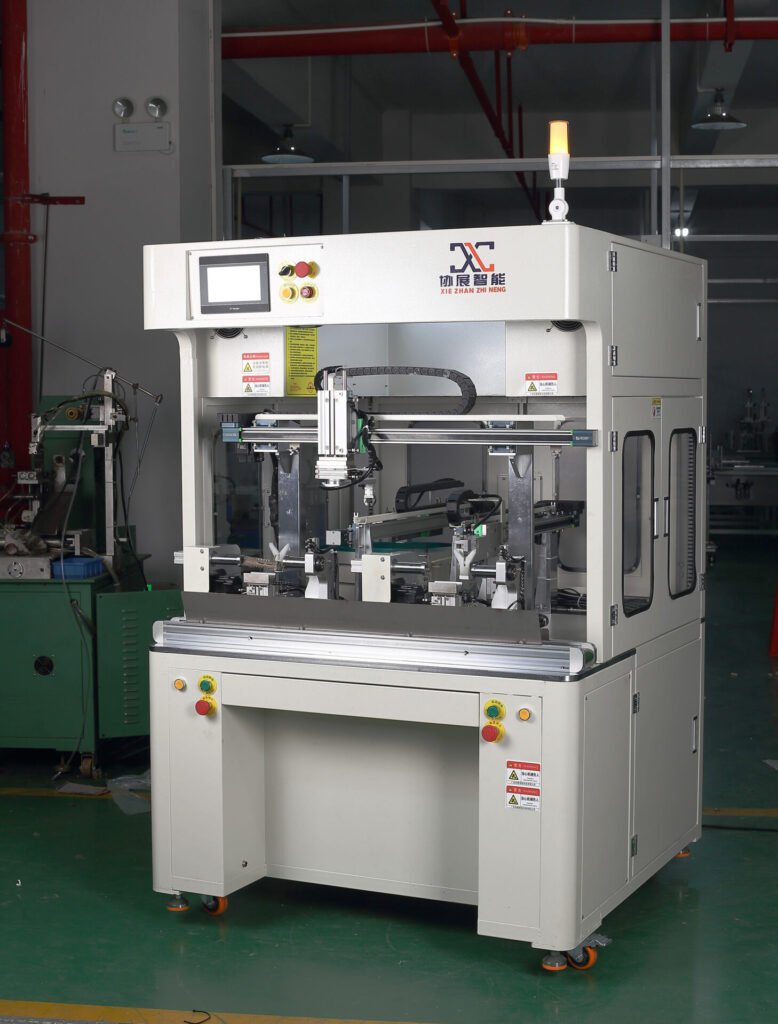
How Smart Manufacturing Is Reshaping Modern Mica Heater Production
Many buyers ask the same question before investing in new equipment: Does smart manufacturing actually improve mica heater production, or is it simply replacing manual work with more expensive machines? Based on projects we’ve discussed with heater manufacturers, the answer is neither. Smart manufacturing delivers value only when it reduces process variation, connects production stages and improves long-term production stability. Simply adding automation without redesigning the workflow rarely delivers the expected return.
The factories achieving the most consistent growth are not necessarily those with the newest equipment. They are the ones that redesign material flow, standardize quality control and match each machine to its specific production task. This difference becomes increasingly important as heater manufacturers face rising labor costs, shorter delivery schedules and higher consistency requirements.
Misconception 1: Does Buying More Automation Automatically Mean Smarter Manufacturing?
One of the biggest misunderstandings among equipment buyers is assuming that more automation automatically creates a smarter factory. In practice, automation is only one component of smart manufacturing.
The reason is straightforward. If every production stage operates independently, each machine may perform efficiently on its own while the overall production line still experiences waiting time, repeated handling and quality variation. The bottleneck simply moves from one workstation to another.
Mechanically, smart manufacturing connects feeding, cutting, forming, inspection and material transfer into one coordinated process. Sensors, servo positioning and programmable controls ensure that each operation receives material in the correct condition before processing begins. Rather than correcting errors after production, the system minimizes opportunities for errors to occur.
The result is smoother production scheduling, fewer manual interventions and more predictable product quality throughout long production runs.
Factories with the highest production stability rarely have the largest number of machines. Instead, they have the fewest unnecessary interruptions between production stages.
Misconception 2: Is Maximum Machine Speed the Best Indicator of Production Performance?
Many technical specifications emphasize maximum operating speed because it is easy to compare. However, experienced purchasing managers usually ask a different question: How many qualified mica heater components can this production line deliver every shift?
The reason is that production efficiency depends on the complete manufacturing cycle. Material loading, positioning, feeding, cutting accuracy, inspection and maintenance all influence actual output. A machine operating at very high speed but requiring frequent adjustments may produce fewer acceptable parts than a slower but more stable system.
From a mechanical perspective, stable servo motion, controlled feeding intervals and repeatable positioning accuracy create a balanced production rhythm. This reduces cumulative dimensional variation that often appears during continuous operation.
The result is higher overall equipment effectiveness and more consistent delivery performance, especially for manufacturers supplying OEM heating products.
| Production Stage | Planning Focus | Recommended Equipment | Capacity Objective | Expected Benefit |
|---|---|---|---|---|
| Prototype Production | Flexibility | XZ-J730D | Fast product adjustment | Supports product development |
| Medium Volume Manufacturing | Stable quality | XZ-JB1212 | Balanced throughput | Lower production variation |
| Large Scale Production | Continuous operation | XZ-XB1300 + XZ-SL300 | High utilization | Stable long-term output |
Best Practice: How Should Equipment Be Selected for Different Heater Products?
The most effective equipment selection process starts with the finished heater rather than the machine itself. Different heater designs require different mica dimensions, forming methods and cutting tolerances. Selecting equipment according to the finished product allows manufacturers to simplify production while maintaining consistent quality.
For larger insulation boards, the XZ-XB1300 Fully Automatic Mica Board Four Edge Trimming and Cutting Machine provides CNC-controlled trimming for boards up to 1300 × 1300 mm with processing thicknesses from 0–6 mm. Manufacturers processing standard insulation sheets often prefer the XZ-JB1212, which offers ±0.2 mm cutting accuracy for 1200 × 1200 mm boards. Continuous stamping operations benefit from the XZ-SL300 Automatic Stamping and Feeding Machine, while shaped mica paper components are efficiently produced using the XZ-J730D Mica Paper Molding Machine.
If you’re comparing different processing solutions, our Mica Sheet & Mica Board Processing Machines page provides an overview of the equipment used across different production stages.
Misconception 3: Can One Machine Meet Every Mica Heater Production Requirement?
Many first-time buyers hope to purchase one machine that handles every production task. While this sounds economical, it rarely produces the best manufacturing results. Mica heater production covers board cutting, strip processing, stamping, forming and sometimes secondary trimming. Each process places different demands on equipment structure.
The reason is that every machining operation applies force differently. Large-board cutting emphasizes positioning stability, while continuous stamping depends on feeding synchronization. Molding mica paper requires repeatable forming pressure rather than high cutting speed. Expecting one machine to optimize every process usually means compromising all of them.
From a mechanical perspective, specialized equipment minimizes vibration, improves positioning repeatability and simplifies maintenance. When every workstation performs one task exceptionally well, the entire production line becomes easier to manage and scale.
The result is better product consistency, lower maintenance costs and greater flexibility when introducing new heater designs.
Instead of asking, “Which machine is the most advanced?” ask, “Which machine removes the biggest production bottleneck?” That question usually leads to a much better investment decision.
| Production Requirement | Recommended Model | Processing Strength | Best Production Volume | Typical Application |
|---|---|---|---|---|
| Large Mica Board Cutting | XZ-XB1300 | Four-edge trimming & CNC cutting | High | Industrial heater insulation boards |
| Standard Sheet Cutting | XZ-JB1212 | ±0.2 mm precision cutting | Medium–High | Heating element insulation parts |
| Automatic Feeding | XZ-SL300 | Continuous stamping | High | Mass production |
| Mica Roll Forming | XZ-J730D | Continuous forming | Small–Medium | Hair dryer mica components |
Best Practice: How Should Smart Manufacturing Be Introduced Step by Step?
Some manufacturers postpone automation because they believe a complete factory upgrade is required. In reality, the most successful projects usually begin with one production bottleneck and expand gradually.
The reason is that every production line already contains one or two processes responsible for most delays. Eliminating these bottlenecks first generates measurable improvements without disrupting the entire factory.
Mechanically, introducing automatic feeding before upgrading cutting equipment, or replacing manual board cutting before adding automated transfer systems, allows operators to adapt while maintaining normal production. Each improvement builds on the previous one, creating a stable transition instead of a risky overhaul.
The result is lower implementation risk, easier employee training and a production line that can continue expanding as business demand grows.
| Application Scenario | Primary Requirement | Suggested Equipment | Production Focus | Expected Result |
|---|---|---|---|---|
| Prototype Development | Flexibility | XZ-J730D | Quick adjustments | Shorter development cycle |
| OEM Heater Production | Consistency | XZ-JB1212 | Precision cutting | Stable dimensional quality |
| Large Export Orders | Continuous output | XZ-XB1300 + XZ-SL300 | Automation integration | High production stability |
Many overseas customers first compare different processing methods before selecting equipment. Our article on Top 13 Mica Sheet Manufacturers in China provides additional industry background that helps buyers better understand material selection before equipment investment.
Conclusion: Smart Manufacturing Starts with Better Decisions, Not Bigger Investments
Across the mica heater industry, one pattern has become increasingly clear. Companies achieving the highest production efficiency are not necessarily purchasing the most expensive equipment. They are selecting machines that match their products, production volume, workforce and long-term expansion plans.
The reason is straightforward. Every production line has unique bottlenecks. Some struggle with inconsistent cutting accuracy, while others lose productivity during material feeding or manual handling. Investing in equipment that directly addresses these constraints produces measurable improvements much faster than replacing an entire factory with automated systems.
From an engineering perspective, modern mica processing equipment combines mechanical rigidity, servo positioning, intelligent control and stable feeding systems into a coordinated manufacturing process. Each improvement reduces variation at one production stage, allowing every downstream operation to become more predictable.
The result is not simply higher production speed. Manufacturers typically gain better dimensional consistency, lower scrap rates, shorter setup times, improved traceability and more reliable delivery schedules—advantages that become increasingly valuable as customer requirements grow more demanding.
After working with manufacturers serving appliance, industrial heating and OEM markets, one lesson consistently stands out: successful automation projects are built around production stability rather than maximum machine speed. Stable processes generate predictable quality, and predictable quality creates sustainable business growth.
Why Manufacturers Choose Xiezhan for Mica Processing Equipment
At Xiezhan, our focus extends beyond supplying individual machines. We help manufacturers develop practical processing solutions based on their actual production requirements. Whether the project involves large mica boards, precision insulation components or continuous heater production, equipment recommendations are made according to product dimensions, material characteristics and future production targets.
Our current mica processing portfolio includes automated board cutting machines, mica paper molding equipment, automatic feeding systems and CNC trimming solutions designed for different manufacturing stages. These machines are widely used in the production of fan heaters, electric heaters, household appliances, industrial heating systems and other mica-insulated products.
If you would like to compare available models, processing capabilities and production applications, you can explore our complete Mica Sheet & Mica Board Processing Machines collection, where each machine is presented with detailed technical specifications and recommended applications.
For manufacturers evaluating suppliers for long-term cooperation, our Client Cooperation page demonstrates how we work with customers throughout equipment selection, project implementation and after-sales technical support.
Every production line is different, and equipment selection should always begin with actual manufacturing objectives rather than catalog specifications alone. If you are planning to upgrade your mica heater production capacity or evaluate automation options for a new project, our engineering team can provide practical recommendations based on your products, expected output and production workflow.
Need Help Selecting the Right Mica Processing Solution?
Tell us about your mica material size, heater product type, expected daily output and current production process. Our engineers can recommend suitable equipment configurations and explain how different machine combinations may improve productivity, consistency and operating efficiency.
Contact our engineering team here: Contact Us