
What Indian Factories Look for in Semi-Automatic Equipment
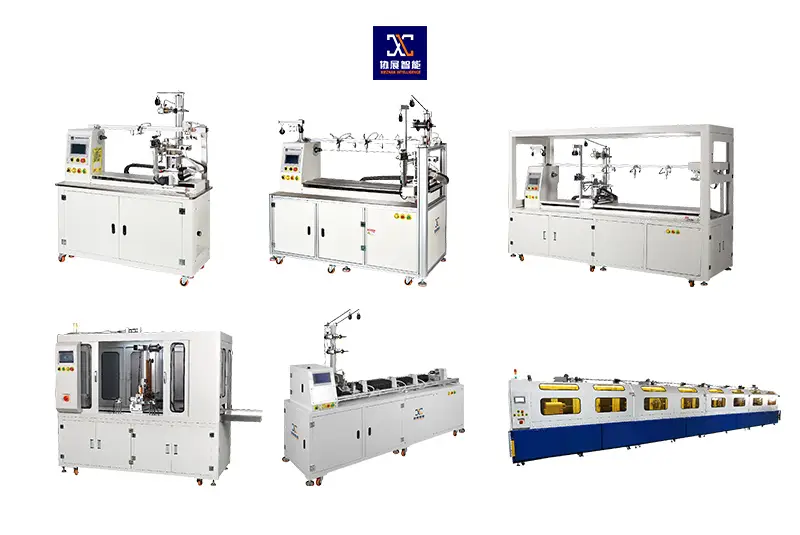
Why Semi-Automatic Machines Still Dominate Many Indian Manufacturing Floors
For many Indian factories, the ideal machine is not the most automated one. It is the machine that keeps production stable every day without creating maintenance pressure, operator confusion, or excessive investment risk. That is exactly why semi-automatic equipment continues to play a major role across Indian manufacturing sectors, especially in heating elements, appliance components, electrical products, and small-to-medium industrial production environments.
Over the past decade, India’s manufacturing sector has expanded rapidly, but factory realities remain very practical. Production managers often need equipment that can handle changing orders, variable workforce skill levels, and cost-sensitive operations without sacrificing product consistency. In that environment, flexible semi-automatic systems frequently outperform complex fully automatic lines.
Many Indian factories evaluate equipment based on how easily it can survive real production conditions, not just showroom demonstrations. Reliability under continuous daily use matters more than impressive automation claims.
Why Do Indian Factories Still Prefer Semi-Automatic Equipment?
From the outside, it may seem surprising that many Indian manufacturers do not immediately invest in fully automatic production systems. But once you visit actual production workshops, the reasons become clear.
Investment Control Remains a Major Priority
Many factories are growing steadily but cautiously. They want machines that improve efficiency without creating excessive financial pressure.
Semi-automatic equipment offers:
- Lower initial investment
- Simpler operator training
- Lower maintenance complexity
- Reduced spare part costs
- Faster return on investment
This is especially important for factories supplying:
- Heating appliances
- Small electrical products
- Industrial heater assemblies
- Local OEM manufacturing
- Export-oriented appliance production
Machines such as the XZ-T2154 semi-automatic spring heating wire winding machine remain popular because they provide stable coil forming performance without requiring advanced CNC programming knowledge.
Production Flexibility Is More Valuable Than Maximum Speed
Many Indian factories handle mixed production orders. Coil dimensions, wire materials, and production quantities often change weekly.
Under these conditions, semi-automatic systems are easier to adapt quickly.
Operators can manually adjust:
- Mandrel sizes
- Wire tension
- Pitch spacing
- Production speed
- Material feeding
without needing complicated programming changes.
What Features Matter Most to Indian Buyers?
Indian procurement teams usually focus on practical performance rather than purely technical specifications.
After years of working with appliance and heating element manufacturers, several priorities appear repeatedly during machine discussions.
| Factory Priority | Preferred Equipment Feature | Common Market Problem | Suitable Models | Operational Benefit |
|---|---|---|---|---|
| Easy operation | Simple controls | Complicated interfaces | XZ-T2154 | Faster operator training |
| Reliable daily production | Stable mechanical structure | Frequent downtime | XZ-B315 | Consistent output |
| Quick product switching | Flexible adjustments | Long setup times | XZ-T2103 | Improved production flexibility |
| Low maintenance | Accessible structure | Complex repairs | XZ-C1040P | Reduced downtime |
| Affordable scaling | Modular production expansion | High automation cost | XZ-SM800 | Controlled investment growth |
Why Reliability Matters More Than High Automation
One thing international suppliers sometimes misunderstand is how Indian factories define “good equipment.”
For many buyers, a machine is considered good when:
- It runs continuously without frequent stoppages
- Operators can learn it quickly
- Maintenance is straightforward
- Spare parts are easy to replace
- Production quality remains stable
This practical mindset explains why some factories still choose robust semi-automatic equipment instead of highly complex fully automatic systems.
For example, the XZ-B315 Deep U Heating Wire Sampling Machine is still valuable in many workshops because it offers dependable operation with relatively simple mechanical maintenance.
What Industries Are Driving Demand in India?
Demand for semi-automatic production equipment is growing across several manufacturing sectors in India.
Heating Element Manufacturing
This remains one of the fastest-growing application areas.
Factories producing:
- Hair dryer coils
- Room heater elements
- Industrial heating assemblies
- Heating rope systems
often require flexible winding and assembly equipment capable of handling frequent product variation.
Electronics and Electrical Components
The growth of domestic electronics manufacturing is increasing demand for:
- Coil winding machines
- Looping systems
- Riveting equipment
- Assembly support machines
Machines like XZ-Q113 Single Head Looping Folding Machine and XZ-Q218 Semi-Automatic Eyeleting Machine are increasingly relevant in these production environments.
Appliance OEM Production
Indian factories supplying local appliance brands often need production flexibility because model specifications change regularly.
Semi-automatic systems allow these factories to adapt without completely rebuilding production lines.
According to recent industrial manufacturing reports related to India’s expanding manufacturing initiatives, medium-sized factories continue investing heavily in practical automation solutions that balance labor efficiency with manageable operational costs.
Factories with limited floor space often prefer compact semi-automatic production layouts because they simplify workflow while keeping expansion options open for future growth.
What Problems Do Buyers Commonly Face with Low-End Equipment?
Price-sensitive purchasing sometimes creates long-term production problems.
Factories that choose extremely low-cost equipment often experience:
- Inconsistent coil quality
- Unstable tension control
- Frequent motor failures
- Poor after-sales support
- Difficulty sourcing spare parts
These issues usually become expensive over time because production interruptions affect delivery schedules and customer trust.
Experienced buyers increasingly evaluate not only machine pricing, but also:
- Machine lifespan
- Support response speed
- Maintenance accessibility
- Availability of replacement components
- Production consistency
Why After-Sales Support Is a Major Purchasing Factor
One of the strongest purchasing considerations in India is technical support availability.
Factories cannot afford long production interruptions while waiting for overseas assistance.
That is why mature buyers usually ask:
- How quickly can spare parts be shipped?
- Can technicians provide remote guidance?
- Are machine structures easy to understand locally?
- Will future upgrades be supported?
Manufacturers that understand real factory conditions usually build stronger long-term partnerships.
You can review available winding and assembly equipment categories here: winding machine
How Indian Factories Are Gradually Adopting Digital Features
Although many factories still prefer semi-automatic systems, digital functionality is becoming more important.
Buyers increasingly look for:
- Digital production counters
- Simple PLC interfaces
- Recipe storage capability
- Basic monitoring functions
- Production data visibility
This does not mean factories want fully automated “smart factories” immediately. Instead, they want gradual improvements that operators can realistically manage.
Machines like XZ-T2103 and XZ-T2201 are often attractive because they combine programmable flexibility with practical production usability.
Why Experienced Buyers Prefer Specialized Manufacturers
Factories producing heating elements and appliance components usually prefer suppliers who understand their specific production challenges.
A specialized manufacturer can recommend:
- Correct winding configurations
- Suitable tension systems
- Practical assembly flow
- Efficient line layouts
- Future expansion planning
This creates a very different purchasing experience compared with buying from a generic equipment trading company.
Examples of production cooperation and factory applications can be reviewed here: client cooperation
Final Thoughts from a Factory Procurement Perspective
Semi-automatic equipment remains highly relevant in India because it matches the operational realities of many growing factories.
The most successful production setups are usually not the most complicated ones. They are the systems that combine:
- Reliable daily performance
- Simple maintenance
- Flexible production adjustment
- Manageable investment cost
- Stable product quality
Factories that choose equipment with these priorities in mind usually scale more smoothly over time.
If you want to understand the engineering background and manufacturing experience behind these equipment solutions, you can learn more here: about us
And if you are currently planning a semi-automatic production setup for heating elements or appliance components, you can discuss your specifications directly here: contact us