
Manual vs CNC Mica Processing Machines
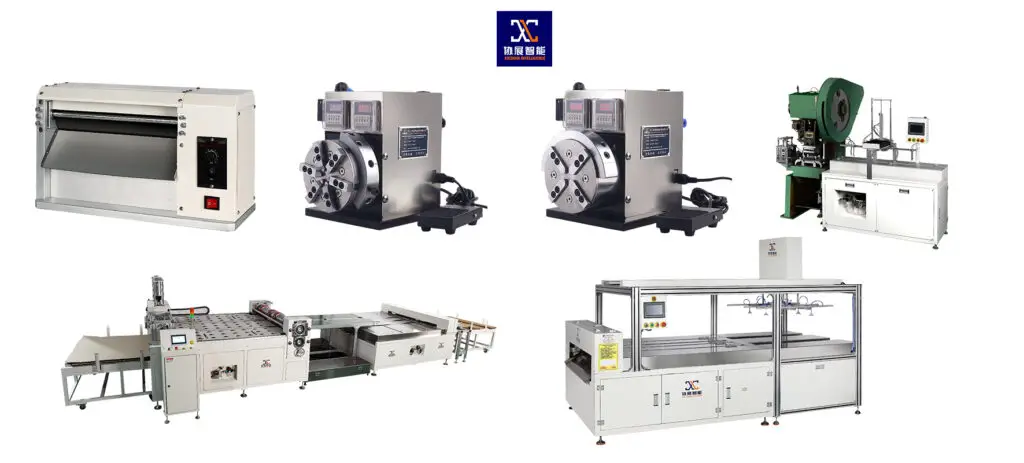
How to Choose Between Manual and CNC Equipment for Mica Manufacturing
Many manufacturers upgrading their production line ask the same question: should they continue using manual mica processing equipment or invest in a CNC solution? The answer depends on production objectives rather than technology preference. Manual machines remain practical for low-volume or frequently changing products, while CNC systems create measurable advantages when consistency, repeatability and production planning become business priorities. Understanding where your factory is today—and where it will be in the next five years—is the foundation of a sound equipment decision.
Step 1: Define Your Production Target Before Comparing Machines
The first mistake many buyers make is comparing machine specifications before defining production goals. In practice, equipment selection should begin with the product, not the machine. Production volume, dimensional tolerance, labor availability, material characteristics and future expansion plans all influence whether manual processing or CNC automation is the better investment.
The reason is mechanical rather than commercial. Manual equipment depends heavily on operator skill for positioning, feeding and quality consistency. CNC systems replace much of this variability with programmed motion control, allowing the machine to repeat identical movements over thousands of production cycles. As production volume increases, this reduction in variation directly improves dimensional consistency and lowers the percentage of rejected parts.
For factories producing customized heating element insulation components in small batches, manual equipment often provides sufficient flexibility. However, manufacturers supplying appliance brands or industrial heating companies usually face strict dimensional requirements across large production runs. In these environments, consistent automation frequently becomes more valuable than reducing initial equipment cost.
Factories achieving stable production growth rarely automate every process immediately. Instead, they identify the workstation creating the highest variation or labor demand and automate that operation first. This phased investment strategy generally produces a faster return than replacing an entire production line at once.
List your annual production volume, acceptable tolerance, labor availability and expected product changes before contacting equipment suppliers. These four factors often determine the most suitable machine configuration more accurately than technical specifications alone.
Another consideration is workflow integration. Mica processing rarely consists of one standalone operation. Cutting, trimming, punching, forming and assembly influence one another, meaning the overall production process should be evaluated as a complete system rather than a series of independent machines.
If you are planning a complete production upgrade, reviewing equipment by manufacturing stage is often more effective than evaluating individual machines separately. Our Mica Sheet & Mica Board Processing Machines collection illustrates how cutting, trimming, stamping and forming equipment can be combined into an integrated manufacturing workflow.
Step 2: Compare Process Stability Instead of Machine Speed
Equipment speed is one of the easiest figures to compare, yet it rarely determines long-term productivity. Stable production depends on how consistently every processing cycle is repeated. Manual operation naturally introduces differences in positioning and feeding, while a CNC mica sheet forming machine executes the same programmed motion repeatedly with minimal variation.
The mechanical principle behind this advantage is repeatability. Servo-driven positioning, programmable motion control and fixed processing parameters reduce dimensional fluctuations between production cycles. As product tolerances become tighter, this consistency becomes increasingly valuable because downstream assembly relies on every component meeting the same dimensional standard.
Step 3: Which Production Environment Benefits Most from CNC Automation?
After determining that process stability is important, the next question is whether automation will generate enough value to justify the investment. The answer depends on production patterns rather than company size. A medium-sized factory producing the same component every day may benefit from CNC equipment sooner than a larger manufacturer handling dozens of different products in small batches.
The mechanical reason is repeatability. CNC systems perform identical movements based on stored programs, eliminating much of the positioning variation introduced by manual operation. As production continues over hundreds or thousands of cycles, this consistency improves dimensional accuracy, reduces adjustment time and keeps downstream assembly running smoothly.
For example, our XZ-JB1212 Fully Automatic Mica Board Cutting Machine is designed for boards up to 1200 × 1200 mm, supports material thicknesses from 0–3 mm and delivers cutting accuracy of ±0.2 mm. When combined with subsequent punching or forming operations, maintaining this level of consistency simplifies fixture alignment and reduces dimensional variation throughout the production line.
For manufacturers processing larger insulation boards, the XZ-XB1300 Fully Automatic Mica Board Four Edge Trimming and Cutting Machine provides CNC-adjustable trimming for sheets up to 1300 × 1300 mm. Instead of relying on repeated manual measurements, programmable positioning keeps edge dimensions consistent before the material reaches downstream punching or assembly stations.
| Comparison Item | Manual Equipment | CNC Equipment | Best Application | Professional Recommendation |
|---|---|---|---|---|
| Production Volume | Low to medium | Medium to high | According to output demand | Match equipment to annual capacity |
| Dimensional Consistency | Operator dependent | Highly repeatable | Precision components | Choose CNC for tighter tolerances |
| Product Changeover | Flexible | Program based | Mixed production | Evaluate product variety |
| Labor Requirement | Higher | Lower | Continuous production | Consider long-term labor availability |
When evaluating automation, calculate the savings from reduced scrap, shorter setup times and improved production consistency—not just the reduction in direct labor. These operational improvements often produce the largest long-term financial return.
Studies from organizations such as Fraunhofer IPA have consistently shown that reducing process variation improves overall manufacturing efficiency more effectively than simply increasing machine speed. Stable production conditions help reduce rework, simplify quality control and improve downstream assembly performance across long production runs.
Equipment performance should always be evaluated together with material quality. Different mica grades vary in density, resin content and machining behavior, all of which influence cutting quality, tooling wear and forming stability. If you are still comparing suppliers or material options, our guide to Top 13 Mica Sheet Manufacturers in China provides a practical overview of commonly used industrial mica materials before finalizing equipment selection.
Step 4: When Does CNC Deliver a Better Return on Investment?
A common concern among procurement managers is whether the higher initial investment in CNC equipment can be justified. Rather than comparing purchase prices, I recommend comparing the cost of producing one qualified part over the machine’s expected service life. This approach reflects actual manufacturing economics instead of short-term budgeting.
The reason is straightforward. Manual processing typically involves more operator intervention, repeated measurements and production adjustments. As order quantities increase, these small interruptions accumulate into significant labor costs and longer production cycles. CNC equipment reduces these interruptions by executing programmed movements repeatedly with consistent accuracy, allowing operators to focus on process supervision instead of continuous adjustment.
From a mechanical perspective, servo-controlled positioning minimizes dimensional variation between production cycles. Consistent positioning reduces cumulative tolerance errors, improves fixture compatibility and keeps downstream punching, forming and assembly operations running under stable conditions. The result is not only higher productivity but also a more predictable manufacturing process.
Factories that successfully adopt automation rarely measure success by machine utilization alone. They monitor indicators such as first-pass yield, setup time, dimensional consistency and unplanned downtime because these metrics have a greater influence on long-term profitability.
Request sample production using your own drawings and mica materials before making a purchasing decision. Real production data provides a far more reliable basis for comparison than catalog specifications or demonstration videos.
Step 5: How Should You Evaluate Equipment Suppliers?
Even when two suppliers offer machines with similar specifications, the overall project outcome can be very different. The difference usually comes from engineering support, production experience and application knowledge rather than hardware alone. Suppliers familiar with heating element manufacturing understand how cutting accuracy influences punching quality, how feeding affects positioning consistency and how forming impacts final assembly.
The reason this matters is that every production stage influences the next. If dimensional variation occurs during board cutting, later operations must compensate for those errors through additional adjustments. By maintaining stable accuracy from the beginning of the process, CNC equipment helps reduce accumulated deviations throughout the entire manufacturing workflow.
When evaluating suppliers, don’t limit discussions to machine specifications. Ask how they determine suitable tooling, how they support commissioning, how quickly replacement parts can be supplied and whether they have experience with products similar to yours. These questions often reveal far more about future production reliability than the quotation itself.
If you would like to see how different manufacturers have implemented customized mica processing solutions, our Client Cooperation page presents examples of production projects developed around actual customer requirements rather than standard equipment packages.
One pattern appears consistently across successful projects: factories that provide detailed drawings, material specifications and production targets during the quotation stage typically complete installation faster and require fewer equipment modifications after commissioning. Clear production requirements almost always lead to more suitable machine configurations.
Step 6: How Can You Make the Right Long-Term Investment?
By this stage, the comparison between manual and CNC equipment should be based on production objectives rather than machine features. The most successful investment is the one that supports your manufacturing strategy over the next several years instead of solving only today’s production challenges. This means evaluating future product diversity, expected order growth, labor availability and quality requirements together rather than independently.
The reason is that manufacturing rarely remains static. As customers demand tighter tolerances, shorter lead times and more consistent product quality, production processes must become increasingly repeatable. CNC equipment achieves this through programmable motion control and standardized operating procedures, reducing dependence on individual operator experience while making production planning more predictable.
That does not mean manual equipment has become obsolete. For prototype development, low-volume production or applications requiring frequent design changes, manual machines still provide flexibility with relatively low investment. The key is selecting equipment that matches the production environment instead of assuming that more automation automatically produces better business results.
The transition from manual processing to CNC automation should be viewed as a manufacturing strategy rather than a machine upgrade. Companies that automate the processes creating the greatest production variation usually achieve faster payback and build a stronger foundation for future capacity expansion.
Final Recommendation
There is no universal answer to whether manual or CNC mica processing equipment is the better choice. The right decision depends on your production volume, product complexity, quality expectations and long-term business objectives. A careful assessment of these factors will lead to a solution that improves efficiency without introducing unnecessary investment.
From our experience working with heating element manufacturers, companies achieve the best results when equipment selection begins with the production process rather than the machine itself. Reviewing drawings, material specifications, annual output and downstream assembly requirements allows engineering teams to recommend configurations that remain reliable throughout years of continuous manufacturing.
Whether you are upgrading a single workstation or planning a complete production line, evaluating cutting, trimming, forming and automation together will generally produce greater long-term value than optimizing one machine in isolation. This integrated approach helps improve dimensional consistency, reduce maintenance interruptions and simplify future production expansion.
Before making your final purchasing decision, prepare representative product drawings, actual mica material specifications and annual production forecasts. These practical production details enable a more accurate equipment recommendation and reduce the likelihood of costly modifications after installation.
If you are evaluating manual equipment, CNC solutions or a complete mica processing line, our engineering team can help analyze your manufacturing requirements and recommend equipment based on your actual production objectives. We focus on building stable, scalable production solutions that support long-term manufacturing performance.
To discuss your project or request technical recommendations, please visit our Contact Us page. We will review your application, production targets and material specifications to recommend a practical solution for your factory.