
Mica Sheet Punch Press vs Die Cutting Equipment: What’s the Difference?
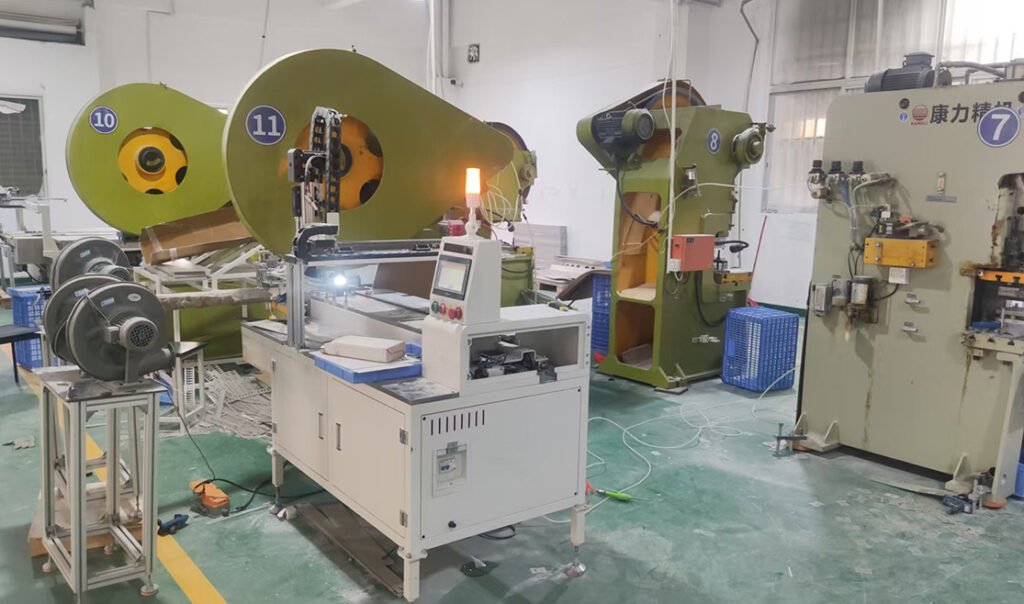
Choosing Between Punch Press and Die Cutting Systems for Mica Component Production
For manufacturers producing heating elements, thermal insulation assemblies, and electrical heater components, one common purchasing question appears repeatedly: should the factory use a mica sheet punch press system or invest in dedicated mica die cutting equipment? The answer depends less on machine labels and more on production structure, component complexity, material stability requirements, and long-term manufacturing consistency. In many real factory environments, the wrong choice creates unnecessary labor dependency, unstable dimensional control, and rising material waste over time.
After discussing production planning with heater manufacturers across different markets, I’ve noticed that many buyers initially focus on machine speed alone. But once production scales up, the real concern becomes repeatability, feeding stability, tooling consistency, and how the equipment behaves during continuous operation.
Industry Production Trend
Manufacturing reports related to electrical insulation production show that automated feeding and precision positioning systems can significantly reduce repetitive operator errors during high-volume stamping operations. This is one reason automated mica cutting solutions are becoming more common in export-oriented heating element factories.
What Is the Difference Between a Mica Sheet Punch Press and Die Cutting Equipment?
Although these two production methods are often grouped together, they actually solve different manufacturing problems.
A mica sheet punch press system primarily focuses on high-speed repetitive punching operations. It is typically used for standardized shapes where production volume is high and tooling repeatability is critical.
Mica die cutting equipment, on the other hand, is usually better suited for:
- Complex component geometries
- Flexible production changes
- Lower-volume customized production
- More delicate material handling
In practical heater manufacturing, many factories eventually combine both approaches depending on product structure and order volume.
| Comparison Factor | Mica Sheet Punch Press | Mica Die Cutting Equipment |
|---|---|---|
| Production Speed | Very high | Moderate |
| Shape Flexibility | Lower | Higher |
| Best for Volume | Mass production | Mixed production |
| Tooling Dependency | High | Medium |
| Automation Potential | Excellent | Good |
Why Are Automated Feeding Systems Becoming So Important?
Many factories still focus heavily on stamping force or cutting precision while underestimating the importance of feeding consistency.
In reality, unstable feeding often creates more production variation than the stamping process itself.
This becomes especially obvious in custom mica component processing where:
- Component dimensions are small
- Tolerance requirements are tighter
- Production speed is higher
- Material brittleness increases handling difficulty
The XZ-SL300 Mica Sheet Automatic Stamping and Feeding Machine was developed specifically to solve this production bottleneck. Instead of relying on manual loading, the system automatically pushes and feeds mica materials into the stamping process.
This equipment is mainly used together with stamping presses to achieve automatic loading and continuous feeding, helping manufacturers improve efficiency while reducing labor dependency.
Key specifications include:
- Applicable board width: 30–300mm
- Storage capacity: 100–200pcs
- Servo motor drive system
- Mitsubishi PLC control
- Taiwan TBI ball screw
- Taiwan Shangyin linear guide rail
For manufacturers running repetitive punching operations, automated mica cutting solutions like the XZ-SL300 can significantly improve production rhythm stability.
Advice for Equipment Buyers
When evaluating stamping systems, always examine feeding stability separately from punching performance. In long production cycles, unstable feeding causes far more production interruption than insufficient press force.
You can explore additional related equipment on our Mica Sheet & Mica Board Processing Machines page.
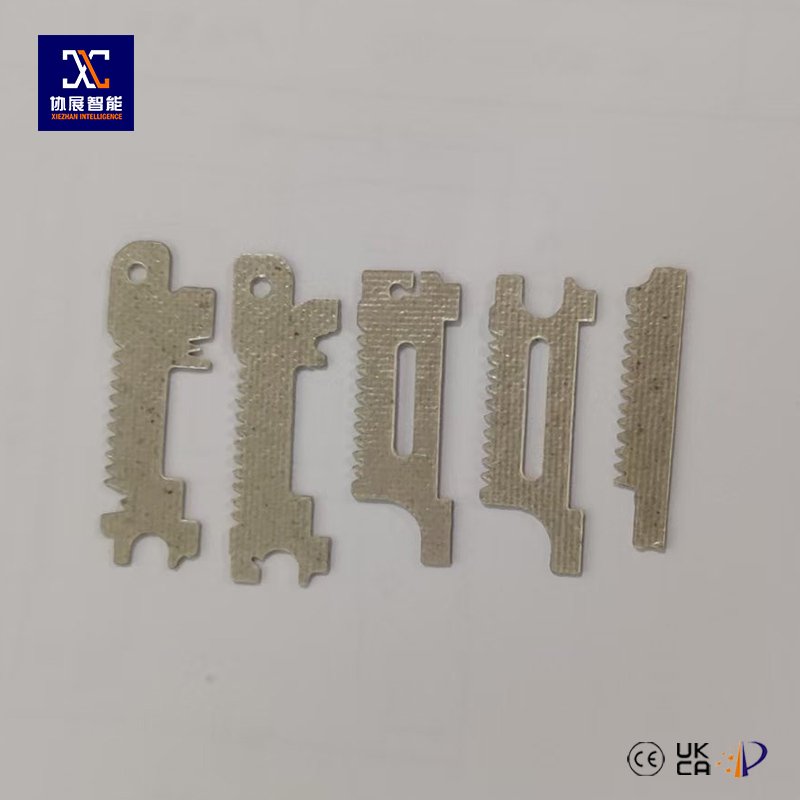
Which Production Method Is Better for High-Volume Manufacturing?
There is no universal answer because production structure matters more than equipment category alone.
However, in large-scale heater manufacturing, punch press systems combined with automated feeding equipment usually provide several operational advantages:
- Higher repetitive output
- Lower labor dependency
- Faster cycle times
- Better consistency during long production runs
Meanwhile, die cutting equipment often performs better when:
- Component geometry changes frequently
- Order quantities vary significantly
- Material handling requires greater flexibility
- Prototype production is common
From my experience working with heating element factories, the best long-term manufacturing strategy is often hybrid production. Standardized high-volume parts are processed through automated punch systems, while specialized custom components remain in flexible die cutting workflows.
Why Do Some Factories Struggle After Upgrading Equipment?
One common misconception is that simply adding automation immediately solves production inefficiency.
In reality, production instability often comes from mismatched process planning rather than insufficient machine technology.
Several recurring problems appear frequently:
- Using high-speed punch systems for low-volume custom production
- Ignoring tooling maintenance cycles
- Poor material alignment planning
- Insufficient operator training
- Underestimating mica brittleness during feeding
This is why experienced manufacturers evaluate the entire production workflow rather than selecting machines independently.
Advice for Long-Term Production Planning
Before purchasing equipment, map your product mix carefully. Factories with highly standardized products benefit more from automated punch press systems, while manufacturers handling frequent specification changes often require more flexible processing structures.
How Automation Is Changing Custom Mica Component Processing
Several years ago, many manufacturers believed automation was mainly suitable for standardized mass production. That assumption is gradually changing.
Modern servo-controlled feeding systems and programmable positioning technologies are allowing automated mica cutting solutions to support increasingly diversified product structures.
This shift is particularly important for:
- Hair dryer heating elements
- Industrial band heaters
- Compact insulation assemblies
- Multi-specification heater components
Factories capable of combining automation with production flexibility are generally adapting faster to changing customer requirements.
How Experienced Manufacturers Evaluate Equipment Stability
Professional heating element manufacturers usually focus on operational stability rather than headline machine specifications alone.
This includes evaluating:
- Continuous feeding consistency
- Servo system reliability
- Component lifespan
- Maintenance accessibility
- Material compatibility
- Long-term dimensional repeatability
At Guangdong Xiezhan, project discussions with clients typically begin with production structure analysis rather than immediately recommending a single machine category. This helps manufacturers avoid costly workflow mismatches later during scaling stages.
You can learn more about our engineering background and manufacturing capabilities on the About Us page.
Some international manufacturing cooperation projects are also available in our Client Cooperation section.
Final Thoughts from a Factory Production Perspective
The debate between mica sheet punch press systems and mica die cutting equipment is not really about which technology is universally better. The better solution depends on product structure, production scale, customization requirements, and long-term manufacturing strategy.
For standardized high-volume production, automated punch systems combined with stable feeding equipment like the XZ-SL300 often deliver stronger operational efficiency and repeatability.
For more diversified or frequently changing production requirements, flexible die cutting systems may provide better manufacturing adaptability.
The most successful factories are usually not those purchasing the most expensive equipment. They are the ones building production systems aligned with their actual manufacturing structure.
If you are currently evaluating automated mica cutting solutions or planning a custom mica component processing line, you can contact our engineering team through the Contact Us page for technical discussions and equipment recommendations.