
Finished Coil Geometry and Winding Technology Explained
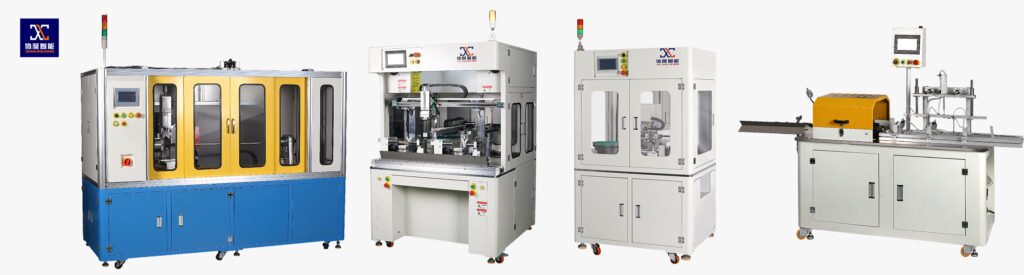
When configuring a winding machine for heating element production, many buyers focus on wire parameters first. However, the second critical layer is finished coil geometry. Mandrel diameter, coil outer diameter, pitch type, and maximum winding length directly determine spindle torque, servo synchronization logic, and structural rigidity. If geometry requirements are not clearly defined, even a well-built machine may struggle with consistency or long-term stability.
Why Coil Geometry Determines Machine Structure
In real production environments, dimensional repeatability matters more than nominal size. The geometry of the finished coil defines motion control requirements.
Mechanical Load Is Geometry-Driven
Small mandrel diameters increase bending stress and spring-back force. Long coils introduce cumulative synchronization error.
Precision Requirements Escalate With Complexity
Equal pitch winding is relatively straightforward. Variable pitch designs require coordinated multi-axis control.
1. Mandrel Diameter (Winding ID)
The mandrel diameter determines internal coil diameter and mechanical load during forming.
Small Diameter (Below φ3mm)
- Higher forming stress
- Greater elastic recovery
- Requires stable servo torque output
Medium to Large Diameter
- Lower bending resistance
- More stable shaping
- Reduced spindle load
| Mandrel Size | Machine Requirement | Key Risk |
|---|---|---|
| ≤ φ3mm | High torque precision control | Diameter deviation |
| φ4–φ8mm | Balanced rigidity | Minor pitch drift |
| ≥ φ10mm | Standard configuration sufficient | Low structural stress |
2. Coil Outer Diameter (OD)
Outer diameter is influenced by wire diameter and pitch. OD accuracy depends on synchronized feed and rotation control.
Inconsistent OD typically indicates tension fluctuation or spindle speed variation.
3. Maximum Winding Length
Machines designed for 500mm production differ significantly from 2000mm configurations.
Short-Length Production
- Lower structural deflection
- Simpler synchronization control
Long-Length Production (1000mm–2000mm)
- Higher bed rigidity required
- Increased risk of cumulative pitch error
- Stronger linear guide system recommended
4. Pitch Requirements: The Technology Divider
Pitch type is often the dividing line between standard and advanced winding machines.
Tight Winding
No spacing between turns. Common in compact heating elements.
Equal Pitch
Constant spacing between turns. Requires synchronized feed movement.
Variable Pitch
Different spacing along the same coil length. Used to control power distribution in advanced heating systems.
Variable pitch requires servo-based motion control and precise software logic.
5. Length-Based vs Resistance-Based Cutting
Traditional machines cut based on preset length. Advanced systems cut based on target resistance (Ω value).
- Length cutting – suitable for uniform material
- Ohm-based cutting – compensates for minor material variation
Resistance-based cutting significantly improves electrical consistency, particularly for export-grade heating elements.
6. Spring-Back and Compensation
All resistance wires exhibit elastic recovery after winding. Machine programming must compensate for this effect.
Without compensation algorithms, finished coil diameter may drift outside tolerance.
Future Trend: Increasing Geometry Complexity
As appliance efficiency standards rise, heating elements require more precise power distribution. This leads to increased demand for variable pitch and controlled resistance output.
Machine design must therefore prioritize multi-axis synchronization, structural rigidity, and stable servo control.
Structured Geometry Definition Before Equipment Selection
Before confirming machine configuration, review the full specification process outlined in our Complete Winding Machine Specification Guide.
At Xiezhan, as a specialized winding machine manufacturer and factory, coil geometry evaluation is always conducted before finalizing spindle structure and servo selection.
Final Advice for Engineering and Procurement Teams
Clearly define mandrel diameter range. Confirm maximum winding length. Specify pitch type precisely. Decide whether resistance-based cutting is required.
When geometry requirements are precise, machine configuration becomes predictable, scalable, and aligned with long-term production goals.