
Why Mica Is Used in Industrial Heating Elements
What Industrial Buyers Really Expect from Heating Element Insulation Materials
If you ask heating element manufacturers why they continue using mica insulation board after decades of material innovation, the answer is surprisingly practical: few materials can balance heat resistance, electrical insulation, structural stability, and manufacturing cost at the same time. In industrial heating systems, insulation failure is rarely a minor issue. It directly affects safety, product lifespan, warranty rates, and production consistency. That is why heat resistant mica remains one of the most trusted materials across appliance heating, industrial heating bands, and electrical insulation processing applications.
Over the past several years, we have discussed insulation material selection with heating element factories, OEM appliance manufacturers, and engineering teams from multiple export markets. One pattern appears repeatedly: buyers are no longer asking only “What temperature can the material withstand?” They now ask deeper operational questions involving long-term stability, forming capability, processing precision, and compatibility with automated production.
Insight
The biggest shift in industrial heating during the past decade is not higher temperature demand. It is the demand for stable insulation performance under continuous production conditions.
Survey Question 1: Why Do Most Heating Element Manufacturers Still Use Mica?
This is often the first question purchasing managers raise when evaluating alternative insulation materials.
From a technical perspective, mica insulation board provides three major advantages:
- Excellent dielectric insulation
- Stable high-temperature resistance
- Good mechanical processing capability
Many alternative insulation materials perform well in only one or two of these areas. Mica performs reasonably well across all three simultaneously, which is why it remains widely used in heating element insulation.
For manufacturers producing hair dryers, industrial band heaters, heating plates, or compact appliance heaters, material flexibility during shaping and forming also becomes important.
This explains why mica continues to dominate many heating system applications despite the availability of newer materials.
Survey Question 2: What Problems Occur When Insulation Materials Are Unstable?
When insulation quality becomes inconsistent, the consequences usually appear later in production or field operation.
| Common Issue | Typical Cause | Production Impact | Field Risk | Buyer Concern |
|---|---|---|---|---|
| Cracking During Forming | Poor Material Structure | Higher Scrap Rate | Insulation Failure | Production Stability |
| Electrical Leakage | Insufficient Insulation | Rework Increase | Safety Risk | Compliance |
| Thermal Deformation | Poor Heat Resistance | Assembly Misalignment | Reduced Lifespan | Warranty Claims |
| Dimensional Variation | Cutting Inaccuracy | Assembly Delays | Performance Instability | Mass Production Control |
One misconception among newer buyers is that insulation material problems will become obvious immediately. In reality, many issues appear only after repeated thermal cycling during long-term use.
Advice
When evaluating mica insulation board suppliers, request samples processed under real heating conditions rather than flat raw sheets only.
Survey Question 3: Why Does Processing Capability Matter as Much as Material Quality?
This is something many purchasing teams discover only after scaling production.
Even high-grade mica insulation board can create production issues if the processing equipment cannot maintain dimensional consistency.
In heating element manufacturing, insulation materials often require:
- Precision cutting
- Hole punching
- Edge trimming
- Roll forming
- Custom shaping
That is why manufacturers increasingly invest in dedicated electrical insulation processing systems.
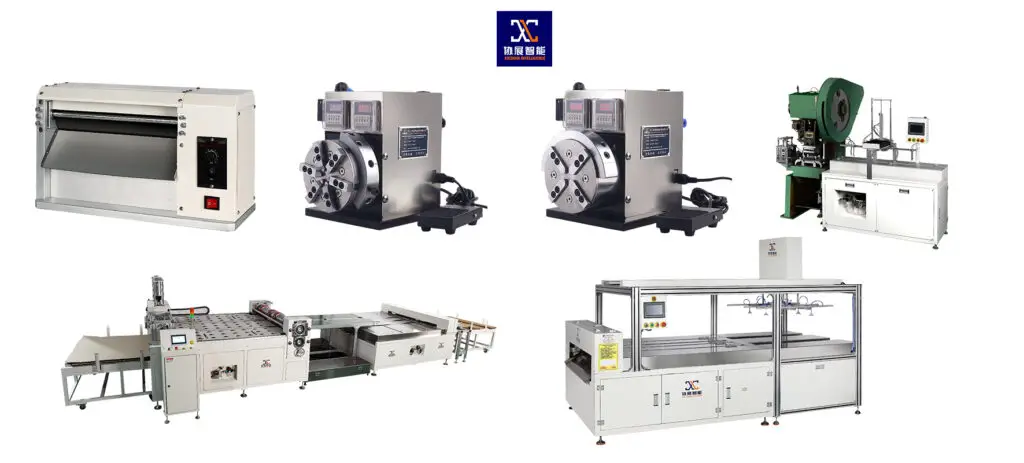
For example, automated cutting systems such as the XZ-JB1212 and XZ-XB1300 improve dimensional consistency during mica sheet preparation, while forming equipment like the XZ-J730D supports curved mica structures used in appliance heaters.
Survey Question 4: Why Is Heat Resistant Mica Still Preferred in Compact Heating Designs?
Compact heating products create unique engineering challenges.
As products become smaller, internal heat concentration increases. This places higher demands on insulation materials.
Many manufacturers prefer heat resistant mica because it offers:
- Thin structural profiles
- Stable insulation performance
- Resistance to repeated thermal cycling
- Compatibility with complex forming processes
This is especially important for:
- Hair dryers
- Industrial band heaters
- Heating plates
- Compact appliance heaters
- Portable heating systems
Factories producing export-oriented appliances also value mica because it supports more stable certification performance across large production volumes.
Advice
For compact heater applications, dimensional consistency often matters more than maximum temperature rating alone.
Survey Question 5: What Do Experienced Buyers Usually Check Before Choosing a Mica Supplier?
From actual factory discussions, experienced buyers usually focus on five areas:
| Evaluation Area | Reason | Production Impact | Common Risk | Preferred Supplier Capability |
|---|---|---|---|---|
| Heat Resistance Stability | Continuous Operation | Longer Product Life | Material Aging | Stable Raw Materials |
| Cutting Precision | Assembly Accuracy | Lower Scrap | Size Variation | CNC Processing |
| Forming Capability | Complex Heater Design | Better Product Fit | Cracking | Controlled Forming |
| Production Capacity | Stable Delivery | Supply Reliability | Delayed Orders | Automation Capability |
Why Mature Manufacturers Invest in Dedicated Mica Processing Systems
As production volumes increase, manual processing becomes difficult to control consistently.
This is why many industrial heater manufacturers gradually transition toward automated insulation processing systems.
At Guangdong Xiezhan manufacturer and factory, many customers focus not only on raw mica materials but also on how insulation materials are processed throughout the production chain.
Consistent mica sheet handling often determines:
- Assembly efficiency
- Thermal stability
- Electrical safety
- Production yield
- Long-term product reliability
This is one reason dedicated mica processing systems continue gaining importance in industrial heating production.
Industry Observation
Factories producing export-oriented heating elements increasingly prioritize process consistency over raw material cost reduction. Stable insulation performance reduces warranty risks significantly over long production cycles.
Advice
If you are sourcing heating element insulation materials for automated production, evaluate both material quality and processing compatibility together.
Final Thoughts
Mica insulation board remains widely used in industrial heating systems because it solves multiple engineering problems simultaneously. It combines heat resistance, electrical insulation, forming flexibility, and manufacturing practicality in ways few alternative materials currently match.
For experienced buyers, the real question is no longer whether mica should be used. The more important question is how consistently the material can be processed and integrated into stable heating element production.
This is why manufacturers increasingly focus on complete insulation processing capability rather than raw material sourcing alone.
You can explore our related mica processing solutions on the Mica Sheet & Mica Board Processing Machines page.
To understand how we cooperate with international manufacturers, visit our Client Cooperation section and learn more about our About Us page.
If you are evaluating insulation processing capability for heater manufacturing projects, feel free to contact our engineering team through the Contact Us page.
Contact Our Team
Similar Posts
كيفية اختيار شركة صينية موثوقة لتصنيع معدات عناصر التسخين؟
ByXiezhanكيف تعرف أن الشركة الصينية قادرة فعلاً على تصنيع الماكينة المطلوبة؟ اختيار شركة صينية لتصنيع معدات عناصر التسخين لا ينبغي أن يبدأ بالسعر أو بصورة الماكينة في الكتالوج. ابدأ بأربعة أدلة: قدرة المصنع على التصنيع، وفهم الفريق الهندسي لمنتجك، ونتائج اختبار العينة، وخطة الدعم بعد التسليم. المورد الذي يشرح كيف سيصنع منتجك ويختبره ويعالج المشكلات…
Long-Term Coil Behavior Under Thermal Stress
ByXiezhanIf your heating elements perform well at the beginning but fail after weeks or months, the issue is rarely the material itself—it is the long-term behavior of the coil under thermal stress. In real production, coil stability is determined not only by alloy quality, but by how the wire was formed during winding. A poorly…
Top Features to Look for in a Mica Processing Machine
ByXiezhanbody{ font-family:Arial,Helvetica,sans-serif; color:#111; line-height:1.6; font-size:13px; margin:0; padding:0; } .post-container{ max-width:1080px; margin:auto; padding:20px; } h1{ font-size:20px; color:#111; margin-bottom:18px; line-height:1.4; } h2{ font-size:18px; color:#111; margin-top:38px; margin-bottom:14px; border-left:4px solid #1e73be; padding-left:10px; line-height:1.5; } h3{ font-size:16px; color:#111; margin-top:28px; margin-bottom:10px; line-height:1.5; } p{ font-size:13px; color:#111; margin-bottom:16px; } ul{ padding-left:22px; margin-bottom:18px; } li{ margin-bottom:10px; color:#111; } .table-wrapper{ overflow-x:auto; margin:24px 0; }…
Mesin Winding Kawat Pemanas vs Mesin Lilit Manual: Mana yang Lebih Sesuai untuk Produksi Anda?
ByXiezhanMemilih antara mesin winding otomatis dan mesin lilit manual bergantung pada volume produksi, variasi produk, dan biaya tenaga kerja yang benar-benar ditanggung pabrik. Untuk pesanan berulang dengan spesifikasi kumparan yang ketat, otomatisasi dapat mengurangi ketergantungan pada keterampilan tangan dan membantu mengulang parameter pembentukan. Namun, untuk sampel atau pesanan kecil dengan banyak perubahan desain, proses manual…
When Should Manufacturers Upgrade to Automatic Heating Element Assembly Equipment?
ByXiezhanWhen Should Manufacturers Upgrade to Automatic Heating Element Assembly Equipment? Many manufacturers assume automation becomes necessary only after production capacity reaches its limit. In reality, the better time to upgrade is much earlier—when manual assembly starts creating inconsistent quality, longer delivery times, or increasing dependence on experienced operators. An automatic heating assembly machine should not…
Cost vs Reliability: What Experienced Buyers Prioritize
ByXiezhanCost vs Reliability: What Experienced Buyers Prioritize When industrial buyers compare machine quotations, experienced procurement managers rarely choose the lowest price automatically. They look at the cost of downtime, maintenance, rejected products, spare parts, operator adjustments, and production delays before making a decision. A machine that costs less to purchase can become the more expensive…