
What Size Mica Board Cutting Machine Fits Your Production Needs
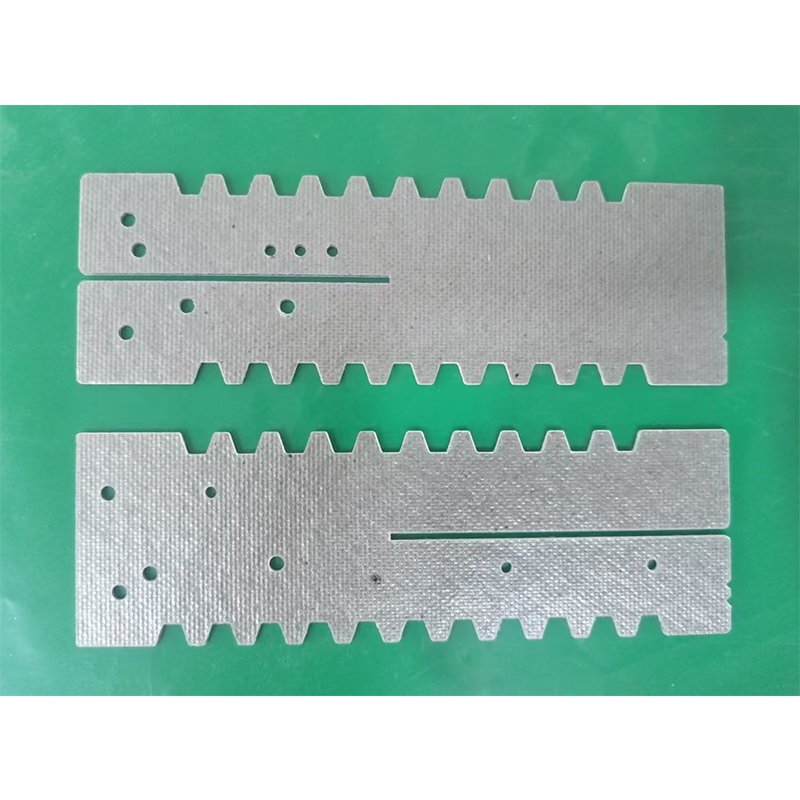
Choosing the Right Mica Board Cutting Capacity for Industrial Production
One of the first questions buyers ask is surprisingly simple: how large should a mica board cutting machine actually be? The answer is rarely determined by the maximum board size alone. Experienced manufacturers evaluate production volume, dimensional tolerance, material utilization, downstream operations, and future expansion together before selecting equipment. A machine that is too small quickly becomes a production bottleneck, while an oversized system often increases investment without creating proportional productivity. Understanding how these factors interact helps manufacturers make decisions that remain cost-effective for many years instead of only satisfying today’s requirements.
Does the Largest Machine Always Deliver the Best Value?
Many first-time buyers assume selecting the largest available machine eliminates future limitations. In practice, production economics suggest otherwise. Machine size should match the dimensions of the products being manufactured rather than the largest sheet occasionally purchased from suppliers.
From our experience serving heating element manufacturers, factories producing thermostat insulation, electric heaters, industrial ovens and household appliance components usually process several standard mica sheet dimensions repeatedly instead of continuously changing formats. When the machine stroke closely matches these production sizes, positioning becomes faster, cutting paths remain shorter, servo movement is more efficient and overall cycle time decreases.
Equipment capacity should follow long-term production planning rather than the largest board that might appear once or twice a year. Consistent utilization generates a better return than oversized specifications that remain idle most of the time.
This is exactly why manufacturers operating multiple product sizes often compare different processing solutions before making an investment. Reviewing complete equipment categories instead of evaluating a single model usually provides a clearer understanding of future production flexibility.
For example, our complete Mica Sheet & Mica Board Processing Machines include different configurations designed for varying board dimensions, cutting accuracy and production capacity, allowing manufacturers to select equipment that fits both current orders and future expansion plans.
Ask your engineering team to provide six months of actual production records before requesting quotations. In many projects, historical production data identifies the ideal cutting range more accurately than estimated future demand.
How Should Board Dimensions Influence Your Machine Selection?
Board dimensions determine much more than the maximum cutting area. They directly affect fixture design, servo travel, cutting efficiency and material handling. A common mistake is purchasing a machine based solely on the largest sheet available from a supplier. In reality, procurement teams should evaluate the dimensions that represent at least 80% of annual production. That provides a much more reliable foundation for equipment selection.
For example, manufacturers producing heating elements for hair dryers, electric ovens and industrial heaters usually process repeat orders with standardized board sizes. When the working area closely matches these dimensions, the machine spends less time repositioning, the cutting path becomes shorter, and every production cycle is more predictable. The result is higher throughput without increasing motor load or sacrificing dimensional consistency.
Our engineering team often recommends evaluating the complete production process instead of only the cutting station. If the finished parts immediately move to punching, edge trimming or forming, maintaining consistent dimensions throughout the line becomes far more valuable than simply owning a larger machine.
| Production Requirement | Recommended Working Area | Typical Model | Main Advantage | Suitable Industry |
|---|---|---|---|---|
| Small standard components | Around 1200 × 1200 mm | XZ-JB1212 | High cutting precision with efficient material utilization | Household heating elements |
| Large insulation panels | Up to 1300 × 1300 mm | XZ-XB1300 | Cutting and four-edge trimming in one process | Industrial heater manufacturers |
| Mixed production | Customized | Customized Solution | Supports multiple specifications with quick changeover | OEM factories |
When requesting quotations, provide your three most frequently used board dimensions instead of only the maximum size. This allows equipment suppliers to recommend a configuration that improves productivity rather than simply increasing machine travel.
Another consideration is future product development. If your engineering department expects gradual increases in board dimensions over the next three to five years, selecting equipment with moderate expansion capacity can be justified. However, purchasing the largest available model without a realistic production plan often results in unnecessary floor space, higher operating costs and longer material handling distances.
According to manufacturing studies published by the Fraunhofer Institute for Manufacturing Engineering and Automation (IPA), reducing unnecessary machine travel and workpiece movement is one of the most effective ways to improve production efficiency while maintaining dimensional consistency. The principle applies equally to industrial mica machining, where repetitive positioning accuracy directly influences downstream assembly quality.
If you are also evaluating raw material suppliers before finalizing equipment specifications, comparing different mica grades and manufacturing capabilities can help establish realistic production standards. Our overview of Top 13 Mica Sheet Manufacturers in China offers a useful starting point for understanding common material specifications and their impact on machining performance.
Should Thickness or Cutting Accuracy Receive More Attention?
Procurement discussions often focus on cutting accuracy because it is easy to compare numerical values on quotations. However, experienced engineers usually examine material thickness first. The reason is straightforward: thickness determines cutting resistance, tool loading, fixture stability and the consistency required from the motion system. Only after these factors are under control does the specified cutting tolerance become repeatable during continuous production.
For example, the XZ-JB1212 is designed for mica boards up to 3 mm thick, making it well suited for many appliance insulation components. When manufacturers process larger boards or require edge trimming after cutting, the XZ-XB1300 provides additional processing capability with a larger working area while maintaining stable dimensional control. The decision is therefore not about selecting the “better” machine, but choosing the one that best matches the production process.
Factories with the lowest rejection rates rarely pursue the smallest tolerance on paper. Instead, they build a process where material quality, fixture design, machine rigidity and operator consistency support each other. Stable production almost always outperforms extreme specifications that cannot be maintained over long production runs.
This is why we normally ask customers to send sample drawings before recommending a machine configuration. A component with multiple small holes, narrow slots or irregular contours may require a different cutting strategy than a simple rectangular insulation plate, even when both use the same mica material.
Request sample processing before placing a production order. Reviewing finished parts under actual production conditions is far more valuable than comparing specification sheets from different suppliers.
When Does a Standalone Cutting Machine Become Part of a Production Line?
As production volume increases, manufacturers often discover that cutting is no longer the limiting factor. Material transfer, positioning, edge finishing and subsequent assembly gradually consume more production time than the cutting operation itself. This shift changes equipment selection priorities.
From a mechanical perspective, every manual handling step introduces small positioning differences. Although each deviation may be insignificant on its own, repeated handling across hundreds or thousands of parts can reduce assembly efficiency and increase variation in finished heating elements. Integrating cutting with trimming, feeding or forming operations minimizes unnecessary handling while improving consistency throughout the production process.
This approach explains why many long-term customers expand from a single machine to a complete mica processing workflow rather than replacing equipment every few years. Instead of maximizing the performance of one workstation, they improve the stability of the entire manufacturing process.
Factories planning production beyond one shift per day should evaluate equipment compatibility before purchasing additional machines. Matching control logic, fixture standards and processing sequences across the line often produces greater long-term benefits than increasing the speed of an individual machine.
Many of these integrated solutions have been supplied to manufacturers producing heating elements for household appliances and industrial heating systems. You can explore several real application examples and completed international projects on our Client Cooperation page to see how different production requirements have been addressed in practice.
How Do You Avoid Oversizing Investment Without Limiting Future Capacity?
One of the most common procurement conflicts comes from balancing current production needs with uncertain future demand. Buyers tend to overcompensate by selecting larger equipment than necessary, expecting it to “cover everything later.” In practice, this approach often increases fixed costs without improving utilization.
From a mechanical perspective, oversized machines do not automatically increase efficiency. Larger travel distance means longer acceleration and deceleration cycles of servo systems. That introduces more energy consumption and slightly longer cycle times per part. When production does not fully use the available working area, the machine operates below its optimal dynamic range, which reduces cost efficiency per unit output.
Plan equipment selection based on “repeat production ratio” rather than peak theoretical demand. If more than 70–80% of your orders share similar dimensions, design the machine around those stable requirements instead of rare outliers.
Another factor often ignored is floor layout efficiency. Larger machines require wider safety clearance zones, longer material handling paths and more complex operator movement routes. Over time, these indirect constraints can have a greater impact on productivity than the machine’s nominal cutting capacity.
In industrial mica machining projects, productivity gains rarely come from scaling machine size. They come from reducing unnecessary movement—of material, tools, and operators—across the entire workflow.
A more balanced approach is to select a stable core machine and leave controlled flexibility for future expansion through auxiliary modules or additional units. This avoids overcapitalization while still maintaining scalability when production actually grows.
What Defines a Well-Balanced Industrial Mica Machining Setup?
A balanced setup is not defined by maximum specifications but by how smoothly each stage of production connects. In mica board processing, this typically includes cutting, trimming, stamping, feeding and forming operations. When each step is designed around consistent positioning logic, the entire workflow becomes more predictable.
For example, manufacturers using XZ-JB1212 for precision cutting often pair it with downstream forming or assembly systems to reduce manual handling. Similarly, XZ-XB1300 users benefit from integrated trimming capability, which reduces the need for secondary processing steps. The goal is not isolated performance but process continuity.
At this stage, procurement decisions become less about individual machines and more about system compatibility. Electrical standards, control architecture and fixture repeatability all influence how easily production can scale without introducing variability.
Final Decision Framework for Selecting a Mica Board Cutting Machine
At the final stage of procurement, most technical parameters have already been compared. What actually determines the right choice is how well the machine aligns with real production behavior rather than theoretical capability. A stable mica board cutting machine is not the one with the highest specification, but the one that maintains consistent output under continuous operation.
In real factory conditions, fluctuations in material quality, operator handling and order variation are unavoidable. The machine must compensate for these variables through structural rigidity, motion control stability and repeatable positioning accuracy. That is where industrial mica machining systems differ from general-purpose cutting equipment.
Before finalizing investment, simulate a full production cycle including loading, cutting, unloading and downstream handling. Many inefficiencies only appear when the entire workflow is tested, not when machines are evaluated individually.
Why Supplier Capability Matters as Much as Machine Selection
Even with the correct machine model, long-term production stability depends heavily on supplier support. Installation guidance, spare parts availability and process optimization advice often determine whether a production line runs smoothly or suffers frequent downtime.
In industrial mica applications, small deviations in setup can affect cutting consistency over time. That is why many manufacturers prefer working with suppliers who understand both equipment structure and downstream heating element production requirements, rather than treating machines as standalone products.
Long-term production stability is usually achieved after the first optimization cycle, not at installation. Factories that continuously refine cutting parameters and fixture alignment typically outperform those that rely only on initial factory settings.
Conclusion What Actually Determines the Right Machine Size
Selecting the right mica board cutting machine is ultimately a decision based on production logic rather than equipment size. Board dimensions, material thickness, workflow integration and long-term production planning all interact to define the optimal configuration.
Factories that achieve stable output usually do not rely on oversized machines or extreme specifications. Instead, they build a controlled and repeatable process where each stage is matched to real production demand.
If you are currently evaluating different configurations or planning a new production line, you can directly reach out for a technical discussion. Our engineering team can review your drawings, recommend suitable models such as XZ-JB1212 or XZ-XB1300, and help align equipment selection with actual production conditions.
For detailed machine selection support, process evaluation or customized mica machining solutions, please visit: Contact Us