
How Mica Sheets Are Cut, Punched, and Formed in Modern Factories
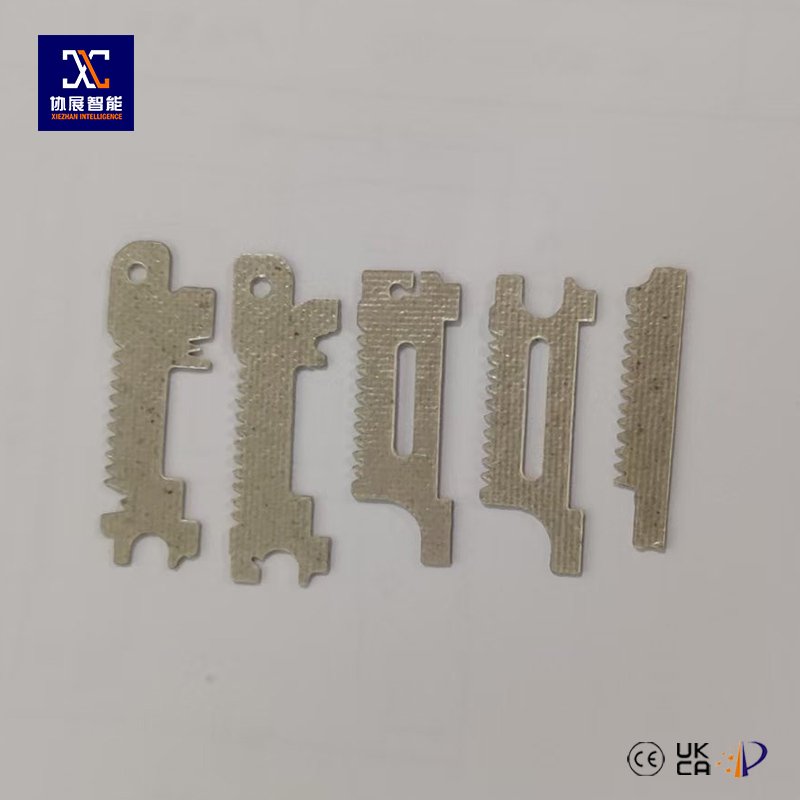
Inside Modern Mica Processing: From Raw Sheet to Finished Heater Component
If you ask experienced heater manufacturers what determines the quality of a mica heating product, most will not immediately mention the heater wire. They will talk about the mica processing workflow first. The reason is simple. Every punching position, cutting edge, forming angle, and dimensional tolerance directly affects the final assembly quality. Modern factories no longer view mica cutting as a standalone process. Instead, cutting, punching, and forming are managed as a connected manufacturing system designed to improve consistency, reduce waste, and simplify assembly.
Many production defects blamed on heater assembly actually originate during the earliest mica sheet processing stages. Better processing stability often delivers larger quality improvements than increasing assembly inspection.
Why Has Mica Processing Become More Sophisticated in Recent Years?
Ten years ago, many factories relied heavily on manual cutting and simple punching equipment. Product tolerances were relatively loose, and production volumes were lower.
Today, manufacturers face a completely different environment.
- More customized heater designs
- Higher export quality expectations
- Smaller dimensional tolerances
- Labor shortages in many markets
- Greater pressure on production efficiency
As a result, modern mica sheet processing machine systems have evolved from basic cutting tools into highly integrated manufacturing solutions.
What Happens Before Cutting Begins?
Many buyers focus on the cutting machine itself while overlooking the preparation stage.
In reality, successful industrial mica machining starts with material evaluation.
Before processing begins, operators typically inspect:
- Sheet thickness consistency
- Surface flatness
- Moisture condition
- Lamination quality
- Material density variation
Factories producing heating elements often reject defective material before it reaches production because downstream correction costs are significantly higher.
Experienced manufacturers understand that even the most advanced machine cannot fully compensate for unstable raw material.
Step 1: Precision Cutting of Mica Sheets
Cutting is usually the first major production operation.
The objective is straightforward: create accurately sized blanks that can move through subsequent processes without dimensional variation.
For large-scale heater manufacturing, CNC cutting systems have become increasingly common.
For example, the XZ-XB1300 Fully Automatic Mica Board Four Edge Trimming and Cutting Machine supports board dimensions up to 1300×1300mm with cutting accuracy reaching ±0.2mm. This allows manufacturers to maintain consistent dimensions throughout long production runs.
Another widely used solution is the XZ-JB1212 Fully Automatic Mica Board Cutting Machine, designed for medium-thickness mica board processing and continuous production environments.
The biggest advantage of CNC cutting is not maximum speed. It is repeatability. Buyers focused on export-quality production usually care more about dimensional consistency than peak output figures.
Why Do Some Factories Still Use Traditional Cutting Equipment?
This is a question buyers frequently ask.
The answer depends on production structure.
Traditional cutting systems still perform well when:
- Production batches are small
- Product designs change frequently
- Operators have extensive experience
- Investment budgets are limited
However, as order volume increases, manual positioning and repeated adjustments often become bottlenecks.
This is where modern mica sheet processing machine systems begin delivering measurable advantages.
Step 2: Punching Operations That Prepare for Assembly
Once sheets are cut, the next stage is punching.
Punching creates holes, slots, mounting locations, and structural features required during assembly.
This stage appears simple on paper, yet it is responsible for many production issues.
Common problems include:
- Hole misalignment
- Edge cracking
- Tool wear
- Dimensional drift
- Feeding inconsistencies
Factories producing heating elements often discover that punching stability directly influences assembly efficiency later in the process.
How Do Modern Factories Reduce Punching Defects?
The answer is not simply using larger machines.
Successful manufacturers typically improve three areas simultaneously:
- Material positioning accuracy
- Tooling precision
- Feeding consistency
Automated feeding systems have become increasingly important because they remove much of the variation caused by manual handling.
This is particularly important when processing thin mica sheets where even small positioning deviations become noticeable.
| Production Stage | Main Equipment | Primary Objective | Common Challenge | Expected Result |
|---|---|---|---|---|
| Material Inspection | Inspection Tools | Verify Material Stability | Thickness Variation | Consistent Processing Quality |
| Sheet Cutting | XZ-XB1300 / XZ-JB1212 | Dimensional Accuracy | Tolerance Deviation | Stable Production Batches |
| Punching | Punch Press Systems | Feature Creation | Hole Misalignment | Improved Assembly Accuracy |
| Forming | Mica Forming Equipment | Shape Development | Material Stress | Reliable Product Geometry |
| Final Inspection | Testing Equipment | Quality Verification | Hidden Defects | Stable Shipment Quality |
Step 3: The Mica Forming Process Explained
After cutting and punching, many products require shaping or forming.
The mica forming process transforms flat sheets into structures required for heaters, insulation assemblies, and specialized industrial applications.
Depending on product requirements, forming may involve:
- Bending
- Rolling
- Molding
- Profile shaping
A good example is the XZ-J730D Mica Paper Molding Machine, which is commonly used for producing round mica components used in heating systems such as hair dryers.
The challenge during forming is controlling stress distribution. Excessive force may create cracks, while insufficient force can produce unstable geometry.
What Separates Efficient Factories from Average Factories?
Many buyers assume the answer is automation alone.
In practice, the difference is workflow integration.
The most successful factories create smooth transitions between:
- Cutting
- Punching
- Forming
- Assembly
- Inspection
Every unnecessary handling step introduces potential variation.
That is why integrated industrial mica machining solutions continue gaining popularity among manufacturers serving international markets.
How Buyers Evaluate Mica Processing Equipment Suppliers
Professional procurement teams rarely focus on machine specifications alone.
They also evaluate whether the manufacturer understands production realities.
Important considerations include:
- Material compatibility
- Maintenance accessibility
- Tooling support
- Future scalability
- After-sales service
This explains why many global manufacturers prefer working directly with specialized factories rather than general equipment traders.
For buyers evaluating different processing solutions, reviewing established mica material suppliers can also be valuable:
Top 13 Mica Sheet Manufacturers
Building a Complete Mica Processing Line
A complete production line usually combines multiple specialized machines rather than relying on one piece of equipment.
Many international customers explore complete solutions through:
Mica Sheet & Mica Board Processing Machines
Real-world customer projects often demonstrate how production efficiency improves when cutting, punching, and forming systems are designed together:
Final Thoughts
Modern mica processing is no longer just about cutting sheets into smaller pieces. It is a coordinated manufacturing workflow that directly influences product quality, assembly efficiency, and long-term production stability.
Factories investing in reliable mica sheet processing machine solutions typically achieve better consistency because every stage—from cutting and punching to the final mica forming process—is engineered to support the next step.
If you are evaluating industrial mica machining equipment or planning a new production line, our engineering team can help assess the most suitable configuration based on your material specifications and production objectives.