
Why Nichrome Wire Requires Specialized Winding Machines
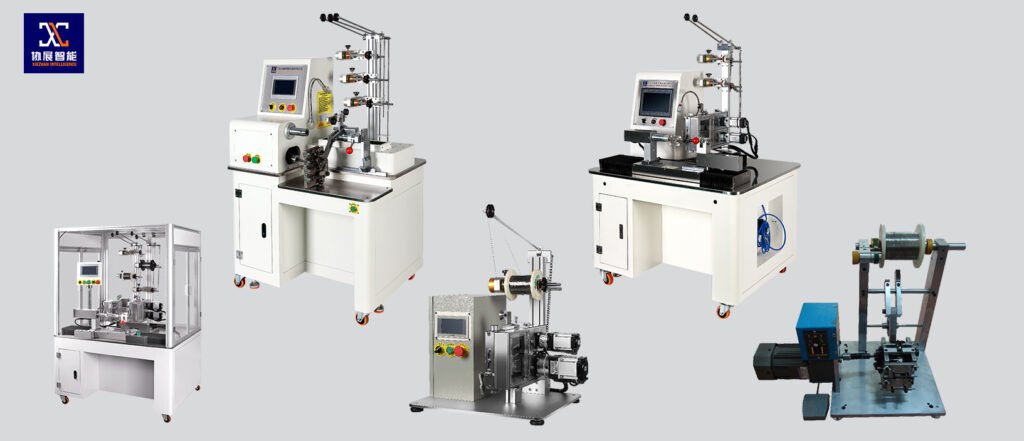
Understanding the Real Reason Behind Nichrome Winding Challenges
If you are sourcing equipment for heating element production, one question usually comes up early: why can’t a standard wire winding machine handle nichrome wire properly? The short answer is control—nichrome behaves differently under tension, heat, and deformation. Without dedicated winding control, you will see unstable pitch, coil deformation, and inconsistent resistance values. These are not small issues; they directly affect product lifespan and rejection rates.
Before going deeper, if you’re still evaluating suppliers, you may want to review this nichrome wire winding machine manufacturers comparison to understand how different factories approach this problem.
Why does nichrome wire behave differently during winding?
Nichrome is not just another resistance wire. Its alloy composition gives it high temperature resistance, but also introduces mechanical characteristics that make winding more sensitive.
1. Higher spring-back effect
Compared to standard resistance wire, nichrome tends to “recover” after deformation. This means:
- Coil diameter becomes inconsistent
- Pitch spacing shifts after winding
- Final shape deviates from programmed settings
2. Sensitivity to tension variation
Even small fluctuations in tension can lead to:
- Uneven coil spacing
- Micro cracks in wire surface
- Resistance variation in finished products
According to industry data (International Journal of Advanced Manufacturing Systems), tension instability can increase defect rates by up to 25% in high-temperature alloy winding.
What happens when you use a standard winding machine?
This is where many buyers make costly assumptions. A general-purpose winding machine may seem sufficient, but real production tells a different story.
| Factor | Standard Machine | Specialized Machine |
|---|---|---|
| Tension Control | Manual / basic | Closed-loop system |
| Pitch Accuracy | ±10% | ±2% |
| Consistency | Operator dependent | Machine controlled |
How specialized winding machines solve these problems
Precision tension control system
Modern nichrome wire winding machines integrate servo-driven tension systems. Instead of relying on mechanical brakes, tension is actively adjusted in real time.
Adaptive pitch correction
Advanced machines compensate for spring-back by adjusting pitch dynamically during winding.
- Real-time feedback loops
- Programmable coil geometry
- Consistent output across batches
Material-specific tooling
Specialized fixtures and guides reduce friction and deformation, especially for flat or corrugated nichrome wire.
| Parameter | Typical Range | Impact |
|---|---|---|
| Wire Diameter | 0.05–2.0 mm | Coil strength |
| Pitch Accuracy | ±0.02 mm | Heating uniformity |
| Speed | 200–800 RPM | Production efficiency |
What experienced buyers actually look for
After working with multiple heating element manufacturers, the decision rarely comes down to price alone. Buyers focus on long-term stability.
Machines running slightly slower but consistently produce better ROI due to lower rejection rates.
Equipment must integrate with mica processing and assembly lines, not operate in isolation.
Manufacturers with real heating element project cases reduce trial-and-error significantly.
You can see actual project cooperation examples here: client cooperation cases
Why working with an experienced manufacturer matters
At Xiezhan, we don’t just supply machines—we work with full production scenarios, including mica processing and heating element assembly.
Learn more about our background here: about our factory
Final thought: it’s not about the machine, it’s about control
Nichrome wire winding is not complicated—but it is unforgiving. Small variations quickly become large defects in final products.
If you’re planning a new production line or upgrading your current setup, it’s worth discussing your application in detail. Talk to our engineering team and get a solution based on your exact product requirements.