
Complete Heating Element Assembly Line Solutions for Industrial Manufacturers
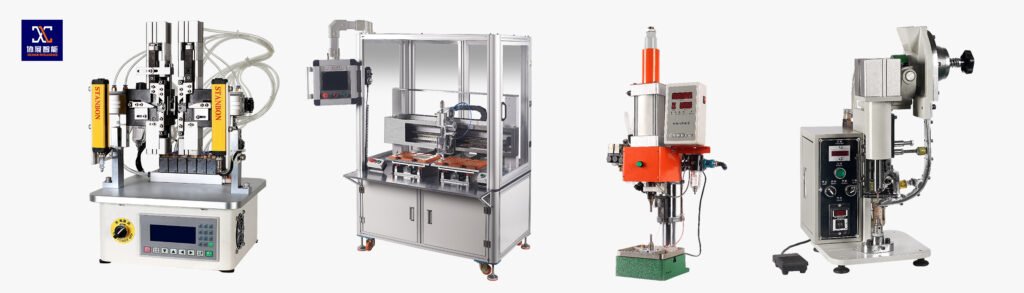
Complete Heating Element Assembly Line Solutions for Industrial Manufacturers
Large heating element manufacturers usually do not need another standalone machine. They need a production system where every process works together. The biggest mistake in assembly line planning is focusing only on individual machine speed while ignoring process balance. A complete heating element assembly line connects looping, riveting, terminal fixing, marking and testing processes into one stable workflow, helping manufacturers achieve consistent quality, predictable output and easier future expansion.
Why Is Buying Individual Machines Often Not Enough for Large Heating Element Manufacturers?
When production demand increases, many factories naturally start by upgrading the machine with the lowest output. This approach seems reasonable because improving one process appears faster and easier than redesigning the entire production workflow.
However, experienced manufacturing managers understand that a production line is not a collection of independent machines. It is a connected system. The performance of one process directly affects the efficiency of the next process.
For heating element manufacturing, the final output depends on how smoothly different operations work together:
- Wire forming and looping accuracy
- Copper wire riveting consistency
- Terminal positioning stability
- Marking accuracy
- Electrical performance testing reliability
Improving only one workstation may increase local speed, but it does not always increase finished product output.
Reason → Mechanical Principle → Result
Reason → Every production line has a natural rhythm. When one machine operates faster than the surrounding processes, semi-finished products accumulate between workstations instead of becoming finished products faster.
Mechanical Principle → A balanced assembly line controls the relationship between cycle time, material transfer and process sequence. Each machine performs its function within a coordinated production flow instead of operating as an isolated unit.
Result → Manufacturers achieve higher effective capacity, fewer production interruptions and more stable product quality.
This is why large factories often evaluate industrial assembly solutions instead of simply purchasing individual equipment based on speed specifications.
In high-volume heating element production, the strongest production line is not necessarily the one with the fastest single machine. It is the one where every process operates at a balanced rhythm, allowing materials to move smoothly from the first forming step to final inspection.
What Processes Should Be Included in a Complete Heating Element Assembly Line?
A complete production line should be designed according to the actual heating element manufacturing process rather than based on a fixed equipment list. Different products may require different combinations of forming, joining and testing operations.
However, large-scale manufacturers usually need several core processes because each stage solves a specific production challenge.
| Equipment Category | Main Process | Manufacturing Function | Production Value | Typical Application |
|---|---|---|---|---|
| Looping Machines | Wire Forming | Creates consistent wire geometry | Improves downstream positioning accuracy | Heating wire components |
| Riveting Machines | Wire Connection | Provides stable mechanical joining | Reduces connection variation | Terminal and copper wire assembly |
| Terminal Fixing Equipment | Terminal Positioning | Maintains fixed installation position | Improves assembly consistency | Electric heating components |
| Marking Machines | Product Identification | Creates traceability information | Supports quality management | OEM production |
| Dry Burning Machines | Performance Testing | Checks heating performance stability | Reduces defective products reaching customers | Finished heating elements |
The important point for procurement teams is that these machines should not be selected separately. Their relationship determines the final production result.
For example, improving a terminal crimping machine without improving the accuracy of the previous forming process may not create the expected quality improvement. The terminal position itself may already contain variation from earlier stages.
Professional Judgment
When planning a large production line, experienced engineers usually start from the finished product requirements and work backward through every manufacturing step. This reverse planning method identifies which processes require the highest precision and which operations can be upgraded gradually.
Manufacturers looking for integrated equipment combinations can review different configurations within our Heating Element & Assembly Machines category to understand how different machines can work together in practical production environments.
How Should Manufacturers Match Assembly Line Equipment With Production Requirements?
A common mistake during production line planning is selecting equipment according to machine specifications before understanding the actual manufacturing environment. Large manufacturers usually have different priorities depending on product type, annual output, customer requirements and future expansion plans.
A factory producing standard heating elements for long-term OEM contracts may require a completely different configuration from a manufacturer producing multiple customized models. The equipment combination should follow the production strategy, not the other way around.
Reason → Mechanical Principle → Result
Reason → Different factories experience different production constraints. Some are limited by labor availability, some by quality consistency, and others by changing product requirements.
Mechanical Principle → A properly designed automated assembly equipment system assigns each process to the most suitable machine while maintaining a balanced production rhythm between operations.
Result → Manufacturers avoid unnecessary investment, improve equipment utilization and create a production line that can support both current orders and future growth.
| Factory Type | Main Production Challenge | Recommended Equipment Focus | Key Decision Factor | Expected Result |
|---|---|---|---|---|
| Small OEM Manufacturer | Limited labor efficiency | Semi-automatic forming and riveting equipment | Flexible production | Lower manual dependency |
| Medium Production Factory | Increasing orders and quality control pressure | Looping, riveting and marking integration | Stable daily output | Improved consistency |
| Large Export Manufacturer | High-volume production requirements | Complete assembly line configuration | Process balance | Predictable production capacity |
| Appliance Component Supplier | Strict customer quality requirements | Automated assembly and testing system | Traceability and repeatability | Stable OEM supply capability |
This matching process explains why there is no universal “best” assembly line. The best solution is the one that matches the manufacturer’s production reality.
For example, a factory producing one standardized heating element model at high volume may benefit from a highly automated workflow. Another factory producing many variations may achieve better results with modular equipment that allows easier product changeover.
Why Does Production Line Balance Matter More Than Individual Machine Speed?
Many purchasing discussions begin with a simple question:
“How many pieces can this machine produce per minute?”
This is an important question, but it does not provide the complete picture. In a complete heating element manufacturing process, the final output depends on the relationship between every workstation.
A faster machine does not always create a faster production line.
Reason → Mechanical Principle → Result
Reason → The slowest or least stable process often determines the actual production capacity of the complete line.
Mechanical Principle → Assembly line machinery works most efficiently when cycle times between processes are balanced. Material movement, machine loading and inspection timing must operate together.
Result → The factory achieves higher effective output because fewer products wait between processes and fewer resources are wasted.
When comparing suppliers, do not only ask for the fastest machine specification. Ask how the equipment connects with the previous and following processes. A well-balanced production line usually creates more value than a single high-speed machine operating alone.
This is especially important for heating element manufacturers because the production sequence contains several precision-dependent steps. Loop forming affects riveting. Riveting affects terminal connection quality. Terminal positioning affects final testing performance.
The entire process must work together.
How Can Manufacturers Build a Production Line That Supports Future Expansion?
Large manufacturers rarely plan only for today’s orders. They consider how equipment will support future product growth, new customers and increased production volume.
A well-designed assembly line should allow additional equipment to be added without completely rebuilding the production layout.
This is why modular planning has become increasingly important in industrial manufacturing.
How Can Manufacturers Build a Production Line That Supports Future Expansion?
Large manufacturers rarely plan equipment investment only for current orders. A production line that meets today’s demand but cannot adapt to future product changes may become a limitation after only a few years.
This is why experienced engineering teams usually consider scalability before purchasing heating parts assembly machinery. The goal is not simply to complete today’s production tasks, but to create a manufacturing foundation that can support future business growth.
Reason → Mechanical Principle → Result
Reason → Heating element manufacturers often expand product ranges, accept larger OEM orders or modify designs according to customer requirements. A fixed production structure can create difficulties when these changes happen.
Mechanical Principle → A modular assembly line allows manufacturers to add, replace or upgrade individual processes without completely redesigning the entire workflow. Equipment such as riveting machines, looping machines, marking systems and testing machines can be configured according to production needs.
Result → Factories gain flexibility, reduce future investment risks and maintain production continuity during expansion.
The most valuable automation projects are not always the ones with the highest automation level at the beginning. They are the ones designed with a clear upgrade path, allowing manufacturers to increase capacity step by step without replacing the entire production system.
For example, a manufacturer may initially automate wire forming and riveting because these processes create the largest labor dependency. Later, the same production line can be expanded with marking and dry burning testing equipment when customer requirements increase.
This approach reduces investment pressure while keeping the production system prepared for future development.
How Do Different Assembly Machines Work Together in a Complete Heating Element Manufacturing Process?
A complete production line is successful when every machine contributes to the final product quality. The purpose of integration is not simply connecting machines physically, but ensuring that each process creates the correct condition for the next process.
The typical manufacturing flow can be understood as a continuous quality chain:
Wire Forming → Looping → Riveting → Terminal Fixing → Marking → Dry Burning Testing → Final Inspection
Engineering Experience
In practical production environments, problems found during final testing are often caused by earlier processes. For example, unstable electrical performance may not always come from the testing stage itself. Incorrect terminal positioning or inconsistent connection pressure during previous assembly steps can influence the final result.
This is why professional production planning focuses on preventing problems before they move downstream.
| Process Stage | Main Equipment | Critical Control Point | Quality Influence | Production Benefit |
|---|---|---|---|---|
| Loop Forming | Looping Machine | Wire shape consistency | Improves assembly positioning | Reduces adjustment time |
| Connection Assembly | Riveting Machine | Riveting pressure stability | Improves connection reliability | Reduces defective products |
| Identification | Marking Machine | Mark position accuracy | Supports product tracking | Improves production management |
| Performance Testing | Dry Burning Machine | Heating performance stability | Improves final reliability | Protects customer quality standards |
This process-based thinking is especially important for international manufacturers supplying different markets. Customer expectations are becoming stricter, and production consistency has become a key factor in maintaining long-term cooperation.
Our engineering experience comes from working with manufacturers who require different production capacities, product structures and automation levels. More examples of cooperation approaches can be viewed through our Client Cooperation projects.
What Should Procurement Teams Evaluate Before Investing in an Assembly Line?
The final purchasing decision should not be based only on machine quantity or initial price. A complete production line is a long-term manufacturing asset, so evaluation should include technical capability, service support and future operating requirements.
- Production capacity matching current and future demand
- Compatibility between different assembly processes
- Maintenance convenience and spare part availability
- Supplier engineering support during installation and adjustment
- Ability to upgrade the line when production requirements change
A reliable supplier should understand not only how to build machines, but also how those machines fit into the customer’s actual production environment.
Understanding the manufacturing background and engineering capabilities of a supplier is an important step before making a long-term equipment investment. More information about our company experience and production approach is available on our About Us page.
How Can Manufacturers Select the Right Heating Element Assembly Line Partner?
Choosing a production line supplier is not only a machine purchasing decision. For large manufacturers, it is a long-term cooperation decision because equipment performance directly affects production stability, delivery capability and future expansion.
A supplier with only equipment manufacturing experience may provide individual machines, but a reliable assembly line partner should understand the relationship between production process, equipment configuration and final product requirements.
Reason → Mechanical Principle → Result
Reason → Every heating element manufacturer has different product structures, production volumes and quality requirements. A standard equipment package cannot always solve different manufacturing challenges.
Mechanical Principle → Professional equipment planning starts from the production process and works backward to determine suitable machines, layout and automation level. This approach ensures that each workstation supports the next operation.
Result → Manufacturers receive a production solution that fits their actual needs instead of purchasing equipment that requires major modification after installation.
Before selecting a supplier, procurement teams usually evaluate several important areas:
- Engineering Understanding: Can the supplier analyze your product structure and recommend suitable processes?
- Equipment Compatibility: Can different machines work together as one production system?
- Application Experience: Has the supplier worked with similar heating element manufacturing requirements?
- After-Sales Support: Can technical assistance be provided during installation and production adjustment?
For industrial manufacturers, these factors often create more long-term value than choosing equipment only based on initial purchase cost.
Frequently Asked Questions About Heating Element Assembly Line Solutions
1. What machines are required for a complete heating element assembly line?
A complete line depends on the heating element design and production requirements. Common equipment includes looping machines, riveting machines, terminal fixing equipment, marking machines and dry burning testing machines. Large manufacturers usually combine these machines according to production flow rather than purchasing every machine separately.
2. Should manufacturers invest in a complete assembly line or upgrade machines step by step?
Both approaches can be suitable. Manufacturers with stable high-volume production often benefit from complete line planning because process balance is easier to achieve. Factories with limited investment budgets may upgrade critical processes first and expand automation gradually.
3. How can a heating element assembly line improve production efficiency?
Efficiency improves because the production process becomes more consistent. Automated equipment reduces manual variation, improves process connection and allows manufacturers to control quality at earlier production stages instead of relying only on final inspection.
Final Thoughts: Plan the Production System Before Buying the Machine
For large heating element manufacturers, the biggest improvement usually does not come from buying the fastest individual machine. It comes from designing a production system where every process supports the next one.
A well-planned heating element assembly line combines forming, joining, marking and testing processes into a stable workflow. This reduces production uncertainty, improves quality consistency and creates a stronger foundation for future expansion.
The right equipment solution depends on your product design, production volume and manufacturing goals. Whether you need individual machines or a complete industrial assembly solution, professional evaluation before purchasing can help avoid unnecessary investment and production disruption.
At Guangdong Xiezhan, we focus on understanding the actual production challenges behind each project. Our goal is not only to supply machines, but to help manufacturers build practical production solutions that match their workflow and future requirements.
If you are planning a new heating element production line or upgrading an existing factory process, you can contact our team to discuss your production requirements and possible equipment configuration.
- A production line should be planned as one system instead of a group of separate machines.
- Process balance is often more important than individual machine speed.
- Equipment selection should follow product requirements, production volume and future expansion plans.
- Looping, riveting, marking and testing processes must work together to achieve stable output.
- A reliable supplier should provide engineering support, not only equipment delivery.