
How Loop Forming Machines Improve Heating Element Manufacturing Accuracy
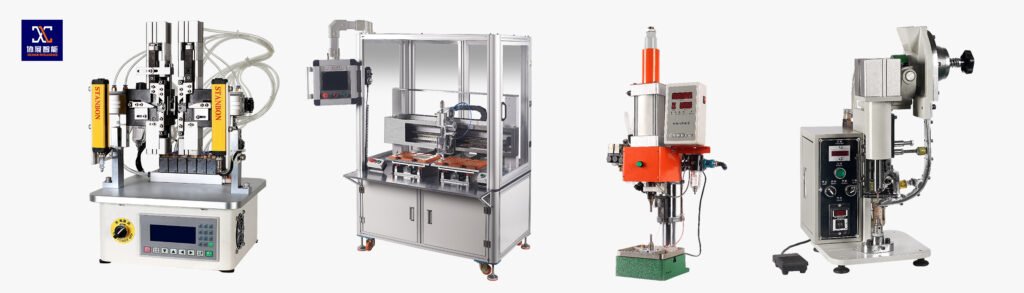
How Loop Forming Machines Improve Heating Element Manufacturing Accuracy
Many buyers focus on riveting or terminal assembly when evaluating a heating element production line. In practice, production accuracy is often determined much earlier. If loop dimensions vary at the beginning of the process, every downstream operation must compensate for that deviation. A precision loop forming machine helps establish a consistent reference point, allowing riveting, end processing and final assembly to operate under stable conditions rather than correcting avoidable errors later in production.
Why Does Loop Accuracy Influence Every Following Manufacturing Process?
Loop forming is sometimes viewed as a simple bending operation, but experienced production engineers rarely see it that way. In heating element manufacturing, the loop is usually the first dimensional feature created after wire preparation. Once that reference changes, every following workstation receives a component in a slightly different position.
This explains why two production lines using the same riveting equipment may achieve completely different quality levels. The difference often originates upstream rather than at the riveting station itself.
Reason → Mechanical Principle → Result
Reason → Every heating element requires the resistance wire to enter the following assembly process with a repeatable position and geometry. Even small variations in loop size can change how the component is located during subsequent operations.
Mechanical Principle → A loop forming machine controls wire feeding, bending angle and positioning through dedicated tooling instead of depending entirely on manual handling. Each production cycle follows the same forming sequence, minimizing dimensional fluctuation between parts.
Result → Copper wire riveting, terminal positioning and heating element end processing become more stable because downstream equipment receives components with nearly identical geometry.
From a procurement perspective, this means improving loop consistency often increases the effectiveness of the entire production line rather than benefiting only one workstation.
| Production Scale | Typical Output Target | Loop Forming Method | Recommended Capacity Strategy | Investment Priority |
|---|---|---|---|---|
| Prototype Production | Small Batch | Manual or Semi-Automatic | Maximum flexibility | Low |
| OEM Manufacturing | Medium Volume | Dedicated Loop Forming Equipment | Balanced quality and productivity | High |
| Export Production | Continuous Production | Automatic Loop Forming | Stable process capability | Very High |
| Large Appliance Supplier | High Volume | Integrated Forming Line | Maximum consistency | Long-Term Planning |
In many heating element factories, engineers initially focus on improving the final assembly process. Production data often shows the opposite approach delivers better results. When the first loop is formed consistently, downstream stations require fewer corrections, inspections and adjustments throughout the entire manufacturing process.
Which Loop Forming Equipment Is Better for Different Manufacturing Scenarios?
Selecting equipment should begin with the product rather than the machine. Manufacturers producing different heating element designs rarely share identical production priorities. Some require flexibility because product dimensions change frequently, while others prioritize repeatability for long production runs.
This is why comparing specifications alone often leads to the wrong purchasing decision. A more practical method is matching equipment capability with production requirements.
| Machine Model | Suitable Products | Production Focus | Primary Advantage | Recommended Application |
|---|---|---|---|---|
| XZ-Q113 Single Head Looping Folding Machine | Heating elements requiring consistent loop geometry | Stable continuous production | Repeatable loop dimensions | General heating component assembly |
| XZ-Q110W Fuse Foot Cutting and Looping Machine | Fuse wire and terminal processing | Integrated cutting and looping | Reduced handling steps | High-mix production |
Neither machine is universally better. The decision depends on production objectives. The XZ-Q113 Single Head Looping Folding Machine is well suited for manufacturers emphasizing repeatable loop geometry across continuous production, while the XZ-Q110W Fuse Foot Cutting and Looping Machine supports applications where cutting and looping are combined into one operation to simplify workflow.
When factories report unstable riveting quality, many immediately inspect the riveting machine. During production evaluations, we often discover the root cause much earlier in the process. Variations in loop dimensions frequently create inconsistent positioning at the riveting station, making it difficult for even high-quality riveting equipment to deliver repeatable results.
For manufacturers planning to improve multiple production stages, reviewing complete Heating Element & Assembly Machines before selecting individual equipment usually provides a clearer understanding of how each process fits into the overall production workflow.
Which Production Data Should Buyers Evaluate Before Purchasing Loop Forming Equipment?
Equipment specifications tell only part of the story. Before selecting a loop forming solution, experienced procurement teams usually review production data collected directly from the manufacturing floor. These numbers reveal whether current production problems are caused by equipment capability, process design or operator variation.
Interestingly, many factories concentrate on output per hour while overlooking the data that has a greater influence on profitability. Loop dimensional variation, operator intervention frequency and downstream rework often create higher hidden costs than a difference of several production cycles per minute.
Reason → Mechanical Principle → Result
Reason → Every manual adjustment made during production introduces additional variation. Even if the finished product passes inspection, repeated adjustments reduce production efficiency and increase operating costs.
Mechanical Principle → A dedicated precision forming equipment maintains stable wire positioning and repeatable bending geometry throughout continuous production. This minimizes the need for operator corrections and keeps downstream processes working under predictable conditions.
Result → Production planning becomes more reliable, inspection workload decreases and equipment utilization remains more consistent during long production shifts.
| Quality Indicator | Recommended Monitoring | Manual Production Risk | Machine Control | Production Impact |
|---|---|---|---|---|
| Loop Dimension | Continuous sampling | Operator variation | Controlled forming path | Stable positioning |
| Loop Angle | Angle inspection | Uneven bending | Fixed tooling | Improved assembly fit |
| Wire Position | Fixture verification | Offset during handling | Repeatable locating | Reduced downstream correction |
| Rework Rate | Daily production review | Increasing adjustment | Stable production process | Lower operating cost |
Production reviews in heating element manufacturing consistently show that reducing variation during the first forming process has a measurable effect on every downstream operation. Manufacturers frequently report fewer manual adjustments, more stable riveting alignment and smoother final assembly once loop consistency improves, even without increasing machine speed.
Why Does Loop Consistency Matter More Than Higher Production Speed?
During equipment selection meetings, buyers often compare cycle time first because it is one of the easiest specifications to measure. However, experienced production managers usually ask a different question: Can the machine maintain the same loop quality after eight hours of continuous production?
This question reflects a deeper understanding of manufacturing performance. Short production tests can make many machines appear similar. The real difference becomes visible only after thousands of consecutive forming cycles, when tooling wear, material variation and machine stability begin affecting production quality.
Professional Judgment
Reason → Continuous production naturally introduces small variations in raw materials, operator handling and tooling conditions. If the forming process has a narrow operating window, these variations accumulate throughout the day.
Mechanical Principle → Stable resistance element fixture design, combined with accurate wire guidance and repeatable forming mechanisms, allows the machine to maintain consistent loop geometry despite normal production fluctuations.
Result → Manufacturers experience fewer unexpected adjustments, more predictable inspection results and better production scheduling because downstream workstations continue receiving components with consistent dimensions.
Instead of asking suppliers only about maximum production speed, request production records showing dimensional consistency during extended continuous operation. A machine maintaining stable loop geometry over an entire production shift usually creates greater long-term value than one achieving a slightly faster theoretical cycle time.
This evaluation method is becoming increasingly common among manufacturers supplying international appliance brands, where production consistency is often considered just as important as production capacity.
What Industry Trends Are Driving Greater Demand for Loop Forming Equipment?
Over the past decade, heating element manufacturers have faced a noticeable shift in customer expectations. Buyers are no longer evaluating suppliers solely on production capacity or price. Consistency, traceability and process stability have become equally important, especially for companies supplying household appliance brands, industrial heating systems and OEM production programs.
This change has increased attention on earlier manufacturing processes, including loop forming. Instead of treating loop geometry as a simple dimensional requirement, manufacturers now recognize it as a critical factor influencing the stability of the entire production workflow.
According to multiple international manufacturing and automation reports, investment in factory automation continues to increase as manufacturers seek higher process repeatability rather than simply replacing labor. The most successful projects generally focus on stabilizing key production steps before expanding automation across the complete assembly line. Loop forming is increasingly viewed as one of these critical upstream processes.
Reason → Mechanical Principle → Result
Reason → Customers expect heating elements produced months apart to maintain nearly identical dimensions and assembly quality. This level of consistency cannot depend entirely on operator experience.
Mechanical Principle → Dedicated loop forming equipment standardizes wire feeding, positioning and bending sequences. Stable tooling minimizes dimensional variation while reducing dependence on individual operating habits.
Result → Manufacturers achieve more repeatable production, simpler quality control and improved compatibility with automated downstream operations such as wire looping and riveting and terminal assembly.
How Should Manufacturers Build a Stable Loop Forming Process?
Many buyers assume that purchasing a better machine automatically solves production inconsistency. In reality, equipment is only one part of a reliable manufacturing process. Sustainable production accuracy comes from combining machine capability, tooling quality, inspection methods and operator discipline into one controlled system.
Based on practical production evaluations, manufacturers usually achieve the most stable results by focusing on five interconnected factors rather than optimizing only one machine parameter.
-
Stable Raw Material
Maintain consistent wire diameter and material characteristics before forming begins. -
Reliable Tooling
Inspect bending tools regularly to prevent gradual dimensional drift caused by wear. -
Controlled Machine Settings
Keep feeding length, positioning and forming sequence standardized for every production batch. -
Repeatable Inspection
Monitor critical loop dimensions continuously rather than relying only on final product inspection. -
Production Feedback
Use quality data from downstream assembly processes to identify variation introduced during loop forming.
Factories that measure loop dimensions only after customer complaints often spend significant time adjusting downstream processes unnecessarily. Monitoring loop consistency at the beginning of production allows small deviations to be corrected before they affect riveting, positioning or final assembly quality.
For manufacturers planning to upgrade several production stages together, reviewing complete engineering solutions instead of individual machines often produces better long-term results. Our completed customer projects demonstrate how different production layouts are configured for various heating element applications. You can explore practical implementation examples on our Client Cooperation page.
Likewise, understanding the engineering philosophy behind equipment development can make machine selection easier when production requirements become more complex. Additional information about our manufacturing capabilities and technical background is available on the About Us page.
Final Thoughts
Loop forming is often one of the smallest operations in a heating element production line, yet it has a disproportionate influence on manufacturing stability. Once the first reference point is inconsistent, every downstream process—from riveting and terminal positioning to final assembly—must compensate for that variation. Improving the forming process therefore reduces cumulative errors instead of simply correcting them later.
For procurement managers, selecting loop forming equipment should not begin with production speed or equipment size. A better starting point is understanding the products being manufactured, expected production volume, dimensional tolerance requirements and future expansion plans. When these factors are evaluated together, the most suitable equipment choice becomes much clearer.
Machines such as the XZ-Q113 Single Head Looping Folding Machine and the XZ-Q110W Fuse Foot Cutting and Looping Machine are designed for different production scenarios. Choosing between them is less about finding the “best” model and more about matching machine capability with actual manufacturing objectives. That approach generally produces a more stable process and a stronger long-term return on investment.
If you are comparing different production solutions, we recommend reviewing our complete range of Heating Element & Assembly Machines to understand how loop forming integrates with riveting, terminal fixing and other assembly operations within a complete manufacturing workflow.
Every production line has unique technical requirements. If you would like engineering recommendations based on your heating element design, production capacity or future automation plans, please Contact Us. Our engineering team will be happy to discuss practical production solutions that fit your manufacturing process rather than recommending equipment based solely on specifications.
Frequently Asked Questions
1. What is a loop forming machine used for in heating element manufacturing?
A loop forming machine shapes the wire into a repeatable loop geometry before downstream processes such as riveting, terminal fixing or final assembly. Maintaining consistent loop dimensions helps ensure stable positioning throughout the production line.
2. Does loop accuracy affect copper wire riveting quality?
Yes. Loop geometry determines how the component is positioned at the riveting station. If loop dimensions vary, even a high-quality riveting machine may experience inconsistent alignment, resulting in additional adjustments or rework.
3. How do I choose between the XZ-Q113 and XZ-Q110W?
The decision depends on your product design and production workflow. The XZ-Q113 is well suited for applications requiring highly repeatable loop forming, while the XZ-Q110W combines cutting and looping functions, making it suitable for production lines where process integration improves overall efficiency.
4. Which production indicators should be monitored after installing loop forming equipment?
Manufacturers typically monitor loop dimensions, bending angle consistency, operator intervention frequency, downstream rework rate and final assembly stability. These indicators provide a more complete picture of process performance than production speed alone.
Key Takeaways for Procurement Teams
- Loop forming establishes the dimensional reference for every downstream assembly process.
- Production consistency creates greater long-term value than simply increasing machine speed.
- Stable loop geometry reduces downstream adjustments, inspection workload and rework.
- Equipment should be selected according to product characteristics and manufacturing objectives rather than individual specifications.
- A complete production solution delivers better results than optimizing a single workstation in isolation.