
Basic Quality Indicators in Wound Heating Elements
Basic Quality Indicators in Wound Heating Elements
A sample batch arrives, it looks fine, resistance reads within tolerance, and it’s tempting to approve the order and move on to mass production. This is exactly the point where a lot of quality problems quietly get locked in — not because the sample was faked, but because most of what actually predicts long-term reliability doesn’t show up in a quick visual check or a single resistance reading. The four indicators that actually matter are dimensional stability, electrical consistency, surface condition, and mechanical spring-back — and each one requires a slightly different way of looking, not just a glance.
Why a Good-Looking Sample Isn’t the Same as a Reliable Product
A sample batch is small, made carefully, often by an experienced operator paying close attention to a handful of pieces. Mass production is none of those things — it’s thousands of cycles, shift changes, operator fatigue, and machine wear all compounding over weeks. A sample that passes inspection tells you the process is capable of good output under ideal conditions. It doesn’t tell you whether that same process holds up once volume, speed, and repetition enter the picture. This is the gap that separates buyers who get surprised by field failures months later from those who catch problems before committing to a full order.
If you’re currently reviewing sample coils from a supplier alongside quotations for a winding machine upgrade or a new production line, this is the stage worth slowing down on — because the questions you ask about a sample now are far cheaper than the ones you’ll be asking about a failed batch later.
Coil Spacing: What to Actually Measure, Not Just Look At
Uniform coil spacing is what keeps heat distribution even across the element. The mistake many buyers make is checking one or two coils near the middle of a sample and assuming the rest match. Pitch tends to drift more noticeably near the start and end of a winding run, where tension is still stabilizing. A more honest check involves measuring spacing at several points along the same coil — beginning, middle, and end — rather than a single spot check. If those three measurements vary meaningfully, that variation will likely repeat, and probably worsen, once the same process runs at production volume.
Resistance Value: A Single Reading Tells You Almost Nothing Useful
Resistance measured fresh off the winding line reflects the wire’s condition at that exact moment — it says very little about how that resistance behaves after the element has actually been heated and cooled a few times. Thermal cycling changes wire structure slightly, and elements with underlying tension or material issues often show resistance drift only after a few heating cycles, not before. Asking a supplier for resistance data after a defined number of thermal cycles, rather than just the as-wound figure, tends to surface problems that a same-day inspection would miss entirely.
| Indicator | A Quick Glance Shows You | A Proper Check Actually Shows You | Why the Difference Matters | What to Ask For |
|---|---|---|---|---|
| Coil spacing | Even pitch at a glance, one spot checked | Pitch measured at start, middle, and end of the coil | Drift often starts at the ends of a winding run | “Can I get pitch readings from three points, not one?” |
| Resistance value | As-wound reading, within tolerance | Reading after several thermal cycles | Drift often only appears after heating stress, not before | “What’s the resistance after 100 or 500 heat cycles?” |
| Surface finish | Visibly smooth to the eye | Checked under magnification for micro-burrs or scoring | Micro-surface damage predicts long-term oxidation risk | “Has this been checked under magnification, not just by eye?” |
| Spring-back / diameter | Coil looks round and uniform | Diameter measured against a defined tolerance range | Excess spring-back causes assembly misalignment later | “What’s the documented diameter tolerance for this sample?” |
| Repeatability | One good sample batch | Comparison across two or three separate sample runs | One good batch doesn’t confirm a stable process | “Can I see data from more than one production run?” |
Surface Finish Is Where Tension Problems Hide
A coil can look clean to the naked eye and still carry microscopic burrs or uneven scoring along the wire surface — the kind of imperfection that’s invisible without magnification but becomes a starting point for oxidation and corrosion over months of use. This detail is easy to skip during sample review simply because it requires equipment most buyers don’t bring to a factory visit. Asking the supplier to show magnified surface images, or provide their own inspection records, is a reasonable substitute when you can’t check it yourself on-site.
Spring-Back: The Indicator Most Buyers Forget to Check
After winding, a coil doesn’t stay exactly at the diameter it was formed to — it relaxes slightly, and how much it relaxes depends on tension calibration and mandrel fit during the winding process. Too much spring-back means the coil won’t seat properly during automated assembly, which shows up not as a rejected sample, but as an assembly line problem weeks later when someone is trying to figure out why insertion rates have dropped. Checking diameter against a stated tolerance — rather than assuming “it looks round enough” — is a small step that catches a problem before it becomes an assembly headache.
Why One Sample Batch Isn’t Enough to Approve Mass Production
Here’s the part that catches experienced buyers off guard even after years of sourcing: a single good sample batch tells you the process is capable of good output, not that it’s consistently good. Two sample runs pulled a week apart, ideally from different shifts or operators, give a far more honest read on whether quality depends on one careful technician or on the actual stability of the winding process itself. If a supplier is confident in their equipment, they generally won’t hesitate to provide comparison data across more than one run — it’s the suppliers who resist this request that are worth asking more questions of, not fewer.
This is part of why structured pre-production evaluation — geometry analysis, tooling calibration checks, and pilot runs completed before committing to volume — tends to reduce risk more effectively than inspecting a single sample and moving forward. This kind of process typically happens under a structured client cooperation arrangement, where sample evaluation isn’t a one-time gate but an ongoing part of how a production relationship is built.
Why the Machine Behind the Sample Matters as Much as the Sample Itself
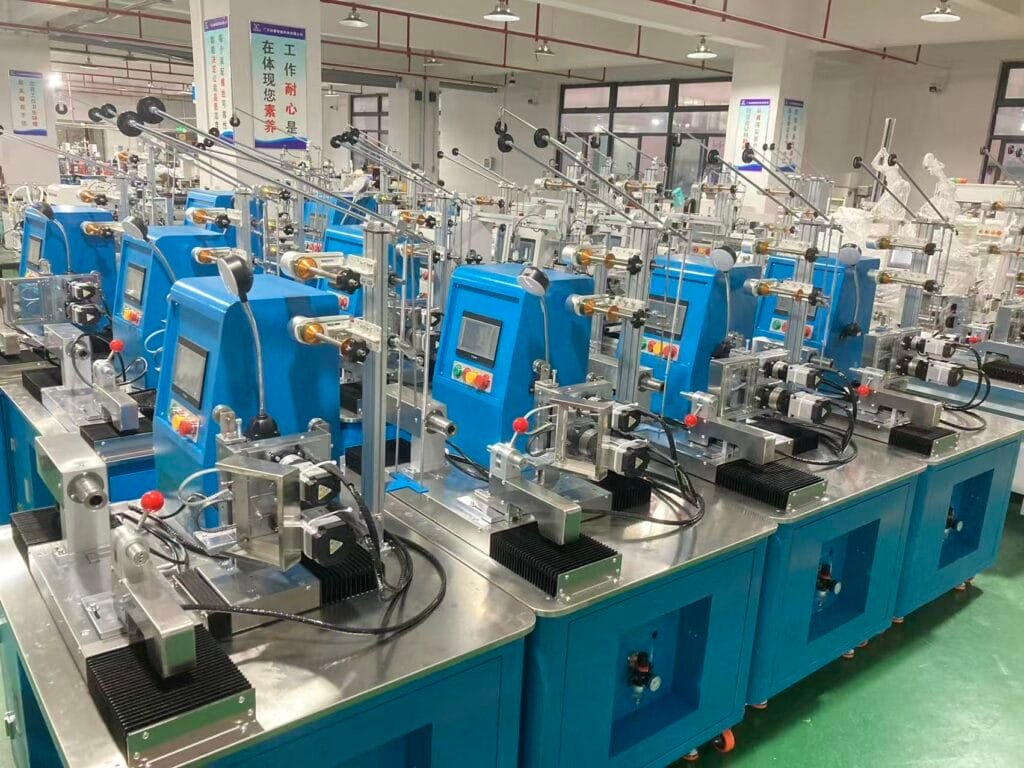
A sample can look excellent and still come from a process that won’t hold up at volume, because the machine producing it lacks the structural rigidity or tension calibration to repeat that result thousands of times over. This is where the relationship between winding machine engineering and product quality becomes hard to separate — a rigid spindle system and properly calibrated tension unit are what make repeatability possible in the first place, not just a well-tuned sample run. A Guangdong Xiezhan manufacturer background means these structural details — spindle rigidity, servo synchronization, tension calibration — are treated as the foundation of product consistency, not adjustments made after a quality issue is discovered.
As a Guangdong Xiezhan factory working directly with heating element producers across different regions, sample evaluation has generally meant reviewing not just the coil itself, but the machine and process behind it — because a sample without that context only tells half the story. More on how that engineering approach developed is outlined on the about us page.
Why This Gets Harder as Automation Increases
Manual assembly lines can sometimes compensate for minor coil inconsistency — an experienced worker adjusts by feel, catches an odd piece, and moves on. Automated assembly doesn’t have that flexibility. A pitch deviation or diameter variation that a manual line would absorb without comment can cause insertion misalignment on an automated line, stopping production entirely until the issue is traced. This is why sample evaluation matters more, not less, as buyers move toward automated assembly — the tolerance for inconsistency actually shrinks even as production speed increases.
A Few Questions Buyers Ask at This Stage
How many pieces from a sample batch should actually be measured?
More than one or two. A meaningful check usually involves measuring several pieces across the batch, and ideally at multiple points along each coil, rather than a single representative piece.
Is it reasonable to ask for thermal cycling data on a sample?
Yes, particularly for elements going into products with demanding duty cycles. A supplier with genuine testing capability should be able to provide resistance readings after a defined number of heat cycles, not just an as-wound figure.
What if the supplier can only provide one sample run?
That’s not necessarily disqualifying, but it’s worth treating that single result as preliminary rather than conclusive, and requesting a second run before committing to a full production order.
Does spring-back tolerance vary by wire material?
Yes, different alloys and wire gauges relax differently after winding, so tolerance expectations should be confirmed against your specific material rather than assumed to be identical across products.
Should sample evaluation change once we move to automated assembly?
Generally yes — automated lines have less tolerance for coil variation than manual assembly, so tighter inspection criteria at the sample stage becomes more important, not less, once automation is introduced.
If you’re reviewing a sample batch right now and want a second opinion on what the numbers actually indicate, or you’re planning pilot runs before scaling to full production, reaching out through contact us tends to get a more specific answer than a general quality checklist.