
Horizontal vs Vertical Winding Structures
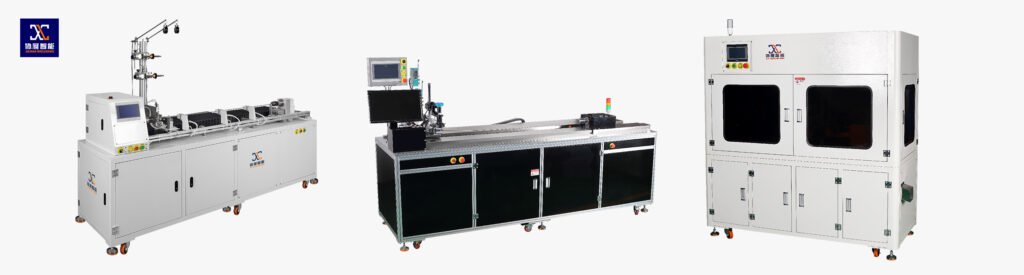
Horizontal vs Vertical Winding Structures
Most buyers don’t actually choose between horizontal and vertical winding structures — the supplier already made that choice before the quotation arrived. What you’re really doing, whether you realize it or not, is agreeing with a decision someone else made based on their own production line, not yours. That’s a reasonable starting point, but it’s worth pausing before you sign off on it, because structure selection quietly shapes your floor plan, your maintenance schedule, and your bearing replacement costs for years after the machine is installed.
Why This Decision Gets Made Too Early, Too Often
In practice, structure gets decided at the quotation stage, before anyone has walked through your actual workshop layout or reviewed your coil weight range. A supplier defaults to whichever configuration they build most often, and unless you ask specifically, that becomes your machine. This isn’t a flaw in any one supplier — it’s simply how quoting works when floor space, ceiling height, and product weight haven’t been part of the conversation yet.
If you’re comparing a few winding machine options right now, this is the point worth slowing down on — not to relitigate which structure is “better” in general, but to check whether the one you’ve been offered actually matches the shape of your production line.
Start With the Room, Not the Machine
Before any technical comparison, the most useful question is the simplest one: what does your workshop actually allow? Horizontal structures need more linear floor length but tolerate low ceilings well, which makes them a natural fit for older buildings or converted spaces. Vertical structures reclaim floor area but need overhead clearance, which only helps if your facility actually has that height to spare. A buyer who skips this step and jumps straight into comparing specifications often ends up with a machine that’s technically excellent but physically awkward on the shop floor.
Then Ask What Your Coil Actually Weighs
This is the question that gets skipped most often, and it matters more than floor space in the long run. In a horizontal layout, weight is distributed evenly across side bearings, which is why heavier coils — generally above 300mm in diameter, or wound with thicker gauge wire — tend to hold structural stability better over time. In a vertical layout, gravity actually helps smaller coils stay aligned during winding, which is useful for precision work, but that same gravity concentrates load onto the lower bearing as coil weight increases. A vertical machine running light, small-diameter coils will usually perform well for years. The same vertical machine pushed into heavier coil production will often show bearing wear sooner than expected — not because the machine is poorly built, but because the structure wasn’t matched to the load.
| Production Scenario | Horizontal Tends to Fit | Vertical Tends to Fit | What It Depends On | Worth Asking Before You Decide |
|---|---|---|---|---|
| Floor plan | Low ceiling, longer floor run available | Limited floor area, adequate ceiling height | Your building’s physical constraints | “Have you measured the installation area?” |
| Coil weight & wire gauge | Heavier coils, thicker wire gauge | Light, small-diameter precision coils | Bearing load distribution | “What’s the rated load for this bearing grade?” |
| Production speed target | Heavy-duty, torque-driven output | High-speed, short material travel path | Whether torque or speed matters more to you | “Which output are we optimizing for?” |
| Maintenance access | Waist-level, easier routine servicing | May require elevated access for spindle work | Your team’s servicing routine | “What does routine maintenance actually involve?” |
| Automation plans | Conveyor-based feeding integration | Robotic top-loading integration | Whether automation is planned now or later | “Will this integrate with automation we add next year?” |
Two Things a Factory Demo Won’t Show You
A live demonstration is genuinely useful, but it also has blind spots worth knowing about in advance. The first is that demo coils are almost always light and small — easy to wind smoothly on either structure, which makes the comparison look closer than it actually is once real production weight enters the picture. Asking to see output from a coil closer to your actual product weight, rather than the lightest sample on hand, gives a more honest read on how the machine will behave under your conditions.
The second blind spot is time. A short demo run can’t show you what happens to bearing performance after months of continuous cycles. This is really a question about long-term structural fatigue rather than day-one performance, and it’s reasonable to ask directly: how has this structure held up in a client’s operation after a year or two of the load profile closest to yours? A factory with real operating history behind its equipment should be able to answer that with a specific example, not a general assurance.
A Real Adjustment, Not a Hypothetical One
One case worth mentioning: a heating element manufacturer in Europe initially asked for a vertical structure, mainly because floor space in their facility was limited. Before finalizing the order, torque requirements and coil weight were reviewed against their actual product line — and the recommendation shifted to a reinforced horizontal design instead. Two years into operation, their bearing replacement cycle had dropped by close to 30 percent compared to what the original vertical layout would likely have required. The floor space concern was real, but it wasn’t the deciding factor once the full load profile was considered.
As a winding machine manufacturer and factory, Xiezhan doesn’t default to one structure as a standard offering across every inquiry. Structure gets reviewed against coil diameter, torque requirement, and actual factory layout before a configuration is recommended — a process that typically happens during early client cooperation discussions, before a final quotation is issued rather than after.
Why This Matters More Once You’re Scaling
A first machine purchase is often judged on price and delivery time. Once a buyer moves toward a second line, or plans to expand output over the next few years, structure choice starts to matter in a different way — because retrofitting a workshop around the wrong structure later is far more expensive than getting it right at the planning stage. This is usually when buyers start asking more detailed engineering questions rather than comparing quotations side by side, and it’s worth having that conversation before committing to a layout that’s difficult to reverse.
A Few Questions Buyers Ask at This Stage
Can a supplier recommend structure based on my product, rather than their default configuration?
A factory with genuine engineering input should be willing to review your coil weight, wire gauge, and floor plan before proposing a structure — not simply offer whichever one they build most often.
Is it possible to switch structure type later if production needs change?
Generally not without significant cost, since structure affects the machine frame, bearing layout, and floor installation. This is part of why getting the decision right early matters more than it might initially seem.
How much does ceiling height actually limit vertical structure options?
It depends on the specific machine height and any overhead clearance needed for maintenance access — this is worth confirming with actual measurements rather than general facility specifications.
If my coil weight varies across different products, should I choose one structure for everything?
Not always. Some factories run mixed lines, matching structure to specific product categories rather than standardizing on a single configuration across their entire output.
Does structure choice affect how easily automation can be added later?
Yes, to some degree. Horizontal layouts tend to integrate more directly with conveyor-based feeding, while vertical layouts often suit robotic top-loading — worth factoring in if automation is part of your longer-term plan, even if not needed immediately.
Structure decisions are easier to get right on paper than they are to reverse on the shop floor. If you’d like to walk through your coil weight, floor plan, and production targets with a team that reviews these details before recommending a configuration, our background and approach are outlined on the about us page, and
Contact Our Team
Similar Posts
Nichrome Wire vs Resistance Wire Winding Machines
ByXiezhanChoosing Between Nichrome and General Resistance Wire Winding Solutions If you are selecting a winding machine, the real question is not “which machine is better,” but “which machine matches your wire and product requirements?” Many buyers assume nichrome wire can be processed using standard resistance wire winding machines. In practice, this assumption often leads to…
Supporting OEM Clients with Stable Equipment
ByXiezhanHow Reliable Equipment Partnerships Help OEM Factories Scale Production OEM manufacturers rarely judge equipment by appearance alone. What matters inside a real production environment is whether the machine can run continuously, maintain stable product consistency, support changing customer specifications, and reduce unexpected downtime during large-volume orders. For factories producing heating elements, appliance components, or industrial…
How Automated Mica Processing Improves Production Consistency
ByXiezhanbody{ font-family:Arial,sans-serif; font-size:13px; line-height:1.6; color:#111; background:#fff; } h1{ font-size:20px; font-weight:bold; color:#111; margin:20px 0; } h2{ font-size:18px; font-weight:bold; color:#111; margin-top:38px; margin-bottom:15px; } h3{ font-size:16px; font-weight:bold; color:#111; margin-top:24px; margin-bottom:10px; } p{ margin-bottom:15px; } ul{ padding-left:22px; margin-bottom:18px; } li{ margin-bottom:8px; } .table-wrapper{ overflow-x:auto; margin:30px 0; } table{ width:100%; min-width:900px; border-collapse:collapse; } th{ background:#eef6ff; color:#1e73be; font-size:16px; font-weight:bold; padding:10px; border:1px…
Mica Sheet Punch Press vs Die Cutting Equipment: What’s the Difference?
ByXiezhanChoosing Between Punch Press and Die Cutting Systems for Mica Component Production For manufacturers producing heating elements, thermal insulation assemblies, and electrical heater components, one common purchasing question appears repeatedly: should the factory use a mica sheet punch press system or invest in dedicated mica die cutting equipment? The answer depends less on machine labels…
How Loop Forming Machines Improve Heating Element Manufacturing Accuracy
ByXiezhanHow Loop Forming Machines Improve Heating Element Manufacturing Accuracy Many buyers focus on riveting or terminal assembly when evaluating a heating element production line. In practice, production accuracy is often determined much earlier. If loop dimensions vary at the beginning of the process, every downstream operation must compensate for that deviation. A precision loop forming…
Endüstriyel Isıtıcı Montaj Hatları İçin Komple Çözümler
ByXiezhanEndüstriyel Isıtıcı Üretiminde Hat Tasarımı Nasıl Değişiyor? Endüstriyel bir ısıtıcı eleman üretim hattı kurarken en doğru yatırım, mümkün olan en fazla makineyi aynı hatta toplamak değildir. Asıl hedef, tel şekillendirme, winding, kesme, perçinleme, markalama, test ve montaj işlemlerini ürünün gerçek üretim akışına göre birbirine bağlamaktır. Çünkü bir istasyonun kapasitesi diğer istasyonun kapasitesinden çok daha yüksekse,…