
Step-by-Step Mica Board Processing Workflow for Heater Manufacturing
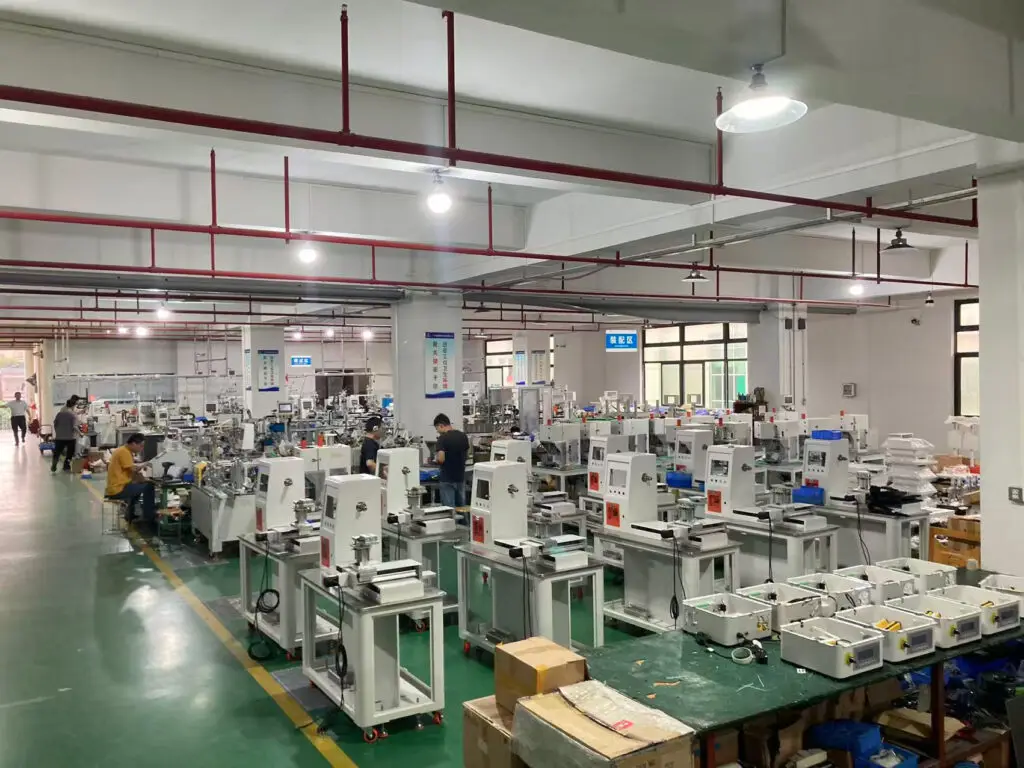
How Modern Factories Build Stable Mica Heater Production Lines
For heater manufacturers, the biggest production challenge is usually not output speed alone. The real difficulty is maintaining dimensional consistency, insulation reliability, and stable assembly quality throughout the entire mica board processing workflow. A small deviation during cutting or forming can later create heating imbalance, assembly rejection, or premature heater failure. That is why experienced manufacturers pay close attention to every production stage instead of focusing only on individual machines.
Factories producing stable mica heaters usually succeed because their workflow is standardized from material preparation to final assembly inspection, not because they simply purchase expensive equipment.
Why Does Workflow Design Matter So Much in Mica Heater Manufacturing?
Many new factories underestimate how connected each production stage really is.
If mica sheets are cut inaccurately, downstream punching alignment becomes unstable. If forming pressure changes slightly, heater assembly gaps may appear. If coil positioning shifts during installation, heating distribution becomes inconsistent.
In real factory environments, small process deviations quickly accumulate.
That is why mature manufacturers design mica processing workflow systems around repeatability rather than isolated machine speed.
Today’s heater manufacturers are also facing increasing pressure from:
- Higher export quality standards
- Labor instability
- Smaller tolerance requirements
- Faster delivery schedules
- More diversified heater designs
As production complexity increases, workflow coordination becomes more important than individual machine performance alone.
Step 1: Raw Mica Material Inspection and Preparation
Every reliable mica heater manufacturing process starts with raw material evaluation.
Experienced factories do not immediately feed mica sheets into cutting machines after material arrival. First, they inspect:
- Board thickness consistency
- Surface flatness
- Lamination stability
- Moisture exposure condition
- Edge cracking risk
This stage matters because mica behaves differently depending on storage conditions and material composition.
In many workshops, unstable raw material is responsible for later cutting defects that operators mistakenly blame on machines.
Why Experienced Buyers Ask About Material Compatibility
Professional buyers usually ask equipment manufacturers whether the machines can handle different mica densities and thickness ranges consistently. Machines performing well with one board type may behave differently with another supplier’s material.
Step 2: Precision Mica Board Cutting
After material inspection, the next stage is dimensional cutting.
This step determines whether downstream processing remains stable.
Factories producing heater insulation boards commonly use CNC mica board cutting machine systems because repeatability directly affects later assembly precision.
For example, the XZ-XB1300 Fully Automatic Mica Board Four Edge Trimming and Cutting Machine supports:
- Board size up to 130×130cm
- Thickness range from 0–6mm
- Cutting accuracy around ±0.2mm
- CNC programmable dimensional control
For medium-size production environments, the XZ-JB1212 Fully Automatic Mica Board Cutting Machine is often selected for stable batch processing and automatic feeding consistency.
The biggest advantage of CNC systems during mica board processing is not only speed. It is dimensional repeatability across continuous production cycles.
| Workflow Stage | Main Equipment | Production Goal | Common Factory Risk | Operational Benefit |
|---|---|---|---|---|
| Raw Material Inspection | Inspection Table / Measuring Tools | Stable material consistency | Hidden cracking or thickness deviation | Lower downstream defects |
| Board Cutting | XZ-XB1300 / XZ-JB1212 | Precision dimensional cutting | Tolerance instability | Stable batch consistency |
| Punching & Forming | Punch Press / Forming Machine | Accurate installation positioning | Hole alignment deviation | Simplified assembly |
| Heating Element Assembly | Assembly Workstation | Stable heater integration | Coil displacement | Reliable thermal performance |
| Final Inspection | Testing Equipment | Quality verification | Undetected assembly defects | Stable export quality |
Step 3: Punching and Forming Operations
Once boards are cut accurately, punching and forming operations begin.
This stage creates:
- Mounting holes
- Assembly positioning areas
- Special shaping structures
- Curved or rolled mica components
Factories producing heater components often experience problems here when punching alignment drifts during continuous operation.
In practical production, stable feeding alignment is just as important as punch force itself.
Some manufacturers still rely heavily on manual positioning. That may work for smaller production batches, but once output volume increases, positioning inconsistency becomes more noticeable.
If your factory produces multiple heater sizes simultaneously, prioritize tooling systems with fast positioning adjustment capability. Changeover efficiency affects production scheduling more than many buyers expect.
Step 4: Heating Element Integration and Assembly
This stage connects insulation structure with actual heating performance.
After mica boards are processed, operators integrate resistance wire or heating components into the assembly structure.
At this point, dimensional accuracy from earlier processing stages becomes extremely important.
Even slight board deformation may later cause:
- Heating imbalance
- Assembly pressure inconsistency
- Reduced thermal efficiency
- Premature heater failure
Experienced heater manufacturers usually focus heavily on assembly repeatability because downstream failure costs are significantly higher than early-stage correction costs.
Why Are More Factories Moving Toward Automated Mica Processing Workflow Systems?
Global manufacturing trends are changing rapidly.
Factories are now handling:
- Smaller production tolerances
- Higher output expectations
- Reduced labor availability
- Increasing product variation
Manual workflow systems become difficult to scale under those conditions.
Industry production reports from recent years show growing adoption of automated mica board processing systems because automation reduces production fluctuation during continuous operation.
The strongest transition toward automation is happening in export-oriented heater manufacturing factories supplying:
- Industrial heaters
- Home appliance heating systems
- Infrared heating products
- Thermal insulation assemblies
Before expanding automation investment, evaluate where your factory loses the most production stability today. In many cases, the bottleneck is workflow coordination rather than machine speed alone.
How Do Mature Buyers Evaluate Mica Processing Equipment Suppliers?
Experienced buyers rarely purchase machinery based only on catalog specifications.
They also evaluate whether the manufacturer understands complete production workflow integration.
That includes:
- Material behavior
- Production rhythm
- Operator interaction
- Maintenance accessibility
- Future scalability
This is one reason many international manufacturers prefer working directly with specialized mica board processing equipment factories instead of general machinery traders.
At Xiezhan manufacturer, many customer discussions involve production flow analysis before machine recommendations are finalized.
You can explore more equipment solutions here: Mica Sheet & Mica Board Processing Machines
You can also review international customer cooperation projects here: Client Cooperation
Why Workflow Stability Matters More Than Maximum Machine Speed
Many factories discover that unstable workflow coordination creates more production loss than insufficient equipment speed. Consistency across all processing stages usually determines final manufacturing efficiency.
Final Thoughts: Stable Heater Production Starts with Stable Workflow Design
Reliable mica heater manufacturing is never determined by one machine alone.
Stable production comes from coordinated workflow design covering:
- Material preparation
- Precision cutting
- Punching accuracy
- Assembly consistency
- Final quality inspection
Factories that scale successfully usually standardize the entire mica processing workflow rather than focusing only on isolated production stages.
You can learn more about our manufacturing experience here: About Us
If your factory is planning a new mica board processing line or evaluating mica heater manufacturing equipment, our engineering team can help analyze suitable production configurations based on your actual workflow requirements: Contact Us