
Managing Workforce Skill Variability with Better Equipment
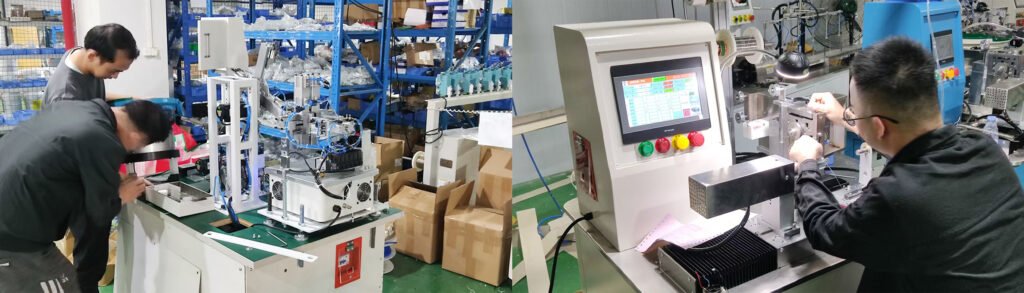
Reducing Production Variability Through Smarter Equipment Selection
One of the biggest hidden challenges inside manufacturing plants is not always material cost or production speed. In many factories, the real issue is workforce skill variability. Different operators produce different results, especially in semi-manual winding and heating element production environments. This creates unstable resistance values, inconsistent coil shapes, uneven assembly quality, and unnecessary rejection rates. Modern winding equipment helps factories reduce these human-driven inconsistencies by standardizing critical production steps and simplifying operation logic.
Factories that solve workforce variability early usually achieve better production stability, faster employee onboarding, lower defect rates, and more predictable delivery schedules. In actual OEM production, stable process control matters more than depending on a few highly experienced workers.
The strongest factories are not the ones with the most skilled operators. They are the ones where production quality remains stable even when operators change.
Why Workforce Skill Variability Is Becoming a Bigger Manufacturing Problem
Across many manufacturing regions, factories are facing growing labor instability:
- high employee turnover,
- shorter training cycles,
- difficulty recruiting experienced technicians,
- and increasing production pressure from OEM clients.
This problem becomes especially serious in winding and heating element production because small operator differences can directly affect:
- coil spacing accuracy,
- wire tension consistency,
- heating resistance values,
- and assembly positioning.
Factories depending heavily on manual production methods often struggle to maintain consistent quality across multiple shifts.
The Hidden Cost of Operator Dependency
Many factory owners initially focus on machine pricing while overlooking long-term labor dependency risks.
In reality, factories relying on highly experienced workers often face:
- unstable output during staff turnover,
- slower expansion capability,
- higher training costs,
- and production interruptions when key operators leave.
Machines with programmable controls and stable process repeatability reduce these risks significantly.
When evaluating new equipment, calculate how much production quality depends on operator experience. Machines that simplify operation logic often produce better long-term ROI than machines requiring highly specialized workers.
What Do Factory Managers Usually Ask Before Upgrading Equipment?
During equipment discussions with factory managers and production engineers, several questions appear repeatedly.
Question 1: Can New Workers Operate the Equipment Quickly?
This is often one of the first concerns for factories experiencing labor instability.
Modern winding systems such as the XZ-T2103 Fully Automatic Spring Shaped Heating Wire Winding Machine help reduce operator dependency because production parameters can be pre-programmed instead of manually adjusted repeatedly.
This allows:
- faster onboarding,
- reduced setup errors,
- simplified operation steps,
- and more consistent output across different workers.
Instead of relying on “operator feeling,” production becomes more process-driven.
Why Process Stability Matters More Than Individual Skill
Factories scaling internationally usually standardize production systems first. Stable equipment allows management teams to maintain consistent quality regardless of workforce changes.
Question 2: How Much Quality Variation Can Be Reduced?
Factories moving from manual winding to programmable systems often see improvements in:
- coil positioning consistency,
- wire tension stability,
- resistance tolerance control,
- and rejection rate reduction.
For example, the XZ-B450P Heating Wire Winding Machine is frequently selected for precision resistance heating coil production because stable tension control reduces coil inconsistency caused by operator variation.
Which Equipment Features Help Reduce Workforce Variability?
Not all automation creates the same production benefits.
Experienced buyers usually focus on several practical features that directly reduce workforce-related production instability.
Programmable Production Memory
Machines capable of storing multiple production recipes reduce manual adjustment errors during product switching.
This becomes especially important for OEM factories handling:
- multiple customer specifications,
- small batch orders,
- and varied voltage configurations.
Machines such as the XZ-T2201 Fully Automatic Dual Head Drive Five Axis CNC Spring Heating Wire Winding Machine allow repeatable production settings, helping operators maintain consistency even during shift changes.
Stable Mechanical Structure
Many production inconsistencies come from unstable feeding systems, inconsistent wire guiding, or vibration during continuous operation.
Factories increasingly prioritize:
- servo-controlled movement,
- stable feeding systems,
- high-repeatability winding structures,
- and durable mechanical frames.
This is especially important for long-hour OEM production.
| Factory Challenge | Common Manual Problem | Recommended Equipment Feature | Machine Example | Expected Result |
|---|---|---|---|---|
| Operator inconsistency | Different winding quality | Programmable recipes | XZ-T2103 | Stable production output |
| High worker turnover | Long training periods | Simplified controls | XZ-T2154 | Faster onboarding |
| Quality instability | Resistance variation | Stable tension system | XZ-B450P | Lower rejection rate |
| Assembly inconsistency | Manual positioning errors | Integrated assembly process | XZ-SM800 | Improved assembly quality |
| Frequent production switching | Long setup downtime | Quick parameter adjustment | XZ-T2201 | Better production flexibility |
Why Mature OEM Factories Prefer Process-Driven Production
Factories supplying international OEM customers increasingly move away from operator-dependent manufacturing systems.
Instead, they build:
- standardized production workflows,
- repeatable quality control systems,
- and equipment-centered manufacturing processes.
This transition improves scalability while reducing long-term labor risks.
How Equipment Stability Improves Factory Management
When equipment becomes more stable and programmable:
- production scheduling becomes easier,
- quality control becomes more predictable,
- operator supervision pressure decreases,
- and customer delivery planning improves.
This operational stability becomes extremely valuable for factories handling export projects and long-term OEM contracts.
What Experienced Buyers Usually Avoid
Mature buyers rarely choose equipment that depends heavily on operator adjustment during every production cycle. Long-term production consistency matters more than short-term machine cost savings.
How Specialized Equipment Manufacturers Support Workforce Challenges
Factories facing workforce variability often need more than standard machine delivery.
They also require:
- technical guidance,
- production process recommendations,
- sample evaluation,
- operator training support,
- and future production scalability planning.
This is why many OEM factories prefer working with specialized winding machine manufacturers that understand actual production environments instead of only machine assembly.
Examples of international factory cooperation projects can be reviewed here: client cooperation
Why Many Buyers Research Equipment Manufacturers Carefully Before Purchasing
As labor costs rise globally and production schedules become tighter, buyers increasingly evaluate equipment suppliers based on:
- production stability,
- technical understanding,
- machine durability,
- future support capability,
- and export project experience.
Many procurement teams also compare supplier capabilities through industry references such as: Top 10 CNC Wire Winding Machine Manufacturers in China
The best equipment investment is usually the one that keeps production stable even when staffing conditions become unstable.
Final Thoughts from a Production Management Perspective
Workforce variability will continue affecting global manufacturing for years ahead.
Factories depending entirely on operator experience may struggle with:
- quality inconsistency,
- training inefficiency,
- production instability,
- and delayed delivery performance.
Modern winding equipment helps factories create more standardized and repeatable production systems.
Machines such as the XZ-T2103, XZ-T2154, XZ-B450P, and XZ-SM800 are increasingly selected because they simplify operation while improving production consistency under real factory conditions.
For manufacturers planning long-term production growth, reducing operator dependency is no longer only an automation decision. It is becoming part of overall factory risk management.
To learn more about our manufacturing experience and equipment specialization, visit: about us
If your factory is currently evaluating winding equipment solutions for more stable workforce management and production consistency, you can contact our engineering team here: contact us