
How Servo Systems Improve Mica Cutting Accuracy
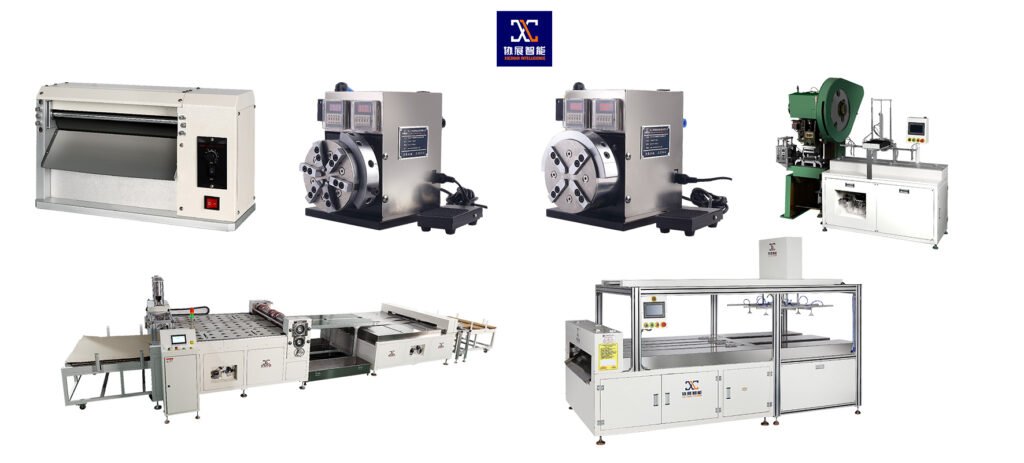
How Servo Technology Creates More Stable Mica Cutting Performance
Servo systems improve mica cutting accuracy by controlling movement, positioning and speed with higher precision than traditional drive methods. For manufacturers, the key benefit is not simply achieving a smaller tolerance value, but maintaining consistent cutting quality during long production runs. When mica sheets are processed for heating elements, even small dimensional variations can influence assembly accuracy, insulation performance and final product reliability.
Why Does Cutting Accuracy Matter More in Mica Processing?
Mica is widely used in heating applications because of its excellent electrical insulation and heat resistance. However, these advantages also mean that manufacturers need stable processing methods to maintain the designed shape and dimensions of mica components.
The reason is that mica sheets usually work as insulation supports, positioning structures or protective layers inside heating assemblies. If cutting dimensions fluctuate, the component may not fit correctly with heating wires, metal frames or other insulation parts.
The mechanical principle behind servo control is based on closed-loop feedback. Unlike traditional motors that operate mainly according to preset movement commands, servo systems continuously compare actual movement with target position and automatically correct small deviations.
The result is improved repeatability during continuous production. For factories producing thousands of mica components, reducing small repeated errors can significantly improve final product consistency and reduce material waste.
In precision manufacturing, the biggest production loss often comes from repeated small deviations rather than one obvious failure. Servo systems create value by controlling these small variations before they become quality problems.
How Do Servo Systems Reduce Errors During Mica Cutting?
Cutting errors in mica processing usually come from several sources: inaccurate positioning, unstable feeding, mechanical vibration and inconsistent operation. Improving only one factor cannot fully solve the problem because these factors influence each other.
A servo-driven system addresses these issues through precise control of motion. The servo motor provides accurate rotation control, while the feedback system monitors position changes during operation. When resistance, load changes or mechanical variation occurs, the system can compensate automatically.
For mica board cutting, this means the cutting path remains more stable, especially when processing repeated shapes or larger sheets. The improvement becomes more noticeable in high-volume production where manual adjustment cannot maintain the same consistency over long periods.
| Equipment Model | Processing Function | Main Parameters | Accuracy Advantage | Suitable Application |
|---|---|---|---|---|
| XZ-JB1212 Fully Automatic Mica Board Cutting Machine | Automatic mica board cutting |
380VAC 50Hz 3800W 120×120cm board size Thickness 0-3mm | ±0.2mm cutting accuracy | Heating plates and insulation components |
| XZ-XB1300 Fully Automatic Four Edge Trimming and Cutting Machine | Large mica board trimming and cutting |
380VAC 50Hz 5800W 130×130cm board size Thickness 0-6mm | Stable large-format processing | Industrial heating insulation boards |
What Production Data Shows About Servo Controlled Mica Cutting?
When manufacturers evaluate cutting equipment, they often focus on machine speed. However, experienced production engineers usually pay more attention to accuracy stability over thousands of cycles. The reason is that a machine producing one accurate piece does not always guarantee stable quality during continuous operation.
The mechanical principle is related to motion control consistency. During mica cutting, the servo system manages acceleration, positioning and stopping points through feedback control. This reduces the influence caused by mechanical inertia, uneven loading and operator adjustment differences.
The result is a more predictable production process. For manufacturers supplying heating element factories or industrial equipment companies, predictable quality is often more valuable than maximum theoretical speed because it reduces inspection time and production interruptions.
| Production Factor | Traditional Processing Challenge | Servo System Solution | Manufacturing Result | Buyer Value |
|---|---|---|---|---|
| Position Accuracy | Small movement deviations accumulate during repeated cutting | Real-time position feedback correction | More consistent dimensions | Lower rejection rate |
| Feeding Stability | Material movement variation affects cutting position | Controlled motion speed and synchronization | Stable processing flow | Higher production efficiency |
| Long Running Production | Manual adjustment creates quality differences | Automatic compensation system | Stable batch quality | Easier production management |
In practical projects, we often find that customers do not lose money because a machine is too slow. They lose money because unstable accuracy creates hidden costs: extra inspection, material waste, delayed delivery and additional labor.
For mica components used in heating products, dimensional stability is usually more important than maximum cutting speed. A stable machine running continuously can create better production results than a faster machine requiring frequent adjustment.
Which Mica Processing Applications Benefit Most From Servo Technology?
Servo-based cutting technology is especially valuable when manufacturers need repeated accuracy across different mica component designs. The reason is that modern heating products often require multiple insulation shapes, sizes and thickness specifications.
The mechanical advantage comes from flexible parameter control. Instead of relying heavily on manual adjustment, operators can change processing settings according to different product requirements while maintaining stable movement control.
The result is better adaptability for factories producing different heating elements, electrical appliances and industrial insulation components.
| Application Scenario | Mica Processing Requirement | Recommended Equipment | Key Advantage | Production Goal |
|---|---|---|---|---|
| Industrial Heater Manufacturing | Large insulation board cutting | XZ-XB1300 | Stable large-size processing | Reduce material waste |
| Heating Element Components | Repeated insulation shape cutting | XZ-JB1212 | High repeatability | Improve assembly consistency |
| Compact Heater Parts | Small mica forming and feeding | XZ-SL300 / XZ-J730D | Efficient repeated processing | Increase production consistency |
For manufacturers evaluating complete equipment solutions, reviewing the relationship between material characteristics and machine configuration is essential. Our Mica Sheet & Mica Board Processing Machines collection includes different solutions designed for various mica cutting, forming and handling requirements.
What Should Buyers Evaluate Before Choosing a Servo Controlled Mica Cutting Machine?
When purchasing automated mica cutting equipment, buyers should not evaluate servo systems only by asking whether a machine uses servo motors. The more important question is how the entire motion control system works together with the cutting structure, material handling and production requirements.
The reason is that cutting accuracy is created by multiple mechanical factors working together. A high-quality servo motor cannot compensate for poor machine rigidity, unstable feeding or unsuitable tooling design. Precision comes from the complete system.
The mechanical principle is similar to a complete production chain. Servo positioning controls movement accuracy, the transmission structure controls mechanical stability, and the cutting tool determines the final processing quality. If one part becomes weak, the final result will be affected.
For this reason, experienced procurement teams usually review the following factors before making a decision:
- Motion control system: Check whether the machine can maintain stable positioning during repeated operations.
- Processing accuracy: Confirm whether the cutting tolerance matches the actual product requirements.
- Material compatibility: Verify whether the machine can handle different mica thicknesses and formats.
- Production flexibility: Consider whether parameters can be adjusted for future product changes.
- Technical support: Evaluate whether the supplier understands real manufacturing applications.
Before purchasing equipment, prepare actual mica drawings, material thickness information and target production volume. Machine selection based on real production data usually creates better results than choosing equipment only from catalog specifications.
How Does Automation Improve Long Term Mica Production Efficiency?
Automation creates value not only by reducing manual operation. The bigger improvement comes from making the production process more predictable. The reason is that manual operations naturally introduce differences between operators, working shifts and production periods.
With automated mica cutting solutions, movement, feeding and cutting parameters can be controlled according to defined production requirements. The machine repeats the same processing logic every cycle, which helps manufacturers maintain consistent product quality.
The result is easier production management. Factory managers can plan output more accurately because the relationship between machine operation and product quality becomes more stable.
This is especially important for manufacturers supplying heating element producers, electrical appliance companies and industrial equipment manufacturers. Many customers require stable quality across thousands of repeated components rather than occasional high-speed production.
Why Does Supplier Experience Influence Equipment Performance?
A machine specification sheet can show motor power, working size and accuracy parameters, but it cannot fully show whether the equipment fits a customer’s production environment. The reason is that industrial processing always involves practical details beyond standard specifications.
For example, different mica materials may behave differently during cutting. Thickness variation, product shape and production volume can all influence the recommended equipment configuration.
A supplier with manufacturing experience can provide suggestions based on actual applications instead of only selling a machine model. This reduces the risk of purchasing equipment that performs well in testing but does not match daily production conditions.
For manufacturers researching mica materials, processing requirements and industry applications, understanding the supply chain is also valuable. Our article about Top 13 Mica Sheet Manufacturers in China provides additional industry reference for understanding mica material sources and applications.
At Xiezhan Machinery, our cooperation approach focuses on understanding the customer’s production process first, then recommending suitable equipment combinations. More information about project experience and cooperation cases can be found on our Client Cooperation page.
When comparing mica cutting machines, focus on repeatability rather than only maximum speed. In industrial production, a machine that maintains stable accuracy every day usually creates higher overall value.
How Can Servo Technology Support Future Mica Processing Upgrades?
Manufacturing requirements continue to change. Heating products are becoming more customized, production batches are becoming more flexible, and customers expect shorter delivery cycles. The reason is that manufacturers need equipment that can adapt instead of equipment designed only for one fixed product.
Servo-based automation provides a foundation for this flexibility because motion parameters can be adjusted more precisely. When factories introduce new mica components, they can modify processing settings without completely changing the production system.
The result is a stronger long-term investment. Instead of purchasing equipment that only solves current demand, manufacturers can build production capability that supports future product development.
The best mica cutting solution is not the machine with the highest specifications. It is the machine that matches your material, production volume, accuracy requirements and future expansion plans.
Conclusion: Precision Comes From Complete Manufacturing Control
Servo systems improve mica cutting accuracy because they create better control over the entire movement process. The value is not only higher precision during one cutting operation, but stable performance across continuous production.
For manufacturers producing mica insulation parts, heating elements and electrical components, precision mica processing depends on the combination of machine structure, motion control, material handling and engineering support.
If you are planning to upgrade your mica processing capability or need assistance selecting suitable equipment, our engineering team can review your production requirements through Contact Us and discuss a practical solution based on your application.