
How Precision Cutting Reduces Waste in Mica Board Production
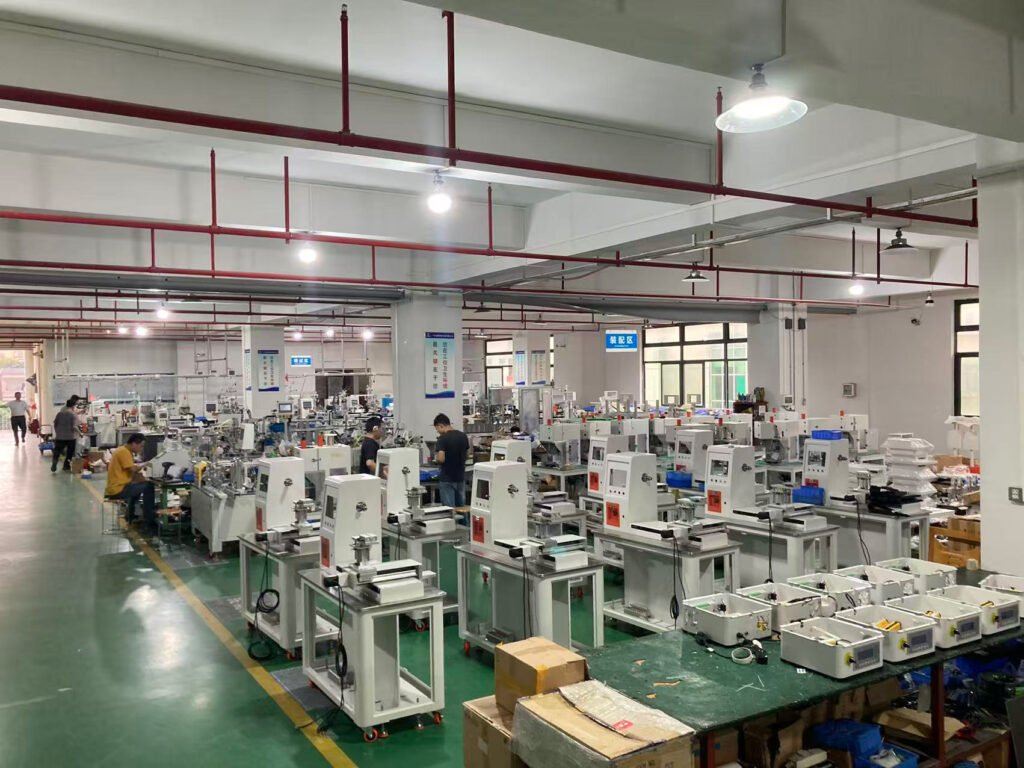
Why Material Waste Is Usually a Cutting Problem Rather Than a Material Problem
When procurement managers evaluate mica board production costs, they often focus on raw material prices first. That seems logical because mica sheets represent a significant portion of overall manufacturing expenses. However, after visiting dozens of heater factories and insulation component manufacturers, I have found that excessive waste is rarely caused by the material itself. More often, waste originates from inaccurate cutting, poor nesting layouts, unstable machine performance, and outdated production methods. Improving cutting precision can reduce scrap rates dramatically while increasing output consistency at the same time.
Many manufacturers believe lowering material costs is the fastest way to improve profitability. In reality, reducing unnecessary waste often delivers greater savings without changing suppliers or material specifications.
The Most Common Misconception About Mica Board Waste
One of the biggest misconceptions in the industry is that waste is unavoidable.
Many factory managers accept a certain level of scrap as part of normal production. While some material loss is inevitable, excessive waste usually indicates process inefficiencies rather than unavoidable production realities.
In facilities using older cutting methods, operators frequently compensate for dimensional inaccuracies by leaving larger cutting margins. Although this reduces the risk of undersized parts, it increases material consumption considerably over time.
This creates a hidden cost that often goes unnoticed because it is distributed across thousands of production cycles.
Why Do Traditional Cutting Methods Generate More Scrap?
Traditional cutting equipment can still perform well in small-batch production environments. However, several limitations become apparent as production volumes increase.
- Manual positioning errors
- Inconsistent cutting paths
- Operator-dependent accuracy
- Tool wear variation
- Repeated adjustment requirements
These factors create dimensional variation that eventually leads to rejected parts, rework, or excessive edge trimming.
The issue becomes particularly noticeable in mica heater manufacturing, where component dimensions directly influence assembly quality.
What Does Precision Mica Processing Actually Mean?
Many buyers hear the term precision mica processing without fully understanding its practical impact.
Precision processing is not simply about achieving tighter tolerances. It is about creating a repeatable manufacturing environment where every sheet is processed consistently regardless of production volume.
This includes:
- Accurate material positioning
- Consistent cutting paths
- Stable machine movement
- Controlled feeding systems
- Reliable dimensional repeatability
When these factors work together, manufacturers can reduce waste while improving downstream production efficiency.
Misconception #2: Faster Machines Automatically Reduce Waste
Many equipment buyers assume higher cutting speed always leads to lower production costs.
The reality is more complicated.
A high-speed machine that produces inaccurate parts can actually increase overall waste levels. Every rejected component consumes material, labor, machine time, and energy.
Experienced manufacturers prioritize stability before speed.
This is why advanced mica board cutting machine solutions increasingly focus on accuracy, positioning control, and repeatability rather than headline speed figures alone.
Factories producing export-quality heater components often measure dimensional consistency before evaluating production speed because consistency directly affects profitability throughout the manufacturing process.
Industry Statistics: How Much Waste Can Better Cutting Control Eliminate?
According to manufacturing studies focusing on precision material processing and industrial cutting applications, production facilities implementing automated cutting systems commonly report material utilization improvements ranging from 10% to 30%, depending on product complexity and previous production methods.
The greatest improvements are typically observed in factories transitioning from highly manual operations to automated precision cutting environments.
While actual results vary by product design and material type, the overall trend remains consistent across multiple manufacturing sectors.
How Modern Mica Board Cutting Machines Reduce Material Loss
The latest generation of cutting systems addresses waste at multiple stages of production.
Improved Positioning Accuracy
Accurate positioning ensures each cut follows the intended path. This minimizes dimensional variation and reduces rejected parts.
Reduced Edge Trimming Requirements
When cuts are precise, manufacturers can reduce safety margins and maximize material utilization.
Consistent Production Across Long Runs
Automated systems maintain accuracy throughout extended production cycles, reducing variation between batches.
Better Process Integration
Cutting data can be standardized and reused, reducing setup variation between operators.
Misconception #3: Material Quality Alone Determines Yield Rates
Material quality certainly matters.
However, even premium-grade mica boards can generate excessive waste when processed using outdated equipment or inconsistent operating procedures.
In many factories, process variation contributes more to yield loss than material variation.
This is particularly true when producing complex heater insulation components requiring tight dimensional control.
| Production Factor | Traditional Cutting | Precision Cutting | Impact on Waste | Impact on Productivity |
|---|---|---|---|---|
| Positioning Accuracy | Operator Dependent | Automated Control | Lower Scrap | Higher Consistency |
| Cutting Repeatability | Variable | Highly Stable | Reduced Rework | Improved Throughput |
| Material Utilization | Moderate | High | Less Waste | Lower Cost Per Part |
| Setup Requirements | Frequent Adjustments | Standardized Programs | Fewer Errors | Faster Changeovers |
| Long Production Runs | Inconsistent | Stable | Predictable Yield | Reliable Output |
How Do Leading Heater Manufacturers Approach Waste Reduction?
The most successful manufacturers rarely focus on a single solution.
Instead, they examine the entire production chain.
They evaluate:
- Material sourcing
- Cutting precision
- Punching consistency
- Assembly efficiency
- Maintenance procedures
This system-level perspective allows them to identify hidden waste sources that may not be visible when evaluating individual machines.
Real Production Example From Mica Board Processing
Consider a heater factory processing hundreds of mica boards daily.
A dimensional deviation of only a few tenths of a millimeter may seem insignificant on a single component. However, multiplied across thousands of parts, the resulting material loss becomes substantial.
Machines such as the XZ-XB1300 Fully Automatic Mica Board Four Edge Trimming and Cutting Machine and the XZ-JB1212 Fully Automatic Mica Board Cutting Machine were developed specifically to improve cutting consistency and reduce such losses.
With cutting accuracy reaching ±0.2mm, these systems help manufacturers maintain stable production standards while reducing unnecessary scrap generation.
Why Experienced Buyers Evaluate More Than Machine Specifications
Procurement professionals increasingly understand that equipment performance depends on more than technical parameters.
They also evaluate:
- Manufacturer expertise
- Application experience
- Engineering support
- Maintenance assistance
- Long-term scalability
This is why many international customers prefer working directly with specialized equipment manufacturers that understand the realities of mica board production.
Buyers evaluating available processing technologies can explore:
Mica Sheet & Mica Board Processing Machines
For companies researching reliable material suppliers, this resource may also be useful:
Top 13 Mica Sheet Manufacturers
Real customer production projects can be reviewed here:
The Best Practice Most Factories Discover Too Late
One lesson appears repeatedly across successful manufacturing operations.
Waste reduction should begin before material reaches the assembly line.
Every improvement made during cutting generates benefits throughout the remaining production stages.
Accurate cutting improves punching quality. Better punching simplifies assembly. More consistent assembly reduces inspection failures.
This chain reaction explains why precision mica processing has become a priority for manufacturers competing in international markets.
Final Thoughts
Reducing waste in mica board production is not simply a matter of purchasing cheaper material or increasing machine speed.
The most effective strategy is improving process consistency at the source.
Precision cutting enables manufacturers to use more of every sheet, reduce rework, maintain tighter dimensional control, and improve overall production efficiency.
If you are evaluating a new mica board cutting machine or planning to upgrade your production line, our engineering team can help identify practical solutions tailored to your manufacturing requirements.