
Typical Production Problems Caused by Wrong Equipment Choice
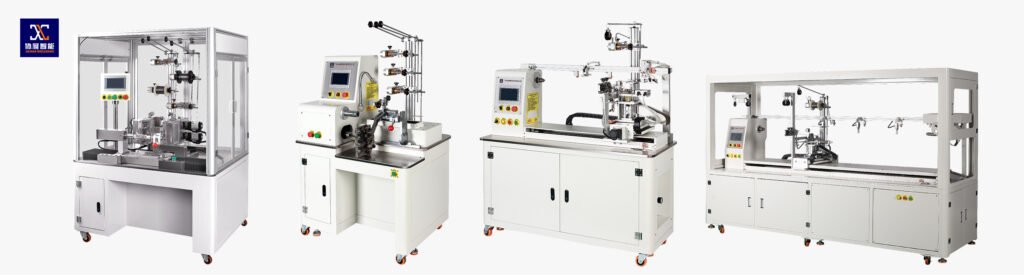
Typical Manufacturing Issues Linked to Incorrect Equipment Decisions
Many factories only realize a machine was the wrong choice after production has already started. The initial quotation may look competitive and the machine may appear capable during testing, but once the equipment enters real manufacturing conditions, problems begin to appear. For procurement managers and engineering teams, this is one of the most expensive mistakes in industrial purchasing. In coil production, heating element manufacturing, and cable component fabrication, selecting the wrong winding machine can cause unstable output, inconsistent product quality, and unexpected downtime.
The key challenge is that equipment problems rarely appear immediately. Instead, they develop gradually during continuous operation, which makes the root cause harder to identify.
The Hidden Cost of Choosing the Wrong Machine
When a factory selects equipment based primarily on price or basic specifications, the short-term savings often turn into long-term operational losses. Industrial studies published by the International Federation of Robotics show that poorly matched automation equipment can reduce production efficiency by up to 30% when operating under real manufacturing loads.
In industries involving precision wire processing, even small mechanical inconsistencies can affect thousands of finished products each day.
Correct Equipment vs. Incorrect Equipment Choice
To understand the consequences more clearly, it helps to compare how properly selected machines behave versus those that are poorly matched to the production process.
| Production Condition | Proper Equipment Selection | Incorrect Equipment Selection |
|---|---|---|
| Coil consistency | Stable pitch and uniform coil structure | Irregular spacing and inconsistent diameter |
| Machine operation | Continuous production with minimal adjustment | Frequent operator corrections |
| Maintenance frequency | Predictable maintenance schedule | Unexpected breakdowns |
| Production efficiency | Stable output and consistent cycle time | Frequent slowdowns or stoppages |
These differences highlight why experienced manufacturing buyers evaluate equipment performance beyond initial appearance or pricing.
Typical Production Problems After Equipment Misalignment
1. Inconsistent Product Quality
One of the most common consequences of incorrect equipment selection is inconsistent product quality. In heating coil production, small changes in wire tension or winding pitch can lead to performance variation in the final product.
Factories producing resistance heating elements or precision coils often require stable winding parameters over thousands of cycles. Machines that lack proper tension control or motion synchronization may produce coils that fail quality inspections.
2. Unexpected Machine Downtime
Equipment that is not designed for a specific production load tends to experience higher failure rates. Motors may overheat, mechanical parts wear faster, or control systems struggle to maintain synchronization.
According to maintenance statistics from manufacturing plants in Europe and Asia, nearly 40% of unplanned machine downtime originates from equipment mismatches rather than component failure alone.
3. Increased Production Costs
Incorrect equipment does not only affect productivity; it also increases operating costs. Operators must spend additional time adjusting parameters, replacing worn parts, or correcting product defects.
These small inefficiencies accumulate quickly when production runs continuously.
4. Limited Production Flexibility
Factories that select overly simplified machines often discover that the equipment cannot adapt to new product designs or wire specifications. As a result, manufacturers may need additional machines earlier than expected.
Why Similar Machines Can Lead to Different Outcomes
A common reason factories choose the wrong equipment is that machines often look similar during evaluation. Frames, control panels, and general layouts may appear nearly identical across different suppliers.
However, real performance differences usually originate from deeper engineering factors such as structural rigidity, control software logic, and manufacturing precision.
Buyers exploring different machine types can review the available equipment structures within the winding machine section to better understand configuration differences.
How Experienced Buyers Reduce Equipment Risk
Industrial procurement teams with experience in production equipment often follow several practical steps before finalizing a purchase decision.
- Evaluate machines under real production conditions
- Request detailed engineering explanations from suppliers
- Compare long-term maintenance requirements
- Analyze existing customer installations
Many manufacturers also review previous cooperation cases between equipment suppliers and factories before confirming a project. Such references can often be seen in the client cooperation section.
Engineering Experience Matters More Than Appearance
Mature equipment manufacturers typically focus on engineering depth rather than only external machine structure. Structural design testing, precision machining, and long-term durability studies help ensure machines operate reliably in real production environments.
Information about manufacturing background, engineering experience, and equipment development can usually be found on the about us page of equipment factories.
This engineering perspective is one reason why experienced buyers evaluate suppliers based on long-term reliability rather than simply comparing quotations.
FAQ: Questions Manufacturers Often Ask
How can factories avoid choosing the wrong machine?
Evaluating machines under realistic production conditions, reviewing supplier experience, and verifying engineering capabilities are effective ways to reduce equipment selection risk.
Are custom machine configurations common?
Yes. Many industrial equipment manufacturers customize machines according to wire diameter range, coil geometry, and production capacity requirements.
What information should buyers provide to equipment suppliers?
Typical information includes wire material, coil diameter, pitch spacing, production speed expectations, and automation level requirements.
Discussing Equipment Selection Before Production Begins
Choosing equipment for coil or wire production should be treated as a long-term manufacturing decision rather than a simple purchasing step. Machines that appear similar during evaluation may behave very differently during continuous production.
Discussing production goals with experienced equipment engineers before purchasing helps manufacturers avoid costly adjustments later. If your team is evaluating equipment for a new production line, you can share your project details through the contact us page for further discussion.