
Key Factors When Choosing a Mica Punching Machine
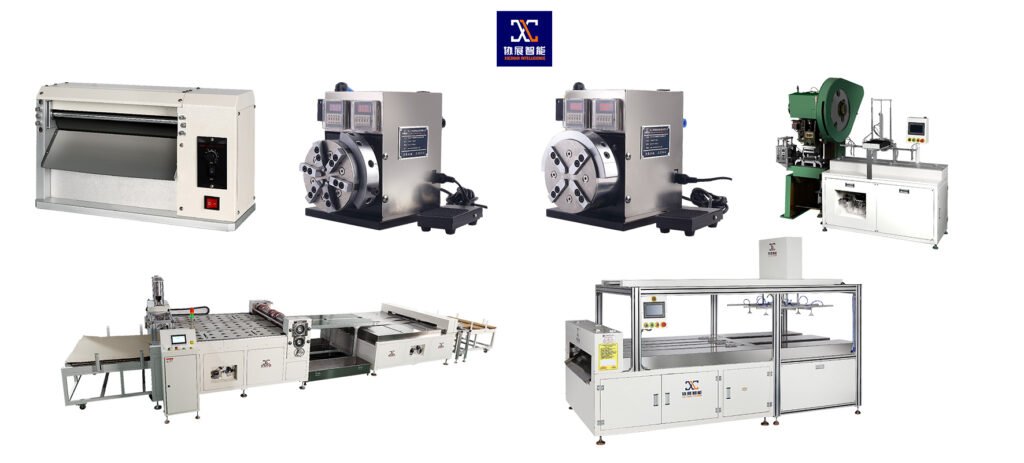
Selecting the Right Mica Punching Solution for Long-Term Manufacturing Success
If you’re comparing mica punching machines from different suppliers, the most important question isn’t how fast the machine runs—it’s whether it can deliver consistent parts after months of continuous production. Stable punching accuracy, reliable feeding, durable tooling and compatibility with your mica material will have a much greater impact on production cost than the nominal speed shown in a quotation. Buyers who evaluate the complete manufacturing process instead of isolated specifications usually make better long-term investments.
What Questions Should You Answer Before Comparing Machines?
Many procurement projects begin by requesting quotations from several suppliers. However, experienced engineering teams usually start by asking internal production questions instead. The reason is simple: equipment should match manufacturing requirements, not the other way around.
Before evaluating any mica sheet punch press, identify four production variables: the dimensions of the finished component, mica material type, annual production volume and downstream assembly process. These variables directly determine punching force, die structure, feeding accuracy and production rhythm. Ignoring any one of them often results in unnecessary tooling changes or unstable production later.
For example, manufacturers producing heating elements for electric ovens usually require repeatable positioning across thousands of identical parts. In contrast, factories serving multiple OEM customers often process small production batches with frequent product changes. Although both use mica punching equipment, the preferred machine configuration can be completely different.
Factories achieving the lowest production cost rarely purchase the fastest machine. Instead, they reduce downtime between orders by selecting equipment that matches their most common product specifications and supports quick tooling adjustments.
Another factor that deserves attention is the relationship between punching and subsequent manufacturing stages. If punched mica sheets are immediately transferred to forming, riveting or heating element assembly, dimensional consistency becomes more valuable than marginal increases in machine speed. Stable geometry simplifies every downstream operation.
Prepare sample drawings, annual production quantities and actual mica material specifications before requesting quotations. This information allows suppliers to recommend a practical configuration rather than a generic machine model.
From our experience, companies that invest time in defining production objectives before comparing equipment usually complete commissioning faster and encounter fewer tooling modifications after installation.
If your production line includes cutting, trimming, punching and feeding operations, evaluating the complete workflow is often more effective than selecting each machine independently. You can review different processing solutions in our Mica Sheet & Mica Board Processing Machines collection to compare equipment designed for different manufacturing stages.
How Does Material Selection Affect Punching Performance?
Material properties influence punching quality far more than many buyers expect. Different mica compositions, binder formulations and board densities respond differently under identical punching force. Assuming one die setup can process every material efficiently is one of the most common causes of premature tool wear and inconsistent edge quality.
Mechanically, punching works by concentrating force within a very small clearance between the punch and die. When material density or elasticity changes, the fracture characteristics also change. Excessive clearance can leave rough edges or burrs, while insufficient clearance increases die wear and machine load. Selecting suitable tooling for the actual mica grade is therefore just as important as choosing the press itself.
Which Machine Configuration Fits Different Production Scenarios?
One question frequently raised during technical discussions is whether a standard punching machine is sufficient or an automatic feeding system should be included from the beginning. My recommendation is to evaluate the number of repeated operations rather than today’s order quantity. If operators repeatedly load identical mica sheets throughout the day, automation usually produces measurable gains in consistency before it noticeably increases production speed.
The mechanical reason is straightforward. Manual loading introduces small variations in positioning because every operator naturally places material with slight differences. An automatic feeding mechanism delivers the sheet to exactly the same reference position every cycle. Stable positioning allows the punch and die to work under identical conditions, reducing dimensional variation while extending tooling life.
For manufacturers processing large batches of heating element insulation components, an automatic feeding solution such as the XZ-SL300 Mica Sheet Automatic Stamping and Feeding Machine helps reduce repetitive manual handling. Instead of requiring operators to position every sheet individually, the machine maintains a continuous and repeatable feeding rhythm, allowing the punching station to operate under more stable conditions throughout long production runs.
| Production Situation | Recommended Equipment | Primary Consideration | Expected Result | Suitable Buyer |
|---|---|---|---|---|
| Prototype development | Manual punching system | Tooling flexibility | Lower initial investment | R&D departments |
| Medium batch production | Punch press with positioning fixture | Repeatability | Stable dimensional control | OEM manufacturers |
| High-volume manufacturing | Automatic feeding system | Continuous production | Reduced labor variation | Appliance factories |
| Multiple product sizes | Quick-change tooling solution | Fast changeover | Less downtime | Contract manufacturers |
Calculate tooling change frequency before comparing production speed. In many factories, reducing one tooling change per shift creates greater productivity gains than increasing punching speed by several percent.
Industry reports published by manufacturing organizations including Fraunhofer IPA consistently show that positioning repeatability and process stability contribute more to long-term manufacturing efficiency than isolated increases in machine cycle speed. For repetitive stamping operations, reducing variation between cycles generally improves downstream assembly quality while lowering maintenance costs.
Material quality should also be evaluated together with equipment capability. Different mica formulations vary in density, resin content and thermal performance, all of which influence punching characteristics and die life. If you are still comparing suppliers, our review of Top 13 Mica Sheet Manufacturers in China provides an overview of commonly used industrial mica materials and their manufacturing applications before equipment selection.
Why Does Die Design Matter More Than Press Tonnage?
Many buyers compare punching force first because it is one of the easiest specifications to find in a quotation. In actual production, however, die design usually has a greater influence on finished part quality than increasing press tonnage. Once the punching force exceeds the material requirement, additional capacity rarely improves edge quality or dimensional consistency.
The mechanical reason lies in how mica fractures during punching. A properly designed die controls stress concentration and guides material separation evenly around the cutting profile. When punch clearance, guide accuracy and stripper force work together, the material separates cleanly with less cracking and lower tool wear. Increasing tonnage without improving die geometry simply applies more force to an unchanged cutting condition.
This is especially important when manufacturing heating elements with multiple slots, mounting holes or irregular contours. Complex geometries require stable guidance and repeatable tool alignment far more than excessive pressing force. Buyers planning long production runs should therefore evaluate tooling capability together with the machine instead of treating them as independent purchases.
In many factories, replacing or regrinding tooling is scheduled according to dimensional inspection trends rather than fixed production quantities. Monitoring quality variation allows maintenance to be planned before defective parts begin to appear.
When requesting quotations, ask suppliers how tooling is manufactured, aligned and serviced after installation. Long-term maintenance capability is often more valuable than a lower purchase price.
How Can You Evaluate a Supplier Beyond Machine Specifications?
Two suppliers may offer machines with similar specifications, yet deliver very different production results after installation. The difference usually comes from engineering support rather than hardware alone. A supplier familiar with heating element manufacturing understands how punching interacts with cutting, forming and final assembly, making equipment recommendations based on the entire production workflow.
During equipment evaluation, I normally recommend asking practical questions instead of specification questions. For example: How long does a tooling change typically take? How is punching accuracy maintained after several months of continuous production? What spare parts are stocked? How quickly can replacement tooling be supplied? These answers reveal much more about long-term operating reliability than a specification sheet.
Another useful indicator is whether the supplier has experience serving manufacturers with production requirements similar to yours. Companies that have delivered equipment to appliance, industrial heater or thermal component manufacturers are often better prepared to anticipate application-specific challenges and recommend practical solutions.
If you would like to see how different production requirements have been addressed in real manufacturing environments, you can review our Client Cooperation projects. They demonstrate how equipment configurations are selected according to product requirements rather than applying the same solution to every factory.
The most successful equipment projects usually begin with production drawings and sample materials instead of machine catalogs. Understanding the product first makes it much easier to determine the correct punching solution, tooling configuration and level of automation.
What Is the Most Practical Way to Compare Different Suppliers?
After technical discussions, many buyers still struggle to make the final decision because several suppliers appear to offer similar machines. At this stage, comparing quotations line by line is rarely enough. A more practical approach is to compare how each supplier responds to the same production challenge.
For example, provide identical production drawings, the same mica material specification and your expected monthly output to every supplier. Then evaluate the proposed punching process, tooling concept, feeding method, estimated maintenance intervals and future upgrade possibilities. Suppliers with genuine manufacturing experience usually explain why they recommend a particular solution instead of simply listing machine specifications.
Another useful comparison is the level of engineering communication. Experienced manufacturers normally ask detailed questions about burr tolerance, hole positioning, downstream assembly, operator workflow and tooling replacement schedules. These discussions indicate that the supplier understands the complete manufacturing process rather than focusing only on selling equipment.
Request sample production using your own drawings and mica material whenever possible. Evaluating real parts under production conditions provides far more meaningful information than comparing catalogs or demonstration videos.
Final Thoughts on Choosing the Right Mica Punching Machine
Selecting a mica punching machine is ultimately a manufacturing decision rather than simply an equipment purchase. Successful projects begin with a clear understanding of product requirements, production volume, material characteristics and future expansion plans. Once these factors are defined, the most suitable machine configuration becomes much easier to identify.
Throughout years of serving heating element manufacturers, one pattern has remained consistent. Companies achieving stable productivity rarely pursue the highest punching speed or the largest press capacity. Instead, they invest in repeatable positioning, reliable tooling, consistent feeding and engineering support that keeps production running smoothly over time.
Whether your project involves a single punching station or a complete mica processing line, evaluating the interaction between equipment, tooling and production workflow will lead to a more sustainable investment. This approach not only improves finished part consistency but also reduces maintenance costs, tooling consumption and unexpected production interruptions throughout the equipment lifecycle.
The best machine is not necessarily the one with the most impressive specifications. It is the one that consistently produces qualified parts with predictable operating costs while adapting to your factory’s long-term production strategy.
If you are evaluating a new project or replacing existing equipment, our engineering team can review your drawings, material specifications and production objectives before recommending a suitable solution. This helps ensure that machine selection is based on actual manufacturing requirements rather than assumptions.
To discuss your application or request technical recommendations, please visit our Contact Us page. We will work with you to assess your production process and recommend equipment that supports stable, efficient and long-term manufacturing performance.
Contact Our Team
Similar Posts
Top 13 Top Nichrome Wire Winding Machine Manufacturers in China
ByXiezhanTop 13 Nichrome Wire Winding Machine Manufacturers in China 2026 – Expert Buyer’s Guide Top 13 Nichrome Wire Winding Machine Manufacturers in China 2026 A Field-Verified Expert Guide for Global Heating Element Equipment Buyers 🇨🇳 China NiCr Winding Machine Focus — Q1 2026 Updated 📋 Who This Guide Is For 🏭Heating element OEM manufacturers sourcing…
Ripple Heating Wire Machine for Corrugated Coil Production
ByXiezhanHow Buyers Choose the Right Corrugated Heating Coil Production Line If you are sourcing a ripple heating wire machine, the real question is not “Which machine is cheapest?” It is: which machine can produce stable corrugated heating wire with consistent pitch, repeatable ripple depth, and low rejection rates over long production runs. Buyers in hair…
Transitioning from Manual to Semi-Automatic Winding
ByXiezhanWhy More Factories Are Moving Beyond Pure Manual Coil Winding For most factories, the transition from manual winding to semi-automatic production does not begin with automation goals. It usually begins with production pressure. Operators struggle to maintain consistency, output becomes unstable as order volume increases, and delivery delays start affecting customer relationships. At that stage,…
Mica Sheet Punch Press vs Die Cutting Equipment: What’s the Difference?
ByXiezhanChoosing Between Punch Press and Die Cutting Systems for Mica Component Production For manufacturers producing heating elements, thermal insulation assemblies, and electrical heater components, one common purchasing question appears repeatedly: should the factory use a mica sheet punch press system or invest in dedicated mica die cutting equipment? The answer depends less on machine labels…
Why Consistent Tension Reduces Warranty Issues
ByXiezhanIf you are dealing with recurring warranty claims in heating appliances, the root cause often goes back to one overlooked factor: inconsistent tension during coil winding. It does not show up during initial inspection, but over time, uneven stress inside the coil leads to deformation, resistance drift, and eventual failure. From a procurement perspective, controlling…
Manual vs CNC Mica Processing Machines
ByXiezhanHow to Choose Between Manual and CNC Equipment for Mica Manufacturing Many manufacturers upgrading their production line ask the same question: should they continue using manual mica processing equipment or invest in a CNC solution? The answer depends on production objectives rather than technology preference. Manual machines remain practical for low-volume or frequently changing products,…