
How to Evaluate Machine Stability in Long Shifts
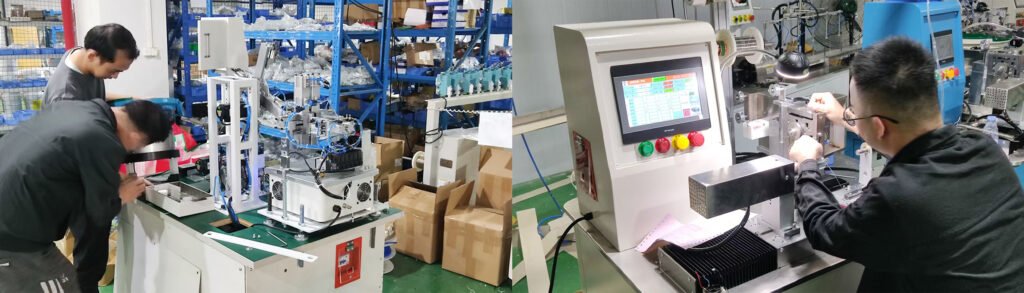
Practical Methods to Assess Equipment Stability During Continuous Production
Factories rarely run machines for just a few minutes. In real manufacturing environments, equipment often operates for eight, twelve, or even twenty-four hours per day. This is why experienced procurement managers evaluate not only machine capability but also how stable the machine remains during long shifts. For production lines involving coil manufacturing, heating elements, or precision wire processing, an unstable winding machine can gradually reduce product quality and increase maintenance costs. Understanding how to evaluate machine stability before purchasing helps prevent many of these operational risks.
Short demonstrations can make most machines appear capable. The real question is how the equipment behaves after several hours of continuous operation.
Why Long-Shift Stability Matters in Manufacturing
Industrial machines experience very different conditions during extended production compared with short test runs. Motors heat up, mechanical components experience continuous load, and control systems must maintain synchronization over thousands of cycles.
According to manufacturing reliability studies published by the American Society of Mechanical Engineers, mechanical systems operating in continuous shifts experience performance variations that may increase by more than 20% if design tolerances are insufficient.
For factories producing coils or heating components, even minor instability can affect wire tension, winding accuracy, or production cycle time.
Step-by-Step: How Procurement Teams Evaluate Machine Stability
Experienced buyers typically follow several evaluation steps before confirming equipment selection. These steps focus on real production conditions rather than short equipment demonstrations.
Step 1: Observe Continuous Operation Testing
A machine that performs well for ten minutes may behave differently after two hours of operation. Procurement teams often request extended production tests when evaluating industrial equipment.
During these tests, engineers observe whether the machine maintains consistent coil geometry, stable winding speed, and reliable tension control.
Factories comparing different configurations can explore equipment structures within the winding machine section to understand how machine designs influence stability.
Step 2: Monitor Temperature and Mechanical Load
Long shifts place sustained mechanical load on motors, bearings, and transmission components. Temperature monitoring during testing helps determine whether the machine can operate reliably during extended production.
Stable machines typically maintain consistent operating temperatures without significant increases during prolonged operation.
Step 3: Evaluate Vibration and Structural Rigidity
Machine vibration often increases gradually during continuous production. Weak frames or imprecise machining can lead to structural instability when machines run at higher speeds.
Excessive vibration may affect coil alignment or cause long-term mechanical wear.
Step 4: Check Production Consistency Over Time
A reliable machine should produce identical results at the beginning and end of a production shift. Procurement teams often compare sample products produced at different stages of the test run.
For coil manufacturing equipment, this means verifying consistent pitch spacing, uniform coil diameter, and stable wire tension throughout the shift.
Step 5: Evaluate Operator Interaction Requirements
Machines requiring constant operator adjustment are usually less stable in long-term production. Mature equipment designs typically allow operators to set parameters once and maintain stable performance during extended runs.
Key Indicators of Long-Term Equipment Stability
When evaluating industrial equipment for continuous production, procurement teams often focus on several measurable indicators.
| Indicator | Stable Machine Behavior |
|---|---|
| Temperature control | Operating temperature remains consistent |
| Vibration level | Minimal vibration during high-speed operation |
| Product uniformity | Identical coil geometry throughout production |
| Operator intervention | Minimal manual adjustments required |
Machines meeting these criteria are generally better suited for factories running continuous shifts.
Common Warning Signs During Equipment Testing
Even during supplier demonstrations, experienced engineers look for signs that indicate potential stability issues.
- Motor temperature rising quickly during extended operation
- Gradual change in coil pitch during long test runs
- Increased vibration at higher speeds
- Frequent operator adjustments to maintain production quality
These warning signs often indicate that the equipment may struggle during full production workloads.
Why Supplier Experience Also Influences Machine Stability
Machine stability is not determined only by hardware components. Engineering experience plays a major role in how equipment performs during real manufacturing conditions.
Equipment manufacturers specializing in coil production or wire processing typically refine their designs over multiple projects and production environments.
Factories evaluating supplier capability often review real project cases available in the client cooperation section to understand how machines perform in different industries.
Understanding the Engineering Behind Reliable Machines
Reliable industrial equipment usually results from long-term engineering development. Structural rigidity, precision machining, and well-designed control systems contribute to stable performance during continuous operation.
Information about manufacturing background and engineering expertise can typically be found on the about us page of equipment manufacturers.
For experienced buyers, evaluating engineering capability is often as important as comparing machine specifications.
FAQ: Questions Procurement Teams Often Ask
How long should machine testing run during evaluation?
Many manufacturers recommend continuous testing of at least one to two hours to simulate real production conditions before finalizing equipment selection.
Can machine stability improve with operator experience?
Operator familiarity helps, but true stability primarily depends on machine design, component quality, and control system precision.
Are winding machines customizable for different production shifts?
Yes. Many equipment manufacturers adjust motor configurations, automation level, and control parameters according to production capacity requirements.
Discussing Long-Shift Production Requirements
Evaluating machine stability is one of the most important steps when planning new production lines. Equipment that performs well during short demonstrations may behave differently under real manufacturing workloads.
Discussing production schedules, coil specifications, and automation expectations with experienced equipment engineers helps ensure the selected machine can operate reliably during extended shifts. If your factory is planning equipment upgrades or new installations, you can share your production requirements through the contact us page for further discussion.