
How Heater Coil Winding Machines Work in Heating Element Production
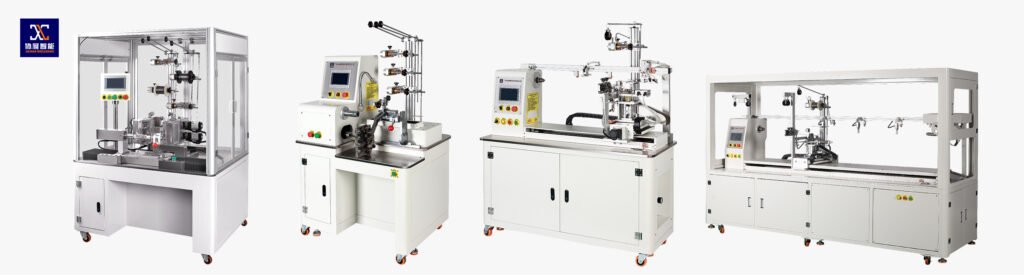
When sourcing a heater coil winding machine, the real concern is not how it spins—but whether it can produce stable, repeatable heating elements under real production conditions. Most machines can wind wire. Few can maintain resistance accuracy, coil geometry, and downstream compatibility at scale. Understanding how these machines actually work inside a heating element production line helps avoid costly mismatches between equipment capability and product requirements.
Why Do Many Winding Machines Fail in Real Production?
On paper, many machines look similar: programmable control, adjustable speed, multi-axis capability. But in practice, failure often shows up in three areas:
- Inconsistent coil pitch under continuous operation
- Resistance deviation caused by micro wire stretching
- Poor compatibility with mica carriers and assembly stages
From field observations, these issues are not caused by a single component, but by how the system handles dynamic stress. In heating element production, especially for hair dryers and electric heaters, even slight instability compounds over thousands of cycles.
According to industry manufacturing studies, resistance deviation beyond ±3% significantly increases failure rates in appliance heating systems. This is where machine design matters more than speed.
How Does a Heater Coil Winding Machine Actually Work?
At its core, the process is simple: wire feeding → tension control → winding → positioning → cutting or transfer. But each stage determines final product quality.
1. Wire Feeding and Straightening
Resistance wire (nichrome or FeCrAl) is fed through a guiding system. High-quality machines apply controlled straightening to remove residual curvature without altering material properties.
2. Dynamic Tension Control
This is the most critical part. The machine must maintain constant tension even as spool diameter changes. Advanced systems use servo feedback instead of mechanical braking.
If tension fluctuates:
- Coil diameter becomes unstable
- Pitch spacing varies
- Electrical resistance shifts
3. Precision Winding and Pitch Control
The spindle rotates while the guide moves laterally. The coordination between these two motions defines coil geometry. This is where software and mechanical accuracy intersect.
4. Integration with Mica Structures
Unlike general coil winding, heating element production requires the coil to match mica slots or frames. Misalignment at this stage leads to assembly inefficiency.
5. Output and Transfer
Finished coils are either transferred directly into assembly or stored for further processing. In integrated systems, this step is synchronized with downstream eyelet riveting.
What Determines Performance Beyond Basic Function?
Two machines can follow the same process but deliver completely different results. The difference comes down to engineering depth.
| Factor | Low-End Machines | Process-Oriented Machines | Impact |
|---|---|---|---|
| Tension Control | Mechanical | Servo Closed-loop | Stability |
| Frame Rigidity | Light Structure | Heavy Machined Frame | Vibration Control |
| Control System | Basic PLC | Programmable Profiles | Repeatability |
| Process Integration | Standalone | Line Integration | Efficiency |
Why Do Experienced Buyers Focus on Stability Instead of Speed?
In procurement discussions, speed is often the first question. But experienced engineers quickly shift focus to consistency.
Based on production data from appliance manufacturers:
- Reducing defect rate from 5% to 2% increases usable output more than increasing speed by 10%
- Stable winding reduces downstream assembly adjustment time by up to 18%
This is why many buyers compare machines not by maximum RPM, but by stable operating range.
Regional Differences in Understanding These Machines
Different markets use different terminology:
- Europe: heating element winding system
- India / Southeast Asia: heater coil machine
- China: heating wire winding machine
Despite naming differences, the expectation is the same: reliable production of heating elements with minimal variation.
What Separates a Specialized Manufacturer from a Generic Supplier?
At Guangdong Xiezhan, the approach is not to design a fast machine, but to design a machine that fits into a heating element production system.
As a focused manufacturer and factory, we consider:
- Wire type and resistance requirements
- Mica structure compatibility
- Downstream eyelet riveting alignment
- Long-term maintenance cycles
This system-level thinking is why many clients shown in client cooperation cases prioritize process stability over isolated machine specifications.
Common Limitations in the Market
Many machines on the market face similar constraints:
- Speed optimized without tension accuracy
- Limited adaptability to different wire diameters
- No integration with mica or assembly stages
These limitations often appear only after installation, not during supplier discussions.
How to Evaluate Before Purchase
If you are comparing suppliers, focus on:
- Sample consistency across long runs
- Resistance deviation testing
- Compatibility with your heating element design
- Ability to customize winding profiles
You can also review industry comparisons such as top heater coil winding machine manufacturers to understand positioning differences.
Final Thought for Decision Makers
A heater coil winding machine is not just a forming tool. It is a control system that determines whether your heating element performs consistently over thousands of cycles.
If your goal is long-term production stability rather than short-term output, the machine must be evaluated as part of the entire manufacturing process.
For detailed discussion on your specific application, you can reach out through the contact page.