
Why Consistent Tension Reduces Warranty Issues
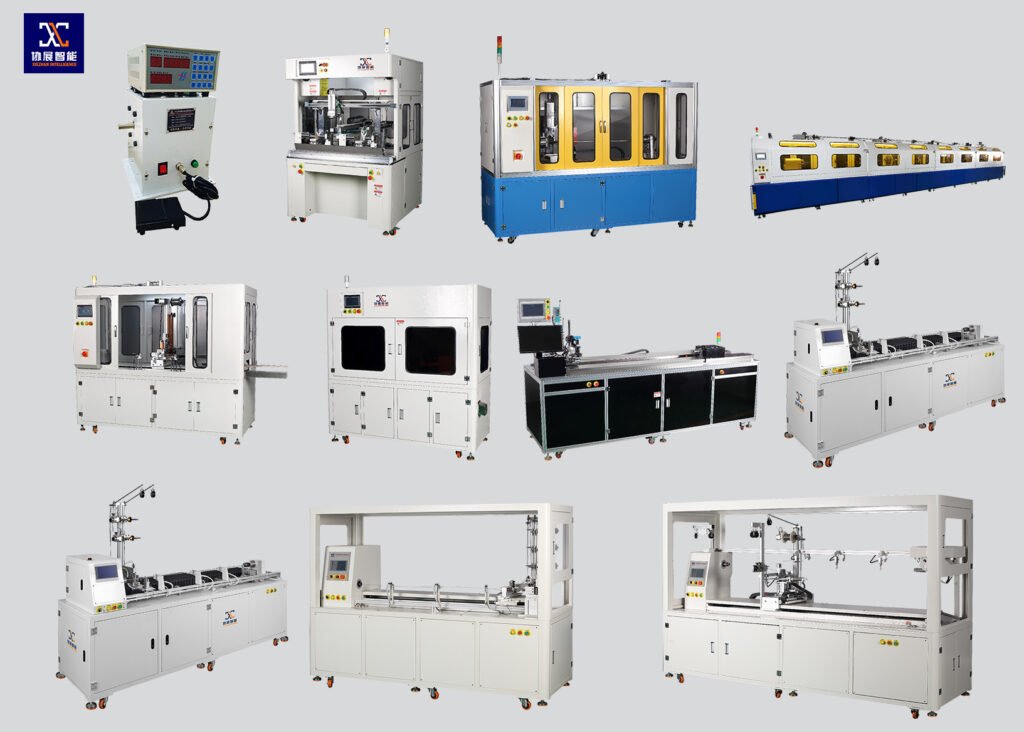
If you are dealing with recurring warranty claims in heating appliances, the root cause often goes back to one overlooked factor: inconsistent tension during coil winding. It does not show up during initial inspection, but over time, uneven stress inside the coil leads to deformation, resistance drift, and eventual failure. From a procurement perspective, controlling tension is one of the most effective ways to reduce long-term product risk.
Why Does Tension Consistency Matter More Than Most Buyers Expect?
In heating element production, the winding process defines how the resistance wire behaves under thermal load. Tension is not just a mechanical parameter—it directly affects internal stress distribution.
When tension is stable:
- Wire deformation is minimized
- Coil geometry remains consistent
- Resistance values stay within tighter tolerances
When tension fluctuates:
- Localized stress points develop
- Coils expand unevenly during heating
- Early-stage degradation accelerates
Industry observations show that inconsistent tension can increase field failure rates by 15–25% in small appliance heating systems.
How Does Poor Tension Control Lead to Warranty Issues?
Warranty issues rarely originate from a single failure. They build up through small inconsistencies introduced during production.
1. Resistance Drift Over Time
Uneven tension stretches parts of the wire differently, leading to resistance variation after repeated heating cycles.
2. Coil Deformation in Operation
Stress imbalance causes coils to expand or sag unevenly, especially in high-temperature environments.
3. Hot Spot Formation
Irregular spacing leads to localized overheating, which accelerates material fatigue.
4. Reduced Assembly Stability
Inconsistent coil dimensions create fitting issues within mica supports, increasing mechanical stress during use.
These issues may not be detected during factory testing but appear after weeks of real usage—leading directly to warranty claims.
What Makes Tension Control Difficult in Practice?
Maintaining constant tension is more complex than it appears, especially in high-speed production.
Key challenges include:
- Changing wire spool diameter during operation
- Variation in wire material properties
- Speed fluctuations during winding cycles
- Mechanical friction and guide resistance
Without proper control systems, these variables cause continuous tension fluctuation.
How Do Advanced Winding Machines Solve This?
Modern winding machine systems address tension control through integrated mechanical and electronic design.
| Aspect | Basic Machines | Advanced Systems | Impact |
|---|---|---|---|
| Tension Control | Manual / passive | Closed-loop feedback | Stable wire behavior |
| Adaptability | Limited | Auto adjustment | Consistent output |
| Speed Stability | Variable | Synchronized control | Reduced defects |
| Long-Term Result | Inconsistent quality | Repeatable performance | Lower warranty risk |
Why Do Some Factories Still Ignore This Factor?
From a cost perspective, tension control is not always prioritized because its impact is not immediate.
Common misconceptions include:
- “If the coil looks correct, it is acceptable”
- “Material quality is more important than process control”
- “Manual adjustment is sufficient for small production runs”
However, these assumptions fail under continuous production conditions.
How Do Experienced Buyers Evaluate Tension Stability?
Buyers with long-term production responsibility approach this differently.
Instead of focusing on initial output, they evaluate:
- Resistance consistency across batches
- Performance after thermal cycling tests
- Machine stability during extended operation
- Maintenance frequency and calibration needs
Manufacturing data suggests that improved process consistency can reduce after-sales issues by up to 20%.
What Differentiates a Specialized Manufacturer?
At Guangdong Xiezhan, tension control is treated as a core design factor rather than an add-on feature.
As a dedicated manufacturer and factory, the design approach includes:
- Integrated tension control systems aligned with wire characteristics
- Machine structures designed to minimize vibration impact
- Process compatibility with mica heating element assembly
- Optimization for long production cycles
This level of control is reflected in real production environments documented in client cooperation cases.
How to Reduce Warranty Risk Through Better Equipment Selection
Reducing warranty issues starts long before products reach the market.
Key steps include:
- Select machines with proven tension control systems
- Test coil performance under simulated operating conditions
- Evaluate long-term consistency, not just initial quality
- Compare suppliers based on real application experience
You can also review broader market comparisons such as heater coil winding machine manufacturers to understand differences in design approach.
Final Perspective for Decision Makers
Warranty issues in heating elements are rarely random—they are often the result of process instability during winding.
Consistent tension ensures that every coil starts with uniform internal stress, stable geometry, and predictable behavior under thermal load.
If you are evaluating equipment for your production line, you can discuss your requirements through the contact page.