
Top Features to Look for in a Mica Processing Machine
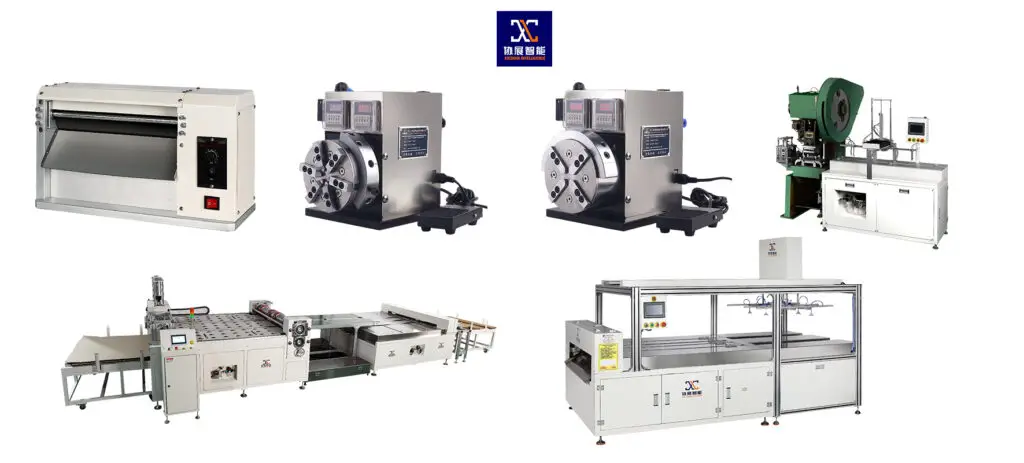
What Experienced Buyers Really Check Before Purchasing a Mica Processing System
Most buyers initially compare a mica processing machine based on price, cutting speed, or automation level. In reality, long-term production stability depends on a different set of factors: positioning accuracy, feeding consistency, servo response, edge quality, and whether the machine can handle material variation without constant manual adjustment. In heating element manufacturing, even small instability in mica board shaping or punching can create assembly problems later in production. That is why mature factories evaluate processing equipment from an engineering and workflow perspective instead of looking only at machine size or advertised capacity.
In recent years, demand for industrial mica processing solutions has increased significantly in industries such as household heating appliances, band heaters, cartridge heaters, infrared heating systems, and electrical insulation manufacturing. At the same time, manufacturers are under pressure to reduce labor dependency while maintaining dimensional consistency. This shift is pushing more factories toward integrated automated mica board machine systems and CNC-controlled forming equipment.
Factories producing heating elements at medium-to-large volume increasingly prefer modular automation layouts instead of isolated standalone equipment. Buyers now expect feeding, cutting, trimming, and forming processes to work together with minimal manual handling.
Why Machine Features Matter More Than Advertised Speed
One of the most common purchasing mistakes is assuming that faster machine movement automatically means higher productivity. In mica processing, unstable feeding often creates more downtime than slow cycle speed. Operators stop the machine repeatedly to correct alignment, remove damaged material, or recalibrate dimensions.
For this reason, experienced procurement managers focus first on process stability. A stable machine running at 85% speed usually produces more acceptable output than an unstable machine running at 100% speed.
Production Stability Depends on System Coordination
A reliable mica processing machine is not simply a cutting device. It is a coordinated system involving:
- Servo motor response
- Linear guide accuracy
- Ball screw stability
- Material feeding consistency
- Pneumatic synchronization
- PLC motion control logic
- Human-machine interaction efficiency
This becomes especially important when processing brittle insulation materials where small vibration or feeding deviation may lead to edge cracking or inconsistent forming quality.
| Feature | Why It Matters | Production Impact | Typical Low-End Problem | Recommended Configuration |
|---|---|---|---|---|
| Servo Motor | Stable positioning and motion control | Higher repeatability | Dimension drift | Industrial servo system |
| Linear Guide Rail | Movement precision | Smoother cutting quality | Mechanical vibration | Taiwan-grade guide rails |
| Ball Screw | Positioning consistency | Reduced tolerance variation | Backlash deviation | TBI precision screw |
| PLC Control | Machine coordination | Stable automation | Frequent alarms | Mitsubishi or equivalent |
| Automatic Feeding | Labor reduction | Continuous production | Manual alignment errors | Integrated feeding module |
What Features Separate Industrial Machines from Basic Workshop Equipment?
There is a large difference between entry-level workshop equipment and true industrial mica processing systems. Many machines can technically cut or form mica sheets. The problem is whether they can maintain stable output during long production cycles.
For factories producing heating elements continuously, machine durability becomes far more important than short-term purchase cost.
1. CNC Dimension Adjustment
Manual dimension adjustment is still common in low-cost machines. However, repeated mechanical calibration slows production and increases operator dependency.
A CNC mica sheet forming machine allows operators to change product specifications directly through the control interface. This is especially valuable for OEM factories handling multiple product sizes in the same production line.
Factories serving export appliance brands often switch between multiple heater dimensions weekly. Machines without digital parameter storage create unnecessary setup downtime and increase adjustment errors.
2. Feeding and Positioning Consistency
In practical production environments, feeding accuracy influences output quality more than spindle speed. Uneven feeding creates:
- Offset punching positions
- Inconsistent forming geometry
- Waste material increase
- Assembly mismatch
- Higher scrap rates
Modern automated mica board machine systems increasingly integrate synchronized feeding with servo positioning to reduce operator correction frequency.
3. Multi-Specification Compatibility
One hidden cost in mica manufacturing is equipment inflexibility. Some machines only handle a narrow thickness range or limited sheet width.
A more valuable system supports multiple material specifications without major structural modification.
According to manufacturing automation studies in electrical insulation production, factories using flexible CNC-configurable equipment typically reduce specification changeover time by 30–45% compared with manually adjusted production systems.
Which Features Directly Affect Precision Mica Processing?
Precision is not determined by one component alone. It is the result of the entire machine structure working together under continuous operation.
Machine Rigidity
Lightweight frames may reduce initial machine cost, but they often introduce vibration during long operating cycles. This becomes particularly problematic when processing thin mica sheets where edge stability matters.
A rigid machine structure helps:
- Maintain cutting consistency
- Reduce burr formation
- Improve edge cleanliness
- Support long-term dimensional stability
Electrical Component Stability
Many buyers focus heavily on mechanical structure while ignoring electrical systems. In reality, unstable electrical control creates hidden downtime.
Industrial-grade electrical components from brands such as Omron, Chint, or Mitsubishi are commonly preferred because replacement support is easier in international markets.
Why Automation Is Becoming the New Standard in Mica Manufacturing
Labor availability is becoming a global manufacturing problem. In many countries, factories struggle to recruit operators for repetitive insulation processing tasks.
This is one reason why industrial mica processing solutions are rapidly moving toward integrated automation.
Automation Reduces Human Variation
Manual production often introduces:
- Uneven feeding pressure
- Misalignment
- Dimension inconsistency
- Operator fatigue errors
- Production interruption
Automation cannot eliminate every issue, but it dramatically reduces process variation.
Factories producing mica heating elements for export markets increasingly require dimensional consistency because downstream assembly lines are often automated as well. Inconsistent upstream processing causes bottlenecks later in production.
How Mature Buyers Evaluate Suppliers Beyond Machine Specifications
Machine specifications alone do not determine project success. Experienced buyers evaluate whether the supplier understands actual manufacturing conditions.
A professional manufacturer should discuss:
- Material characteristics
- Target output
- Operator skill level
- Future product expansion
- Maintenance accessibility
- Electrical standards
- Installation conditions
This is where experienced factories and trading-style suppliers become very different.
At Guangdong Xiezhan, many customer discussions focus less on “machine selling” and more on how to stabilize production lines for heating element manufacturing. Buyers usually care about repeatability, maintenance simplicity, spare parts accessibility, and future scalability.
What Are Common Mistakes When Selecting a Mica Processing Machine?
Mistake 1 — Focusing Only on Price
Low-price equipment often creates hidden operational costs:
- Frequent maintenance
- Higher material waste
- Operator dependency
- Longer setup time
- Lower dimensional consistency
Mistake 2 — Ignoring Material Variability
Mica sheets vary significantly depending on supplier quality, thickness consistency, and material composition. Machines designed without tolerance flexibility may perform well during testing but become unstable during real production.
Mistake 3 — Buying Standalone Machines Without Process Planning
Many factories initially purchase separate machines independently. Later, they discover feeding direction, production rhythm, or automation compatibility does not match.
That is why integrated planning matters when investing in automated mica board machine systems.
| Buyer Mistake | Typical Result | Operational Impact | Long-Term Cost | Better Approach |
|---|---|---|---|---|
| Choosing lowest price | Frequent breakdowns | Production interruptions | High maintenance cost | Evaluate total lifecycle value |
| Ignoring automation compatibility | Manual bottlenecks | Labor dependency | Expansion difficulty | Plan future line integration |
| Overlooking material variation | Inconsistent quality | Higher scrap rates | Lower output stability | Test multiple material types |
| Ignoring spare parts support | Long repair delays | Downtime increase | Production losses | Choose experienced manufacturer |
| Buying oversized systems | Underutilized capacity | Higher investment pressure | Slower ROI | Match machine to actual demand |
Why Long-Term Stability Is More Valuable Than Maximum Speed
In real production environments, consistent output usually matters more than peak speed performance.
A machine operating steadily for years creates:
- Lower rejection rates
- More predictable delivery schedules
- Reduced maintenance cost
- Higher customer confidence
- Better production planning
This is especially important in heating element manufacturing, where dimensional mismatch in mica insulation components may affect final product assembly and electrical safety.
Final Thoughts from a Manufacturing Perspective
The best mica processing machine is not necessarily the largest or fastest machine in the market. It is the machine that matches your material characteristics, production structure, labor condition, and long-term manufacturing strategy.
Factories focused on stable growth increasingly choose equipment that combines:
- Automation compatibility
- Reliable electrical systems
- Precision positioning
- Flexible configuration
- Long-term service support
If your factory is evaluating new industrial mica processing solutions, it is worth studying complete production workflows instead of comparing isolated machine parameters alone.
You can explore more equipment options in our Mica Sheet & Mica Board Processing Machines section.
For real manufacturing project references, visit our client cooperation page.
To learn more about our manufacturing background and engineering capabilities, visit about us.
If you want to discuss your production requirements directly with our engineering team, please visit our contact us page.
Contact Our Team
Similar Posts
Why Feeding Accuracy Matters in Mica Stamping Processes
ByXiezhanThe Overlooked Factor Behind Consistent Mica Stamping Quality When buyers evaluate a mica sheet punch press, most discussions revolve around punching force, tooling quality, cycle speed, or machine dimensions. Yet in real production environments, one factor repeatedly determines whether a factory achieves stable output or struggles with recurring quality issues: feeding accuracy. A stamping machine…
Spring Heating Wire Winding Machine for Spiral Heater Coils
ByXiezhanSpring Heating Wire Winding Machine The Spring Heating Wire Winding Machine is specialized equipment used to produce spiral-shaped resistance wire for electric heating elements. By forming resistance wire into a spring or coil structure, manufacturers can create heating components that provide stable temperature performance, efficient heat distribution, and reliable durability. Spring-shaped heating wire structures are…
ماكينة واحدة أم خط إنتاج كامل لعناصر التسخين؟
ByXiezhanهل تحتاج فعلاً إلى خط كامل أم أن ماكينة واحدة تكفي؟ إذا كان مصنعك ينتج كميات كبيرة من عناصر التسخين، فالسؤال الصحيح ليس: أي خيار أرخص، ماكينة واحدة أم خط كامل؟ السؤال هو: أين ستدفع التكلفة فعلياً خلال السنوات التالية؟ شراء ماكينة واحدة يخفض الاستثمار الأولي، لكنه قد يترك العمالة والنقل الداخلي والمخزون بين العمليات…
Medical Guide Wire Winding Machine for Precision Micro Coils
ByXiezhanMedical Guide Wire Winding Machine The Medical Guide Wire Winding Machine is a high-precision micro winding system designed for manufacturing extremely fine coils used in medical devices.This equipment is specifically engineered to produce micro spring wire and precision coils that are commonly used in medical guide wires and minimally invasive surgical instruments. Guide wires play…
How to Maintain Winding Accuracy Over Long Production Runs
ByXiezhanHow to Keep Winding Precision Stable During Continuous Production If your winding process starts accurately but loses consistency after several hours—or days—the issue is not unusual. In long production runs, even high-quality equipment can show small deviations that accumulate into visible defects. The key question is not whether drift happens, but how well your process…
Corrugated Heating Wire Winding Machine for Heater Elements
ByXiezhanThe Corrugated Heating Wire Winding Machine is designed to produce ripple or V-shaped resistance wires used in electric heating elements. Compared with straight resistance wire, corrugated heating wire provides larger heating surface area and more efficient heat distribution. These heating wires are widely used in products such as hair dryer heating elements, electric heater heating…