
Best Automation Solutions for Nichrome Coil Production
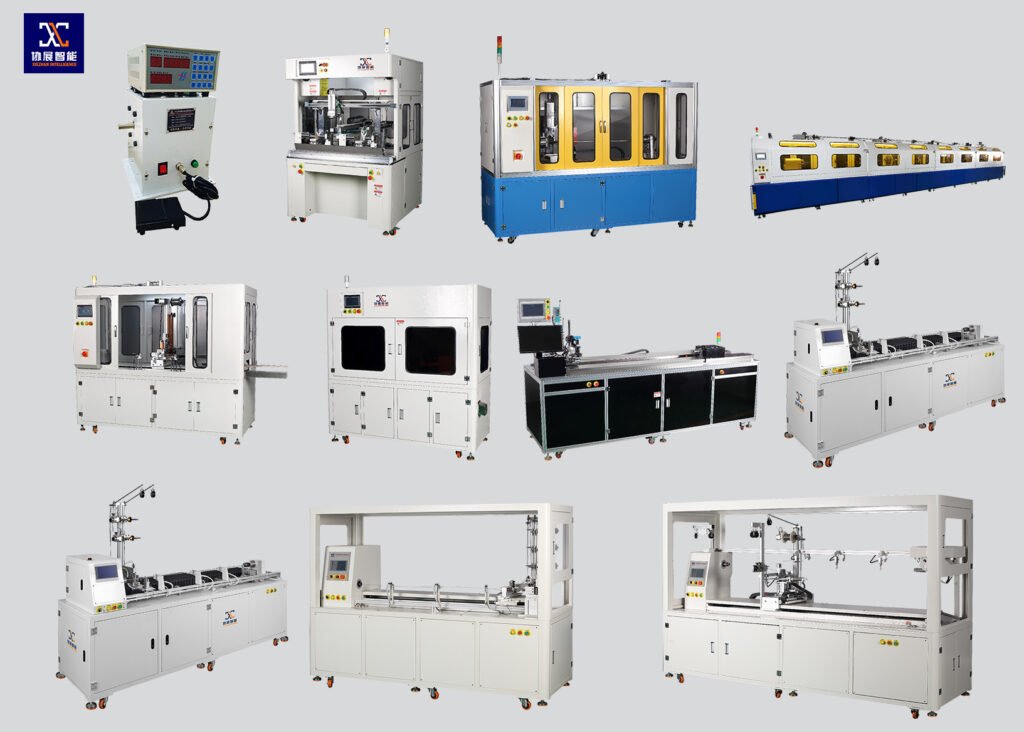
How Smart Factories Scale Nichrome Coil Output with Automation
If your nichrome coil production still depends on manual loading, operator adjustments, and repeated inspection, output growth will eventually stall. Most factories do not lose orders because demand is weak. They lose opportunities because production cannot scale with consistent quality. The right automation setup solves labor pressure, reduces coil variation, and creates predictable capacity.
If you are reviewing suppliers first, this nichrome winding machine manufacturers guide gives a clear overview of available manufacturing partners.
Why automation is becoming necessary in nichrome coil production
Ten years ago, many factories accepted manual adjustment as normal. Today, buyers expect stable resistance values, repeatable dimensions, and shorter lead times. That changes the economics of production.
- Labor cost continues to rise in most markets
- Operator skill is harder to replace
- Quality claims are more expensive than before
- Lead times are shorter across appliance and industrial sectors
Industry manufacturing surveys show automated coil production lines can improve usable output by 20% to 40% depending on starting conditions.
Where manual production usually breaks first
In our experience, bottlenecks appear in the same places across different factories.
Manual tension correction causes uneven spacing, affecting heating balance.
Output quality changes between shifts, especially on night production.
When process control is weak, factories compensate with more checking.
What are the best automation solutions today?
The best solution depends on production volume, wire type, tolerance target, and future expansion plans. Not every plant needs a fully robotic line on day one.
| Automation Level | Best For | Main Benefit | Investment Logic |
|---|---|---|---|
| Semi-Auto | Growing workshops | Lower labor pressure | Fast upgrade path |
| Servo Auto | Medium factories | Stable coil precision | Balanced ROI |
| CNC Line | Large OEM plants | High repeatability | Long-term scaling |
| Integrated Line | Multi-product plants | End-to-end efficiency | Lowest unit cost |
Which machine series fits your factory stage?
We usually recommend choosing by business stage rather than by headline speed numbers.
| Series | Typical Specs | Suitable User | Result |
|---|---|---|---|
| NC Series | 0.10–1.2 mm / 300–700 RPM | Standard heater makers | Stable daily output |
| CNC Series | ±0.02 mm pitch control | Precision manufacturers | Low defect rate |
| SPRING Series | Heavy coil forming | Tubular heater plants | Strong shaping capacity |
| MICA Series | Flat wire handling | Plate heater makers | Fast assembly flow |
What automation modules create the fastest return?
1. Automatic feeding
Reduces idle time and operator intervention. Usually the quickest visible productivity gain.
2. Closed-loop tension control
Keeps coil geometry stable across long runs, especially with thinner nichrome wire.
3. Auto cutting and discharge
Removes small repetitive tasks that consume labor without adding value.
4. Inline inspection
Detects drift before a batch becomes scrap.
What common buying mistakes should you avoid?
- Choosing maximum speed instead of stable average output
- Ignoring future product size changes
- Buying isolated machines without line planning
- Comparing price without support and spare parts response
Many low-cost machines look competitive in quotations but create hidden downtime later.
Why buyers choose experienced manufacturers
At Xiezhan, we focus on real production use cases rather than generic catalogs. Buyers usually need a machine that fits their wire, coil size, operator skill level, and growth plan.
You can review practical delivery cases here: client cooperation projects
To understand our production background, visit: about our factory
Final thought: the best automation plan is phased, not oversized
The strongest factories usually did not buy the biggest line first. They upgraded in stages, solved real bottlenecks, then expanded with confidence.
If you are evaluating a new nichrome coil production setup, contact our team and share your wire size, output target, and product type. We can recommend a practical path forward.