
Top 10 CNC Wire Winding Machine Manufacturers in China
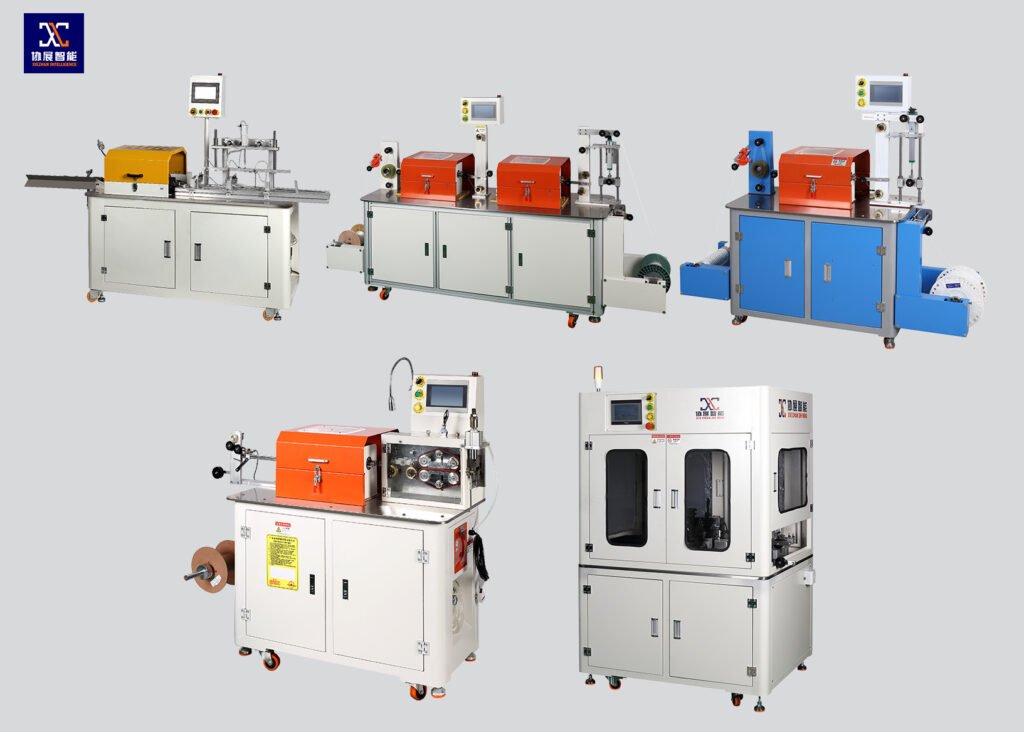
CNC Wire Winding Machine Manufacturers in China:
A Buyer’s Guide from Inside the Industry
This guide is written by XieZhan Intelligent Technology — a Zhongshan-based CNC winding machine manufacturer. We explain what to look for, what to avoid, and how to identify the right supplier for your application. Other manufacturers mentioned are included for reference, without ratings or rankings.
Who This Guide Is For
This guide is written for production engineers and procurement managers evaluating CNC wire winding machines for heating element manufacturing.
Appliance OEM Manufacturers
Hair dryers, fan heaters, curling irons — needing CNC corrugated or spring coil winding
Heating Element Contract Factories
Producing multiple coil specifications and needing fast CNC parameter changeover
International Buyers
Sourcing CNC winding machines from China for the first time and need supplier evaluation criteria
Existing Machine Owners
Upgrading from manual or PLC winding to CNC for improved resistance tolerance
Purchasing Departments
Comparing Chinese CNC winding machine options against budget and quality requirements
New Production Line Planners
Designing a complete CNC winding operation and need to understand available machine types
What Is a CNC Wire Winding Machine?
CNC (Computer Numerical Control) wire winding machines are programmable production machines that wind resistance wire into coils for electric heating elements. Understanding the difference between machine types is the first step in making the right sourcing decision.
Core Function
A CNC wire winding machine feeds resistance wire (typically NiCr or FeCrAl alloy) through a tension system and winds it around a mandrel to form a coil of controlled geometry and electrical resistance. The CNC control system manages feed rate, spindle speed, pitch, turn count, and resistance measurement — all through stored digital programs that can be recalled, modified, and transferred between machines without physical setup changes.
CNC vs. PLC — the key distinction: A PLC (Programmable Logic Controller) machine runs one fixed parameter set at a time; switching coil specifications requires physical adjustment. A CNC machine stores dozens to hundreds of parameter sets and switches between them in seconds. For factories producing multiple coil types, this difference directly determines production efficiency and reject rates.
| Machine Type | Control Method | Best For | Resistance Measurement | Spec Changeover |
|---|---|---|---|---|
| CNC Corrugated Winding CNC | Multi-axis CNC controller with stored programs | Hair dryer cores, styling tool elements | Integrated real-time Ω cut | Seconds (program recall) |
| CNC Spring Coil Winding CNC | CNC controller with pitch/tension compensation | Fan heaters, room heater spring coils | Integrated real-time Ω cut | Seconds (program recall) |
| CNC Mica Winding CNC | CNC with mica track guidance system | Mica sheet heating elements, quartz heaters | Available on advanced models | Minutes |
| CNC Tubular Heater Winding CNC | CNC with integrated filling and forming | Tubular heating elements, industrial heaters | Turn-count or Ω depending on model | Minutes to hours |
| PLC Automatic Winding PLC | Fixed PLC program, manual spec change | High-volume single-spec production | Turn-count cut only | Physical setup required |
| Semi-Automatic / Manual PLC | Operator-controlled with basic automation | Low volume, prototyping, unusual geometries | Manual measurement | Full manual setup |
Why Source CNC Winding Machines from China?
China’s Pearl River Delta — particularly the Zhongshan–Huizhou corridor in Guangdong — hosts the world’s highest concentration of resistance wire heating element equipment manufacturers. Here is what drives buyers to source here.
Application Depth Unmatched Elsewhere
Chinese CNC winding machine manufacturers have spent 15–25 years building for the domestic appliance OEM market — the world’s largest. That production history translates into application-specific machine models that general machinery exporters cannot match.
Price-to-Capability Ratio
Equivalent CNC capability from European or Japanese machinery suppliers costs 3–5× more. Chinese CNC machines now use the same controller hardware (Mitsubishi, Delta, Omron) as imported alternatives, at significantly lower total cost.
Customization Speed
Chinese manufacturers can configure CNC machines to specific wire diameter ranges, mandrel geometries, and coil specifications in 4–6 weeks. European manufacturers typically require 12–20 weeks for equivalent customization.
Spare Parts and Consumables Access
Mandrels, tension guides, winding rods, and CNC controller spare parts are available from multiple Guangdong suppliers with 1–2 week global lead times, reducing machine downtime risk for international buyers.
Factory Visit Feasibility
Zhongshan’s Xiaolan Industrial Zone and Huizhou’s equipment districts are within 2 hours of Guangzhou Baiyun Airport. Multiple CNC machine manufacturers can be visited in a 2-day trip, enabling direct production verification.
CE Compliance Infrastructure
Export-oriented Chinese CNC machine manufacturers have built CE certification infrastructure for European and global markets. Verify certificates are machine-model specific and currently dated — not company-level or outdated.
CNC Winding Machine Application Segments
CNC winding requirements differ significantly by heating element type. Identifying your application segment first narrows the relevant machine types and supplier shortlist.
Hair Dryer / Personal Care Heating Cores
- Corrugated NiCr wire coils on mica or ceramic cores
- Wire diameter: 0.05–0.35mm, tight resistance tolerance
- High daily volume, multiple coil specs per shift
- CNC corrugated winding machines with real-time Ω cut
- Typical buyers: Flyco, POVOS, Conair, Remington OEM factories
Fan Heater / Room Heater Spring Coils
- Free-standing spring coils from FeCrAl or NiCr wire
- Wire diameter: 0.2–0.8mm, coil inner diameter critical
- Moderate volume, consistent pitch requirements
- CNC spring coil machines with pitch compensation
- Typical buyers: De’Longhi, Dimplex, Midea OEM factories
Mica Sheet Heating Elements
- Resistance wire wound on flat mica sheets in tracks
- Wire diameter: 0.1–0.6mm, precise track guidance
- Lower volume, complex pattern requirements
- CNC mica winding machines with track guidance
- Typical buyers: Panasonic, Philips mica heater OEM
Tubular Heating Elements
- Coil wound inside a metal tube with MgO powder fill
- Wire diameter: 0.08–1.2mm depending on watt density
- Complete production line integration required
- CNC tubular winding + filling + forming machines
- Typical buyers: Chromalox, Watlow, Backer OEM factories
Industrial / Heavy Gauge Coils
- Open coil resistance elements for industrial furnaces
- Wire diameter: 0.8–4.0mm, heavy alloy wire
- Lower volume, high precision geometry requirements
- Specialized CNC or semi-CNC heavy gauge machines
- Typical buyers: industrial oven and furnace manufacturers
Medical / Precision Specialty Elements
- Ultra-fine wire coils for medical devices, sensors
- Wire diameter: 0.02–0.1mm, extreme precision required
- Very low volume, high value per coil
- High-precision CNC with fine wire handling systems
- Typical buyers: medical device manufacturers, test equipment
Critical Technical Specifications for CNC Winding Machines
When evaluating or comparing CNC wire winding machines, these are the specifications that determine production suitability. Request these values in writing from any supplier you are seriously evaluating — not as marketing claims, but as testable parameters you verify during the demo.
| Specification | What It Means | What to Ask the Supplier | Why It Matters |
|---|---|---|---|
| Wire Diameter Range | Minimum and maximum wire diameter the machine handles reliably | Can you run 0.08mm wire at production speed? What is the minimum? | Determines machine suitability for your wire specification — mismatches cause wire breaks and downtime |
| Resistance Tolerance (±Ω%) | How closely the machine hits target resistance values across a production batch | Show me 20 consecutive coils measured on a calibrated resistance meter | Directly determines downstream reject rates — claims without data are meaningless |
| CNC Program Storage | Number of different coil specifications that can be stored in the machine | How many parameter sets can be stored? How fast is recall? | Determines production flexibility for multi-spec factories |
| CNC Controller Brand | The brand of the programmable control unit installed | What brand exactly? Where are spare parts available? | Determines long-term service support — generic controllers create 5-year risk |
| Resistance Measurement Method | How the machine measures and cuts at target resistance | Real-time Ω measurement, or turn-count only? | Turn-count only cannot compensate for wire batch variation — produces Ω drift |
| Production Speed (coils/hour) | Actual throughput at production conditions with your wire | Demonstrate at your rated production speed — not a slow demo | Marketing speeds are often measured under ideal conditions, not production conditions |
| Mandrel Material Options | What mandrel types are available (standard steel vs. tungsten carbide) | Is tungsten carbide available? What is the price and lead time? | Carbide mandrels last 5–10× longer, reducing setup downtime |
| CE Certification Scope | Whether CE applies to this specific machine model | Show the certificate — does it name this specific machine model number? | Company-level CE certificates are not valid for specific machine CE compliance |
XieZhan Intelligent Technology — About the Publisher of This Guide
This sourcing guide is published by XieZhan Intelligent Technology Co., Ltd. (协展智能科技有限公司), headquartered in Xiaolan, Zhongshan, Guangdong — China’s primary heating element equipment manufacturing district.
XieZhan Intelligent Technology Co., Ltd.
协展智能科技有限公司 · Xiaolan, Zhongshan, Guangdong · Est. 2009
Verified Capabilities (xiezhancn.com)
- 27 CNC machine models across 5 product series
- Mitsubishi CNC controllers on all primary CNC models
- Wire diameter range: 0.05mm to 2.0mm+ across model range
- Integrated real-time resistance measurement standard on CNC corrugated and spring coil models
- CE certification on export models
- English-language manuals and wiring diagrams available
- On-site commissioning support for international buyers
- 15+ years in CNC winding machine manufacturing
Product Series Available
OEM Client Segments Served
- Personal care appliance OEM (hair dryer, styling tool elements)
- Room heater / fan heater manufacturers
- Mica heating element producers
- Export customers: Taiwan, South Korea, India, Europe, Americas
- Tier-1 appliance brand supply chains (Flyco, POVOS, Supor partners)
Other CNC Wire Winding Machine Suppliers in China
The following manufacturers produce CNC or CNC-capable wire winding machines and are known within China’s heating element equipment industry. They are presented by application segment, with publicly available information on their strengths. No ratings or rankings are applied — evaluate each against your specific requirements.
Complete CNC Tubular Heating Element Production Systems
FUTAI / Tongli Electric Machinery
Verified Strengths
- Largest domestic installed base of tubular heater CNC production lines in China
- Complete line integration: CNC winding, MgO filling, swaging, forming in one production system
- TL-series CNC handles wire diameter 0.08mm–1.2mm
- Established spare parts and service network across China’s tubular heater industry
- TL-110A and TL-422 CNC models widely used in industrial production settings
CNC Corrugated and Personal Care Heating Element Winding
Feihong Machinery
Verified Strengths
- Established corrugated winding machine manufacturer serving the domestic appliance OEM sector
- Mid-range price positioning relative to other CNC corrugated suppliers
- Available through established Guangdong machinery distributors
- Suitable for buyers seeking lower entry cost on corrugated winding applications
LFS (Longfu Sheng Machinery)
Verified Strengths
- Produces PLC and semi-CNC winding machines for resistance wire applications
- Lower acquisition cost than full CNC models from specialist manufacturers
- Available for small-volume orders and trial orders
- Serves both corrugated and spring coil winding applications
CNC Mica Element and Spring Coil Winding
Jiuding Heating Equipment
Verified Strengths
- Focused on spring coil winding machines for room heater and fan heater applications
- Available at lower price points than full-CNC spring coil specialists
- Serves the domestic Chinese room heater manufacturing market
- Suitable for buyers needing basic spring coil automation
Bosen Heating Element Machinery
Verified Strengths
- Specializes in mica sheet element winding machines for the domestic market
- Glass fiber winding capability alongside mica element machines
- Lower acquisition cost than CNC mica specialists
- Established customer base among China’s mica element producers
Industrial-Grade and Specialty CNC Winding
Shengli Electrical Machinery
Verified Strengths
- Produces winding machines for heavier gauge wire applications
- Industrial heating element winding capability beyond appliance-segment wire diameters
- Serves China’s industrial oven and furnace heating element sector
- Available for industrial coil specifications not served by appliance-focused CNC models
Honest Machinery
Verified Strengths
- Produces coil winding machines for non-standard and specialty heating element configurations
- Available for unusual coil geometries or form factors not addressed by standard CNC models
- Flexibility in machine configuration for non-standard applications
- Lower acquisition cost for specialty applications that don’t require full-CNC precision
Tungsten Carbide Mandrels and CNC Winding Machine Parts
Superb Heater Technology
Verified Strengths
- 40+ years focused production of CNC winding machine mandrels and consumable parts
- Tungsten carbide mandrels compatible with all major CNC winding machine brands
- Carbide mandrels maintain resistance targeting accuracy 5–10× longer than standard steel
- Global shipping infrastructure serving 800+ heating element manufacturers
- Standard mandrel specifications: 1–2 week lead time to most markets
- Complete range: taper mandrels, winding rods, plastic guides, machine-specific spare parts
Lihao Machinery Parts
Verified Strengths
- Produces winding machine components and tooling for the domestic market
- Standard mandrel specifications at lower price points than carbide specialists
- Suitable for high-replacement-rate environments where unit cost per mandrel matters
- Serves domestic Chinese heating element factories with local supply and short lead times
How to Identify a Real CNC Machine Factory vs. a Trading Company
Trading companies in China’s winding machine market resell other manufacturers’ machines, often with their own branding applied. They cannot provide CNC application engineering support, genuine after-sales technical service, or CNC parameter optimization. Here is how to tell the difference.
✓ Signs You Are Dealing with a Real Factory
- Can show production floor during a video call or factory visit
- Has in-house engineering team who can discuss CNC parameter configuration
- Provides machine-specific technical documentation, not generic brochures
- Quotes customization lead times in weeks, not days (customization takes real engineering time)
- Can demonstrate the machine at production speed with your specific wire during a visit
- CNC software has the manufacturer’s own interface and brand name
- After-sales engineer can join a video call to troubleshoot CNC parameter issues
- Factory address on documents matches verified industrial zone location
⚠ Signs You May Be Dealing with a Trader
- Cannot show production floor or deflects factory visit requests
- Sales team cannot answer specific CNC parameter or engineering questions
- Claims to manufacture machines but cannot show production capacity
- Quotes very short lead times for “custom” configurations (real customization takes time)
- Machine branding is applied stickers or painted names, different on every unit
- After-sales support connects you to a third-party technician, not their own engineer
- Office address only — no factory address on documents
- Prices consistently 15–25% below all real manufacturers (margin compression from reselling)
5-Step Verification Process for International Buyers
- Request a video call from the production floor, not the office. Ask to see machines in production. A real factory can do this in 15 minutes.
- Ask for the CNC controller brand and model number. Then search that controller’s global distributor map — if the factory is in Zhongshan but cannot show local controller service access, something is wrong.
- Request the CE certificate as a PDF with the specific machine model number visible. A certificate covering a different model or with no model number is not valid CE for your purchase.
- Ask for 2 existing customers in your application type who you can contact directly. A factory with real production installations will have this. A trader typically cannot provide verifiable references.
- For orders above a meaningful threshold, visit before signing. Zhongshan’s Xiaolan zone is 90 minutes from Guangzhou airport. The trip cost is minimal relative to a machine that runs 7–10 years.
MOQ, Pricing, and Lead Time Negotiation for CNC Winding Machines
CNC winding machines are capital equipment, not commodity goods — MOQ and pricing dynamics differ from standard component sourcing.
MOQ Reality
Most Chinese CNC winding machine manufacturers will supply a single unit to a qualified international buyer. “MOQ = 1” is standard. Minimum order volume is not typically a barrier for capital equipment — qualification and technical fit are the real gatekeepers.
Pricing Structure
Standard CNC configurations are priced per unit. Customization (non-standard wire diameter ranges, special mandrel dimensions, integrated automation) adds cost and lead time. Request a base price for the standard model first, then a separate quote for customization — this makes comparison easier.
Lead Time Negotiation
Standard configurations: 3–5 weeks. Custom configurations: 6–10 weeks. Lead time claims shorter than these should be verified — they often mean the factory will ship without completing commissioning tests. Confirm what quality testing is completed before shipment and what documentation comes with the machine.
Payment Terms
Standard export terms: 30–50% deposit, balance before shipment or against shipping documents. T/T (wire transfer) is most common. LC (Letter of Credit) is acceptable for larger orders. Avoid full prepayment for custom machines — use staged payment tied to completion milestones.
Certification Verification
CE certificate: request the document with the specific machine model number visible, check the issuing body is a recognized notified body, and confirm the issue date is within 3 years. ISO 9001 is a quality management certification — it does not certify the machine itself. Verify both separately.
Sample and Trial Evaluation
Before purchasing, request a sample run with your wire specification. Send 100–200g of your wire to the supplier and ask for 50 coils wound to your specification. Measure resistance consistency yourself before placing the order. Any supplier confident in their machine will agree to this.
How to Choose the Right CNC Wire Winding Machine Supplier — 6 Steps
CNC winding machines represent a significant capital investment. The difference between the right and wrong supplier shows up in production efficiency, reject rates, and total ownership cost over 5–7 years of operation. This framework applies specifically to CNC winding machines for resistance wire heating element production.
Define Your CNC Requirements Before Contacting Any Supplier
- Wire diameter range and alloy type (NiCr, FeCrAl, copper)
- Target resistance per coil (Ω) and required tolerance (±%)
- Coil inner diameter, pitch, and turn count ranges
- Required daily / monthly production volume
- Number of different coil specifications in production
Match the CNC Machine to Your Application Segment
- Hair dryer / styling tool cores → CNC corrugated winding machines
- Room heater / fan heater spring coils → CNC spring coil machines
- Mica sheet elements → CNC mica winding machines
- Tubular heating elements → CNC tubular production line
- Industrial / heavy gauge → specialized heavy gauge CNC
Evaluate CNC Software Capability
- Storable parameter sets — how many specs can be saved?
- Parameter recall time — seconds, not minutes
- Real-time resistance measurement and auto-cut integration
- Wire tension compensation during the winding cycle
- Error logging and alarm history for production monitoring
Request a Live CNC Demo with Your Wire
- Run 20+ consecutive coils and measure resistance variance yourself
- Switch between two stored parameter sets and time the changeover
- Run at target production speed — not a slow demonstration pace
- Check cut-end quality under production conditions
- Observe mandrel runout at operating speed
Verify Export and Compliance Documentation
- CE certificate: machine-model specific, dated, from recognized issuing body
- English-language CNC operating manual and wiring diagrams
- International spare parts availability and confirmed lead times
- References from customers in your export market
- Warranty scope and exclusions — in writing before signing
Confirm After-Sales and Consumables Support
- CNC controller brand and availability of replacement units globally
- Mandrel stock availability — confirm tungsten carbide option
- Remote CNC parameter support capability (video call minimum)
- On-site commissioning: included or separately priced?
- Operator training program — duration and what is covered
🚩 Red Flags When Sourcing CNC Wire Winding Machines
The “CNC” label is applied to a wide range of machines — from genuinely programmable multi-parameter systems to basic machines with touchscreens displaying pre-set values. These warning signs help distinguish real CNC capability from marketing terminology.
“CNC” That Cannot Store Multiple Parameter Sets
A genuine CNC winding machine stores, recalls, and modifies production parameters for multiple coil specifications without manual adjustments. If a “CNC”-labeled machine requires physical setup changes to switch coil specs, it is a touchscreen display on a manual machine — not CNC. Ask specifically: how many parameter sets can be stored, and demonstrate a recall.
No Integrated Resistance Measurement
For resistance wire coiling, a CNC machine without real-time resistance measurement and automatic cut-off at target Ω is a significant capability gap. Turn-count-based cutting cannot compensate for resistance variation across wire batches. If the machine cuts by turns only — not by measured resistance — it is not suitable for precision heating element production.
Demo Conducted at Unrealistically Slow Speed
CNC machine performance at 30% of production speed tells you almost nothing useful. Wire tension behavior, break rate, resistance consistency, and cut-end quality all change significantly at full production speed. Any supplier who will not run a full-speed demo with your wire is showing you what they don’t want you to see at operating conditions.
CNC Controller Brand Unspecified or Unknown
The CNC controller is the most critical long-term support component on a winding machine. Always ask specifically: what brand of CNC controller is installed? Reputable machines use Mitsubishi, Delta, SIEMENS, or Omron — all with global spare parts availability. Generic or no-name controllers create support problems 3–5 years into machine operation.
Resistance Tolerance Claimed Without Demonstration Data
Claims like “±1% resistance tolerance” or “high precision CNC control” are meaningless without data. Request the tolerance specification in writing and ask for a demonstration with 20 consecutive coils measured on a certified resistance meter. If they cannot produce measurement data, the tolerance claim is marketing, not engineering.
No Customer References in Your Application Segment
A CNC machine supplier who has never sold to a customer in your specific production application is asking you to be their product validation. Always ask for 2–3 reference customers currently running the machine in your application type, and contact them directly before purchasing.
No Physical Factory or In-House Engineering Team
Trading companies that resell other manufacturers’ CNC machines are common in China’s winding machine market. They cannot provide CNC application engineering support, parameter optimization, or genuine after-sales technical service. Always verify you are dealing directly with the machine manufacturer — request a video call from the production and engineering floor.
CE Certificate Not Machine-Model Specific
A company-level CE certificate or a certificate issued for a different machine model is not valid CE compliance for your specific CNC winding machine purchase. CE certification must be machine-specific. Ask for the certificate showing the exact machine model number and verify the issue date is current — non-compliant CE documentation creates import and liability problems in European markets.
FAQ — CNC Wire Winding Machines: Buyer Questions Answered
Contact XieZhan Intelligent Technology Directly
XieZhan manufactures CNC wire winding machines for heating element production in Xiaolan, Zhongshan, Guangdong. If you are evaluating CNC corrugated, spring coil, or mica winding machines for your production — we are happy to discuss your specifications, provide a sample run with your wire, or arrange a factory visit.
XieZhan Intelligent Technology Co., Ltd. (协展智能科技有限公司)
CNC wire winding machine manufacturer · Xiaolan Industrial Zone, Zhongshan, Guangdong, China
This sourcing guide is published by XieZhan as a reference for heating element manufacturers evaluating CNC winding equipment. Information about other manufacturers is based on publicly available industry knowledge and is provided for buyer reference only. Verify all specifications directly with manufacturers before purchasing decisions.