
Ripple Heating Wire Machine for Corrugated Coil Production
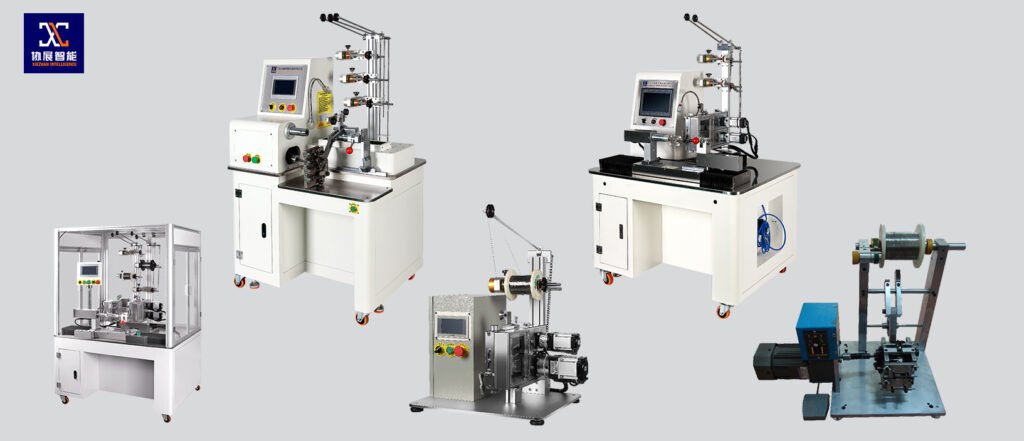
How Buyers Choose the Right Corrugated Heating Coil Production Line
If you are sourcing a ripple heating wire machine, the real question is not “Which machine is cheapest?” It is: which machine can produce stable corrugated heating wire with consistent pitch, repeatable ripple depth, and low rejection rates over long production runs. Buyers in hair dryer, heater, oven, and industrial furnace sectors usually discover that output speed means little when wire deformation, resistance drift, or unstable ripple geometry creates downstream failures. A good machine must shape wire accurately, protect alloy properties, and fit your final product volume.
In practical terms, a ripple heating wire machine is industrial equipment used to convert straight resistance wire such as nichrome or FeCrAl into ripple, wave, U-shape, or corrugated profiles for heating elements. These profiles increase surface area, improve heat transfer, and help compact heater design. For serious manufacturers, machine stability matters more than headline speed.
What Is a Ripple Heating Wire Machine Used For?
Ripple wire is common where compact heating space and fast thermal response are required. Compared with straight wire, corrugated wire gives more exposed area in the same installation length. That is why many appliance factories and industrial heater producers use this forming method.
- Hair dryer heating coils
- Fan heater elements
- Electric oven and toaster heaters
- Industrial furnace heating assemblies
- Brewing immersion heating elements
- Custom air heating modules
If your product uses a mica frame, ceramic support, tubular heater core, or open coil assembly, ripple geometry often improves packaging efficiency.
Why Do Manufacturers Prefer Corrugated Wire Instead of Straight Wire?
From an engineering perspective, ripple profiles solve three common production problems:
- More heating surface area: Better heat exchange in airflow systems such as hair dryers.
- Compact layout: Longer effective wire length inside a smaller chamber.
- Mechanical positioning: Easier mounting on mica board, ceramic holder, or support frame.
In my experience, many factories first focus on wattage only. Later they realize airflow balance, hot spot control, and assembly speed matter just as much. Ripple geometry helps with all three.
Which XieZhan Models Fit Different Production Needs?
Based on your product mix, three common series choices are the XZ-B360P, XZ-B450P, and XZ-B460P. These are widely suitable for corrugated resistance wire production with different output ranges.
| Model | Best For | Ripple Depth | Production Character | Recommended Buyer |
|---|---|---|---|---|
| XZ-B360P | Small appliance coils | Approx. 3–6mm | Compact footprint, flexible setup | Start-up lines / mixed SKUs |
| XZ-B450P | Medium output heater plants | Approx. 4–7mm | Balanced speed and stability | Growing OEM factories |
| XZ-B460P | Hair dryer heating coil lines | Approx. 4–8mm | High efficiency ripple forming | Large-volume appliance suppliers |
For product details on corrugated wire forming equipment, review our Corrugated / Flat Resistance Wire Winding Machine range.
How Does a Ripple Heating Wire Machine Work?
Most production lines follow a straightforward sequence, but precision in each step separates industrial machines from low-end equipment.
- Payoff stand feeds resistance wire smoothly.
- Tension system stabilizes incoming wire load.
- Ripple forming rollers or shaping dies create wave profile.
- Pitch control maintains repeatable spacing.
- Cutting unit trims to programmed length.
- Operator or robot transfers formed wire to assembly station.
The challenge is protecting wire metallurgy during shaping. Excessive pull force may change section geometry or induce micro stress. Good machines shape efficiently without damaging wire consistency.
What Parameters Should Procurement Teams Check First?
| Parameter | Why It Matters | Typical Concern | Buyer Priority |
|---|---|---|---|
| Wire Diameter Range | Defines product compatibility | Cannot run future SKUs | High |
| Ripple Depth Control | Affects thermal area and fit | Inconsistent assembly | High |
| Speed Stability | Controls output efficiency | Frequent stoppage | Medium |
| Cut Length Accuracy | Reduces manual trimming | Labor waste | High |
| Tooling Change Time | Important for mixed orders | Lost production hours | Medium |
Many buyers ask for maximum speed first. I usually ask how many SKUs they run each month. If the answer is more than five, changeover time may matter more than top speed.
Why Hair Dryer Factories Often Choose XZ-B460P
Hair dryer coils need fast airflow heating, tight space utilization, and repeatable mounting geometry. That combination suits deeper ripple designs. The XZ-B460P series is often selected because it can maintain strong production rhythm while forming ripple depth around 4–8mm, which is useful for compact heater frames.
- Better wire exposure to airflow
- Efficient heater chamber packing
- Stable repetitive dimensions for assembly lines
- Suitable for high-volume consumer appliance demand
For export-oriented OEM plants, consistency between batches matters as much as output speed because downstream assembly jigs are fixed.
Common Buying Mistakes I See Repeatedly
1. Choosing by price only
Low-cost machines may run well for samples but drift after continuous use. Bearings, drive systems, and roller hardness make the difference over time.
2. Ignoring future wire sizes
If you plan new heater products next year, narrow wire range machines become expensive limitations.
3. No sample validation
Always send your actual alloy wire and request finished production samples.
Industry Reference: Why Precision Matters
In appliance heater manufacturing, even small dimensional variation can slow automated assembly stations. Many factories report that reducing component inconsistency improves line efficiency more than simply increasing machine speed. That matches what we see in export projects: stable parts keep final assembly moving.
Another broad manufacturing trend is labor reduction through semi-automatic and automatic forming systems. As wages rise globally, buyers increasingly favor machines that reduce manual shaping and trimming work.
Why Buyers Work with an Experienced Manufacturer
A machine supplier should do more than ship steel and motors. They should understand heating element production logic: wire behavior, thermal structure, fixture compatibility, and output planning. That is where experienced manufacturers stand apart.
Learn more about our factory background and see practical delivery records in our client cooperation cases.
How to Decide Between XZ-B360P, XZ-B450P, and XZ-B460P
- Choose XZ-B360P if you run varied small appliance orders with moderate output.
- Choose XZ-B450P if you need a balanced daily production machine.
- Choose XZ-B460P if your focus is hair dryer or large-volume ripple heater lines.
My honest advice: if your monthly demand is unstable, flexibility beats maximum speed. If your orders are repetitive and high volume, automation pays back quickly.
Final Recommendation for Serious Buyers
The best ripple heating wire machine is the one that keeps dimensions stable, protects resistance wire quality, and matches your real production mix. That may be a compact XZ-B360P, a balanced XZ-B450P, or a high-output XZ-B460P. The wrong machine creates scrap and operator frustration; the right machine quietly earns money every day.
If you want model comparison, sample testing, or a production recommendation based on your heater design, contact our engineering team here: Contact Us.