
Equipment Selection for Small Appliance Startups
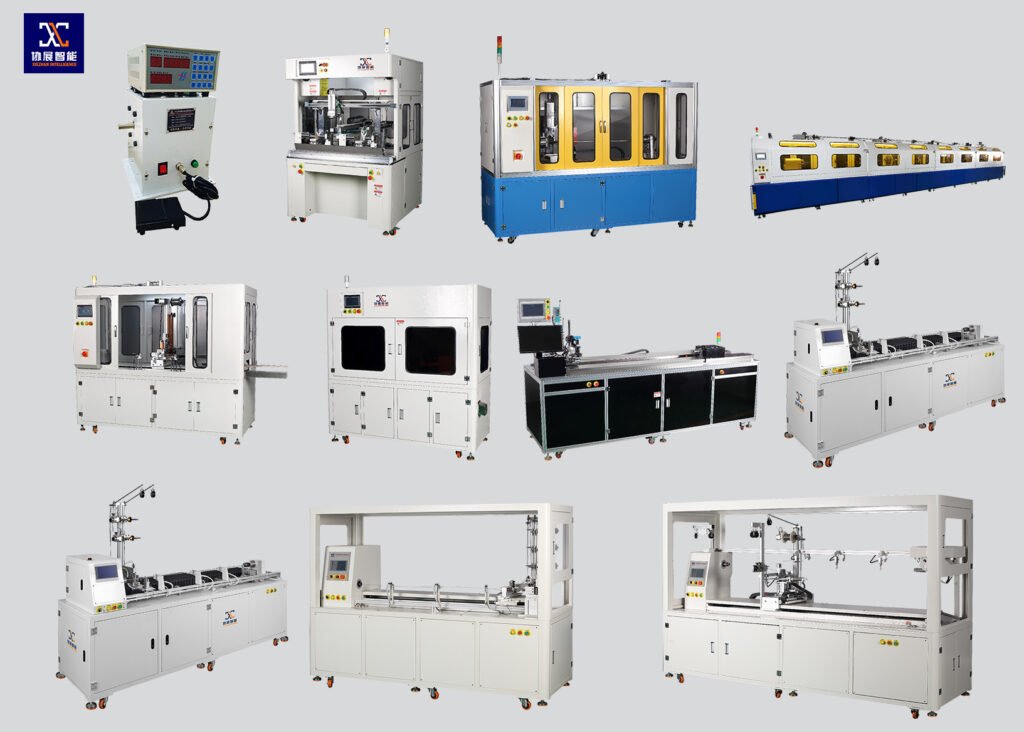
How Startup Manufacturers Choose the Right Equipment Without Wasting Budget
If you’re launching a small appliance factory, the first equipment decision often determines whether you scale smoothly or struggle with constant rework. Most startup buyers don’t fail because of lack of demand—they fail because they choose machines that don’t match their actual production stage. The goal isn’t to buy the most advanced equipment. It’s to buy the right one for your current capacity, product type, and cash flow.
Why Do Small Appliance Startups Often Choose the Wrong Equipment?
In real projects, I’ve seen this pattern repeatedly. A new buyer invests heavily in a fully automatic line, expecting efficiency gains. Three months later, the machine runs at 30% capacity. On the other side, some startups go too conservative, choosing low-cost semi-automatic machines, only to find labor costs eating their margins within six months.
Common Misjudgments
- Overestimating initial production volume
- Ignoring product variation (especially heater coil sizes)
- Choosing machines without considering operator skill level
- Focusing on price instead of long-term cost per unit
According to a 2024 report from Statista, over 62% of small manufacturing startups revise their equipment setup within the first 18 months. That alone tells you initial selection is often off-target.
What Actually Determines the Right Equipment Choice?
Instead of thinking in terms of “best machine,” experienced buyers look at three variables:
1. Product Structure
Are you producing:
- Hair dryer heating elements?
- Room heater coils?
- Mica-based heating assemblies?
Each of these requires different forming precision and winding structures. For example, a hair dryer coil line typically uses corrugated wire machines like B460P, while room heater coils rely more on spring coil winding systems such as T2201.
2. Daily Output Expectation
Startup mistake: planning for future capacity instead of current orders.
If your actual demand is 5,000 units/day, buying a 30,000 units/day system doesn’t improve efficiency—it increases idle cost.
3. Labor vs Automation Balance
Automation only pays off when:
- Orders are stable
- Product specifications are consistent
- Operators are trained
Otherwise, flexible semi-automatic machines can outperform high-end systems in early stages.
Equipment Selection Strategy for Startups (Step-by-Step)
Step 1: Start with Core Process, Not Full Line
Focus on the bottleneck process first—usually winding or forming.
You can explore suitable options here: Winding Machine Solutions
Step 2: Choose Modular Instead of Fixed Systems
Modular setups allow expansion without replacing your entire line. This is especially useful in heating element manufacturing where product specs evolve quickly.
Step 3: Match Machine Precision to Product Tolerance
Not every product needs CNC-level precision. Over-spec machines increase cost without adding value.
Comparison: Entry vs Growth Stage Equipment
| Stage | Machine Type | Investment | Flexibility | Best For |
|---|---|---|---|---|
| Startup | Semi-automatic | Low | High | Small batches |
| Growth | Standard automatic | Medium | Medium | Stable demand |
| Scale | CNC full automatic | High | Low | Mass production |
What Experienced Buyers Do Differently
Experienced procurement managers rarely look at machines in isolation. They evaluate:
- Supplier’s real production experience
- After-sales response capability
- Machine upgrade path
- Compatibility with future automation
You can see real project cases here: Client Cooperation Projects
Advice from a Practical Perspective
If your startup budget is limited, don’t try to “future-proof” everything at once. Build a system that works today, but leaves space for upgrades. Machines should grow with your orders—not ahead of them.
About the Manufacturer Matters More Than You Think
Many buyers focus only on specifications, but long-term success depends heavily on who you buy from.
A reliable heating element machine manufacturer should understand your product, not just sell equipment.
Learn more about our background here: About Our Factory
Final Step: Talk Before You Buy
No catalog can replace a real technical discussion. Before finalizing any purchase, share:
- Your product drawings
- Target output
- Wire type and diameter
That conversation usually saves weeks of trial and error.
You can reach us directly here: Contact Our Team