
Winding Machine Requirements for High-Mix Production
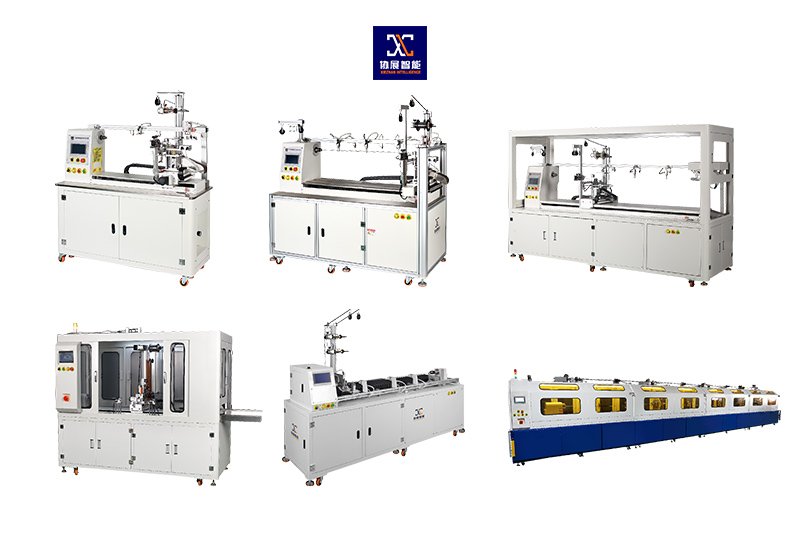
How Manufacturers Choose Winding Equipment for High-Mix Production Environments
When a factory produces dozens of coil types every week, the biggest challenge is not winding speed. It is changeover efficiency. In high-mix production, machines must switch quickly between wire sizes, coil geometries, and tension settings without causing excessive downtime or unstable product quality. This is why experienced manufacturers focus less on “maximum automation” and more on flexibility, repeatability, and setup simplicity when selecting winding equipment.
Across appliance heating elements, industrial heaters, thermal assemblies, and custom resistance coils, high-mix manufacturing is becoming more common. Buyers are facing shorter product cycles, more customer customization requests, and smaller production batches than before.
In high-mix production, the fastest machine is often not the most profitable one. The real advantage comes from reducing setup interruptions between different product specifications.
What Does “High-Mix Production” Actually Mean?
Many equipment suppliers misunderstand this term. High-mix production does not simply mean “many products.” It means frequent switching between different coil designs while maintaining stable quality and acceptable production efficiency.
Typical examples include:
- Hair dryer heating elements with multiple voltage versions
- Industrial heating coils with varying diameters
- Heating rope assemblies using different insulation materials
- Small-batch custom resistance elements
- OEM production with changing monthly specifications
Factories operating in these conditions usually struggle with:
- Frequent tooling changes
- Operator adjustment errors
- Unstable tension control
- Long setup times
- Inconsistent winding accuracy
According to several industrial automation studies in flexible manufacturing sectors, production downtime caused by setup and changeover activities can consume 20–40% of total operational time in high-mix environments. That explains why setup efficiency has become a major purchasing factor.
Before comparing machine speeds, calculate how many specification changes your factory performs weekly. That number often matters more than maximum RPM capability.
Step 1: Start with Flexible Machine Architecture
The first step in selecting winding equipment for high-mix production is understanding machine flexibility.
Machines built only for a single product type may work well in stable mass production, but they create serious inefficiencies when product specifications change frequently.
Why CNC and PLC Systems Matter
Modern CNC and PLC-controlled winding machines simplify production switching because operators can store multiple production recipes directly in the system.
Instead of manually recalibrating:
- Pitch distance
- Coil diameter
- Tension parameters
- Winding speed
- Feed length
the operator can simply load a saved program.
Machines such as the XZ-T2201 five-axis CNC winding machine are particularly effective because they support complex coil structures while maintaining positioning consistency during repeated changeovers.
Meanwhile, mid-sized factories often prefer XZ-T2103 because it combines programmable flexibility with easier operator training requirements.
Step 2: Reduce Tooling Change Time
One of the most overlooked production costs in high-mix manufacturing is tooling replacement time.
A machine may run perfectly during production but lose profitability if operators spend excessive time changing mandrels, guides, or fixtures.
Quick-Change Tooling Is Becoming Essential
Experienced procurement managers now ask questions like:
- How long does mandrel replacement take?
- Can operators switch fixtures without engineers?
- Are wire guides modular?
- Does recalibration require downtime?
For example, factories producing multiple heating coil dimensions often combine:
- XZ-B450P for precision corrugated winding
- XZ-C1040P for mica integration
- XZ-GJ006 for rapid riveting transitions
This modular structure allows production adjustments without rebuilding the entire line.
When evaluating equipment, ask suppliers to demonstrate an actual product changeover process instead of only showing finished production samples.
Step 3: Prioritize Tension Stability Across Different Materials
High-mix production rarely uses identical wire materials for every order.
Factories may switch between:
- Different resistance alloys
- Copper wire
- Flat wire
- Fine heating wire
- Fiber-insulated structures
This creates one major challenge: maintaining stable tension.
Inconsistent tension causes:
- Coil deformation
- Pitch variation
- Uneven heating performance
- Assembly difficulties
- Product rejection
Servo-controlled systems with encoder feedback have become increasingly important because they maintain winding consistency even during low-speed operation or delicate wire handling.
Machines such as XZ-C631P and XZ-C650P are widely used for heating rope production because they support broader material adaptability while preserving winding precision.
| Production Challenge | Machine Requirement | Recommended Equipment | Operational Benefit | Risk If Ignored |
|---|---|---|---|---|
| Frequent product switching | Recipe memory system | XZ-T2201 | Faster setup | Long downtime |
| Different wire sizes | Adaptive tension control | XZ-C650P | Stable coil quality | Pitch inconsistency |
| Complex coil geometry | Servo precision motion | XZ-T2103 | Higher repeatability | Dimensional errors |
| Small production batches | Modular tooling | XZ-B450P | Reduced setup time | Low efficiency |
| Operator variability | Simple PLC interface | XZ-SM800 | Simplified training | Human error |
Step 4: Integrate Multiple Processes Whenever Possible
Another trend in high-mix production is process consolidation.
Factories increasingly prefer equipment capable of integrating:
- Winding
- Cutting
- Looping
- Riveting
- Testing
within fewer workstations.
This reduces:
- Operator movement
- Intermediate inventory
- Material handling
- Floor space usage
For example, combining XZ-SM800 riveting and looping functions within the same workflow can significantly reduce handling interruptions for heating rope assembly production.
Likewise, integrating XZ-DX009 dry burn testing near final assembly improves defect detection speed before products move into packaging.
Avoid building production lines with too many isolated manual stations. In high-mix environments, excessive material movement often becomes the hidden bottleneck.
Step 5: Evaluate Maintenance Simplicity Before Purchase
Many factories focus heavily on machine specifications while ignoring maintenance accessibility.
That becomes a serious mistake in high-mix production because machines stop and restart more frequently than in mass production environments.
Why Modular Design Matters
Machines with modular mechanical structures are easier to maintain during production interruptions.
Experienced factory managers often prefer:
- Accessible servo layouts
- Simple wire path structures
- Replaceable tension modules
- Clear PLC interfaces
- Independent station servicing
This is one reason dual-station production structures continue gaining popularity.
For example, in some factories using XZ-C650P, one station can continue operating while another receives adjustment or maintenance support.
Why Some Factories Still Prefer Semi-Automatic Systems
A common assumption is that fully automatic equipment always delivers the best result.
In reality, extremely high-mix environments sometimes benefit more from flexible semi-automatic systems.
Why?
- Lower setup complexity
- Faster manual intervention
- Reduced programming time
- Better adaptation for prototypes
- Lower investment pressure
That is why machines like XZ-T2154 and XZ-B315 still remain valuable in many custom manufacturing environments.
Factories handling prototype heating elements or low-volume OEM production often prioritize flexibility over full automation.
How Mature Buyers Select the Right Manufacturer
Experienced buyers rarely choose equipment based only on brochures or isolated machine specifications.
They evaluate whether the manufacturer understands actual production realities.
Typical questions include:
- Can the supplier configure an entire high-mix workflow?
- Do they understand small-batch production challenges?
- Can they adapt machines for future specification changes?
- Will spare parts remain available long-term?
This is why many buyers prefer working directly with specialized heating element equipment manufacturers rather than general automation factories.
You can review available machine categories and production solutions here: winding machine
Real Production Cooperation Matters More Than Marketing Claims
Factories facing high-mix production challenges usually value proven cooperation experience.
They want suppliers who understand:
- Changeover management
- Operator workflow
- Maintenance pressure
- Production scalability
- Mixed product scheduling
Examples of practical cooperation projects can be seen here: client cooperation
Final Thoughts from an Engineering and Procurement Perspective
High-mix production changes the way winding equipment should be evaluated.
The best machine is not necessarily the one with the highest speed or the largest automation package. It is the machine that minimizes production interruptions while maintaining quality consistency across multiple product types.
Factories that succeed in high-mix manufacturing usually focus on:
- Rapid changeover capability
- Recipe memory systems
- Stable tension control
- Flexible tooling structures
- Practical maintenance access
- Balanced automation investment
If you want to understand the engineering background and manufacturing experience behind these machine solutions, you can learn more here: about us
And if you are planning a winding setup for high-mix production, you can discuss your coil specifications and workflow requirements directly here: contact us