
Ring Coil Forming Machine for Heater Coil Shaping
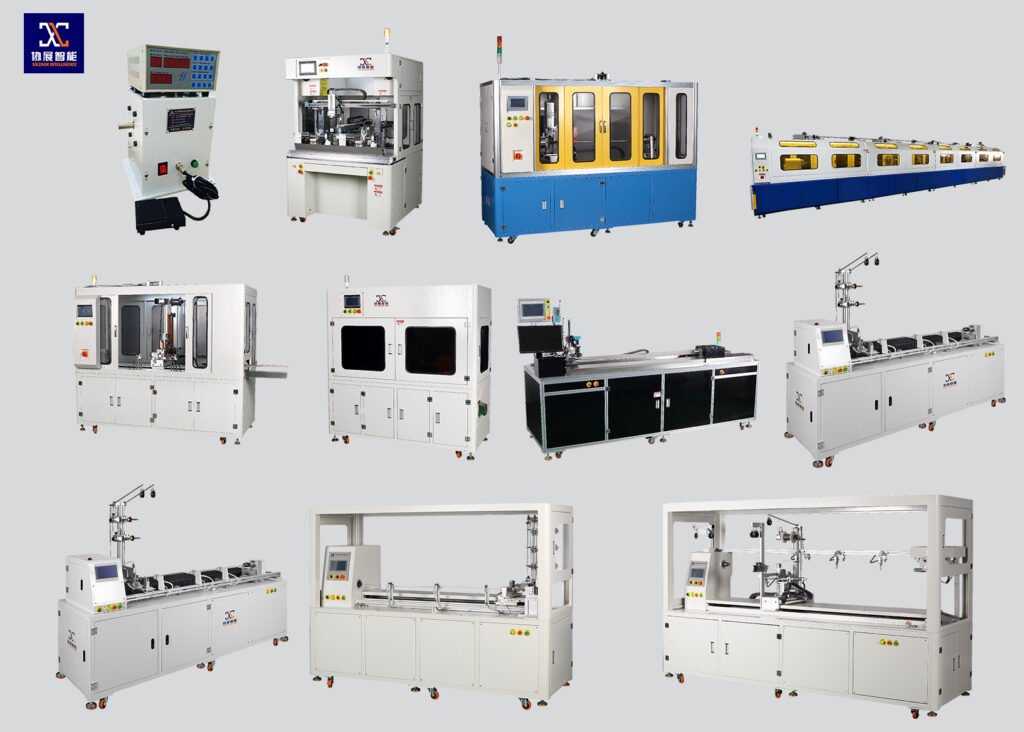
Ring Coil Forming Machine for Heater Coil Shaping
Ring forming almost never gets evaluated as a standalone purchase. By the time a buyer starts looking at forming equipment, the wire has usually already been through a winding stage somewhere — either on their own line or from a supplier — and the real question isn’t “what does a ring forming machine do,” it’s “will this machine actually accept the coil my winder is producing, or am I about to introduce a bottleneck between two processes that were never designed to talk to each other.”
Why This Gets Overlooked Until It’s Too Late
Winding and forming are usually purchased at different times, sometimes from different suppliers entirely, sometimes months apart as production scales up. Because of that gap, buyers tend to evaluate each machine on its own specification sheet — winding tension here, forming pressure there — without checking whether the coil geometry coming out of one process actually matches what the next process was built to handle. This isn’t a rare mistake. It’s simply what happens when two purchasing decisions get made at different points in time, by people focused on solving one problem at a time rather than the full production sequence.
If you’re currently reviewing a winding machine lineup alongside a separate forming machine decision, this is exactly the point worth slowing down on — because a mismatch here doesn’t show up as a dramatic failure. It shows up quietly, as slightly inconsistent ring diameter, occasional deformation, or a forming machine that needs constant manual correction to compensate for coil variation it wasn’t built to absorb.
What Actually Has to Match Between the Two Stages
A ring forming machine takes a wound coil — whether spring-shaped or corrugated — and bends it under controlled pressure into a circular structure. That bending process assumes a fairly specific input: a coil with consistent pitch, a predictable outer diameter, and enough structural stiffness to hold its shape while being repositioned into the forming jig. If your winding process produces coils with any meaningful pitch drift or diameter variation batch to batch, the forming machine either has to compensate for that variation on the fly, or it produces rings with the same inconsistency baked in — just one step further down the line, where it’s harder to trace back to the original cause.
This is why asking a forming machine supplier for a spec sheet in isolation rarely tells you much. The more useful question is whether the equipment was actually tested against coil variation similar to what your winding process produces — not against an idealized, perfectly uniform sample coil.
| Handoff Point | What Can Go Wrong | Where the Problem Actually Shows Up | Why It’s Hard to Trace | Worth Asking Before You Order |
|---|---|---|---|---|
| Coil pitch consistency | Uneven pitch from winding stage | Irregular ring diameter after forming | Looks like a forming defect, originates upstream | “What pitch tolerance was this jig tested with?” |
| Coil structural rigidity | Coil too soft or too stiff for the forming pressure | Deformation or collapse during ring shaping | Blamed on forming pressure, actually a wire/coil mismatch | “Is forming pressure adjustable for coil stiffness variation?” |
| Diameter tolerance | Slight variation between coil batches | Rings that don’t seat properly in downstream assembly | Often discovered at final assembly, far from the cause | “How much diameter variation can the jig absorb?” |
| Material type | Nichrome vs FeCrAl responding differently to bending force | Cracking or surface stress on the ring’s outer edge | Easy to mistake for a material defect rather than a process mismatch | “Has this jig been run on my specific alloy?” |
| Handling between stages | Manual transfer introducing coil distortion | Inconsistent forming results even with a stable coil input | Often blamed on the forming machine itself | “How is the coil positioned into the forming jig?” |
Why It Helps to Buy Both Stages With the Same Process Logic in Mind
Some factories choose to source winding and forming equipment from separate suppliers, and that can work perfectly well — as long as both sides understand what the other stage actually produces. What tends to go wrong is when a forming machine is selected purely on its own merits, tested only with a supplier’s sample coil, without ever seeing the actual coil geometry your winding process generates. A jig that performs beautifully on a demonstration coil can behave very differently once it meets the slight pitch variation or diameter drift that’s completely normal in real production.
This is part of why manufacturers who build both winding and forming equipment under one engineering process tend to design the two stages with each other in mind from the start, rather than treating forming as an afterthought once winding output already exists. A Guangdong Xiezhan manufacturer background means the forming jig geometry, pressure settings, and diameter tolerance were developed by testing against coil output from the same production line — not against an idealized reference sample.
What to Actually Check Before Committing to a Forming Machine
If your winding and forming equipment will come from different sources, there’s a practical step worth taking before either order is finalized: send a small sample batch of your actual wound coils to the forming equipment supplier and ask them to run a real forming test, not a demonstration using their own reference material. Watch specifically for ring diameter consistency across the batch, and check the outer edge of the ring for any surface stress or micro-cracking, which often signals a mismatch between bending pressure and your specific wire alloy.
This single step tends to reveal compatibility issues that no amount of specification comparison would catch, simply because specification sheets describe ideal conditions, not your specific coil variation.
How This Plays Out Once Production Scales
A small trial batch can mask a compatibility problem that only becomes visible at volume. Once you’re running continuous shifts, minor coil variation that seemed negligible in a sample run starts compounding — and a forming jig that isn’t built to absorb that variation will produce a rising defect rate that’s genuinely difficult to trace back to its source, because by the time it’s noticed, the wound coils have already moved several steps down the production line. This is exactly the kind of problem that experienced buyers try to catch before scaling, not after.
As a Guangdong Xiezhan factory working across the full sequence — from resistance wire winding through to ring and coil forming — the approach has been to treat these two stages as one connected process rather than two separate machines sold independently. Details on how that engineering background developed, and the production experience behind it, are outlined on the about us page.
Looking at How This Has Worked for Other Manufacturers
Beyond a single sample test, it’s reasonable to ask a supplier how their forming equipment has performed across other clients running similar wire types and production volumes. A supplier with real cross-client experience should be able to speak to specific challenges they’ve solved — not just describe the machine in general terms. Examples of how winding and forming equipment has been matched to different production requirements across various heating element manufacturers are outlined on the client cooperation page, which tends to give a more grounded picture than a specification comparison alone.
A Few Questions Buyers Ask at This Stage
If I already have a winding machine, do I need to check compatibility with a new forming machine?
Yes, even if both machines seem to meet general specifications on paper. Coil geometry from your specific winding process is the actual input the forming jig has to work with, so a compatibility check is worth doing before finalizing an order.
Can forming pressure be adjusted for different coil stiffness?
On well-designed equipment, yes — pressure settings should be adjustable within a defined range to accommodate variation in wire alloy and coil rigidity, rather than fixed at a single setting.
What’s a reasonable way to test compatibility before ordering?
Sending an actual sample batch of your wound coils for a real forming trial, rather than relying on a supplier’s own demonstration material, tends to be the most reliable way to surface compatibility issues early.
Does ring diameter tolerance vary by wire material?
Yes, different alloys respond differently under identical bending pressure, so tolerance expectations should be confirmed against your specific material rather than assumed to be universal.
Is it better to source winding and forming equipment from the same supplier?
Not necessarily required, but it does reduce the risk of a compatibility gap between stages, since equipment developed together tends to account for real coil variation rather than idealized samples.
If you’re weighing whether your current coil output will actually match a specific forming machine, or you’re planning both stages together from the start, sending your wire specification and coil samples through contact us tends to get a more useful answer than comparing spec sheets alone.