
Transitioning from Manual to Semi-Automatic Winding
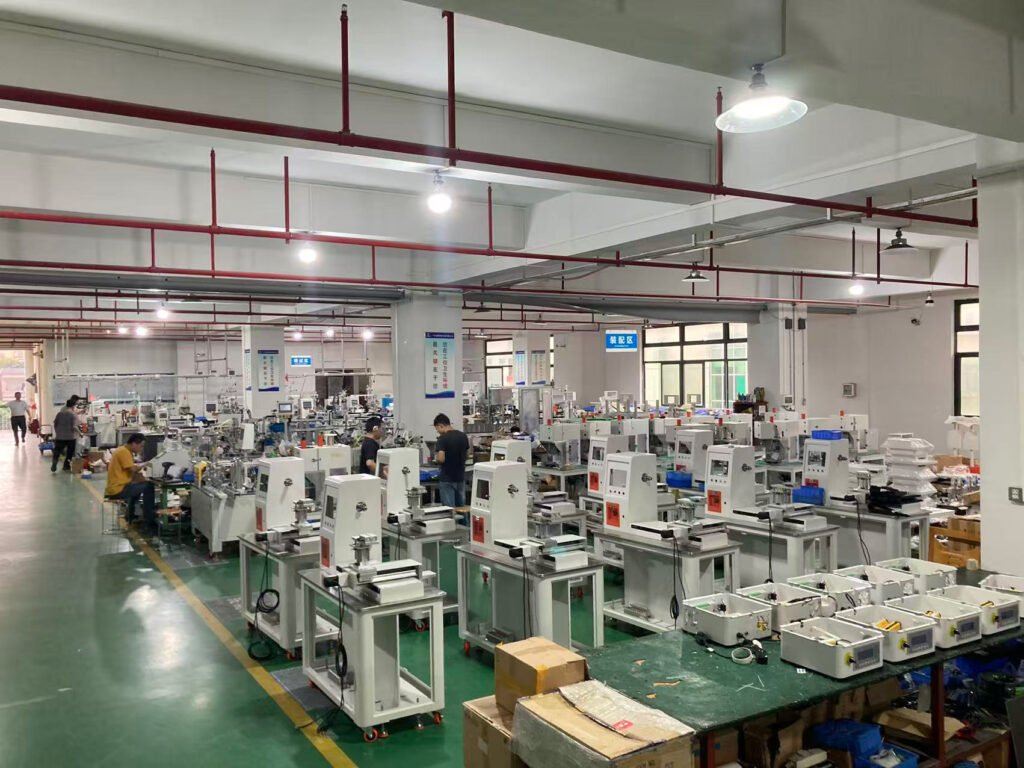
Why More Factories Are Moving Beyond Pure Manual Coil Winding
For most factories, the transition from manual winding to semi-automatic production does not begin with automation goals. It usually begins with production pressure. Operators struggle to maintain consistency, output becomes unstable as order volume increases, and delivery delays start affecting customer relationships. At that stage, manufacturers are not necessarily looking for “smart factories.” They are looking for a practical way to improve efficiency without losing production flexibility or creating excessive investment risk.
This is exactly where semi-automatic winding equipment becomes valuable. It bridges the gap between labor-intensive production and fully automated manufacturing while keeping operational control manageable for growing factories.
Most factories that successfully scale production do not jump directly from manual work to full automation. They first stabilize their process with semi-automatic systems that reduce human inconsistency while preserving flexibility.
The Real Problem with Manual Winding Production
Manual winding still exists in many factories because it offers low startup cost and simple operation. For small workshops or prototype production, manual processing can work reasonably well in the early stage.
However, once production demand increases, manual winding creates operational limitations that become difficult to control.
Inconsistent Product Quality
Even experienced operators produce slight variations during long production shifts.
Common issues include:
- Uneven coil spacing
- Inconsistent pitch
- Variable tension control
- Wire deformation
- Different heating performance between batches
These problems become especially serious in heating element production, where coil uniformity directly affects product performance and lifespan.
Output Growth Becomes Difficult
A factory relying heavily on manual production often discovers that increasing output requires adding more operators rather than improving production efficiency.
That creates:
- Higher labor costs
- Longer training periods
- More quality variation
- Production management pressure
- Higher rejection rates
At this stage, many manufacturers begin evaluating semi-automatic winding equipment.
Factories moving from manual production usually underestimate how much hidden production loss comes from operator fatigue, inconsistent adjustment methods, and repeated rework.
Why Semi-Automatic Equipment Is Often the Most Practical Next Step
Some factories assume the next logical step after manual production is full automation. In reality, that approach is often too aggressive for developing production environments.
Semi-automatic winding systems solve several problems without creating unnecessary operational complexity.
Better Stability Without Losing Flexibility
Machines such as the XZ-T2154 Semi-Automatic Spring Heating Wire Winding Machine are popular because they improve winding consistency while still allowing operators to adapt quickly to different coil specifications.
This balance matters for factories producing:
- Heating coils
- Resistance wire assemblies
- Hair dryer elements
- Industrial heater components
- Small-batch appliance parts
Unlike large fully automated systems, semi-automatic machines remain easier to adjust during mixed production runs.
Lower Investment Risk
Many medium-sized factories cannot justify the cost of complete automation immediately.
Semi-automatic systems allow manufacturers to:
- Improve quality gradually
- Increase production capacity
- Train operators progressively
- Reduce material waste
- Control expansion costs
This creates a more manageable transition path.
What Changes First After Installing Semi-Automatic Machines?
One interesting pattern appears repeatedly across factories transitioning from manual winding.
The first improvement is usually not speed.
It is production consistency.
Factories immediately notice:
- More uniform coil structures
- Lower rejection rates
- Reduced operator dependency
- More stable batch quality
- Smoother downstream assembly
Machines like the XZ-T2103 Fully Automatic Spring Shaped Heating Wire Winding Machine are often introduced after factories gain experience with semi-automatic production because operators become more familiar with process standardization first.
Why Do Some Factories Fail During This Transition?
Not every transition succeeds smoothly.
In many cases, the problem is not the machine itself. It is unrealistic purchasing expectations.
Mistake 1: Buying Purely Based on Speed
Some buyers focus only on production speed specifications.
But if:
- tooling changes are slow,
- operator training is difficult,
- maintenance becomes complicated,
- or tension adjustment is unstable,
then theoretical speed advantages disappear quickly in real production.
Mistake 2: Ignoring Operator Skill Level
A machine that is too complicated for the existing workforce often creates new production bottlenecks.
Experienced manufacturers usually introduce semi-automatic systems first because they reduce complexity while improving process control.
Mistake 3: Choosing Generic Equipment Suppliers
Factories producing heating elements and resistance coils often require highly application-specific winding configurations.
General automation suppliers may not fully understand:
- coil pitch stability,
- heating wire behavior,
- spring deformation risks,
- or thermal assembly requirements.
This is why many buyers prefer specialized winding machine manufacturers with direct industry experience.
How Semi-Automatic Production Improves Material Control
Material waste is another hidden issue in manual winding environments.
When tension varies or coil positioning becomes inconsistent, factories experience:
- higher scrap rates,
- wire breakage,
- uneven heating results,
- assembly fitting problems,
- and rework costs.
Semi-automatic systems significantly reduce these problems because movement paths become more repeatable.
Machines such as the XZ-B450P Heating Wire Winding Machine and XZ-B360P Deep V Corrugated Heating Wire Winding Machine help stabilize coil structure during repetitive production.
Why Stable Tension Matters
In resistance heating production, stable winding tension directly affects electrical consistency, thermal performance, and final product lifespan. Factories that improve tension control usually reduce customer complaints significantly within the first production cycle.
What Mature Buyers Usually Evaluate Before Purchasing
Experienced procurement managers rarely purchase equipment based only on demonstrations or catalogs.
Instead, they evaluate how the machine will perform under long-term factory conditions.
| Evaluation Area | Buyer Concern | Practical Requirement | Typical Equipment Example | Production Impact |
|---|---|---|---|---|
| Machine stability | Continuous operation reliability | Stable mechanical structure | XZ-T2154 | Reduced downtime |
| Production flexibility | Handling multiple coil types | Easy adjustment | XZ-T2103 | Faster product switching |
| Maintenance | Repair simplicity | Accessible structure | XZ-B315 | Lower service interruption |
| Operator learning | Training speed | Simple control logic | XZ-Q113 | Reduced production errors |
| Future scalability | Production expansion | Modular integration | XZ-C1040P | Long-term flexibility |
The Importance of Technical Support During Transition
Factories shifting away from manual production often require more than equipment delivery.
They also need:
- process guidance,
- parameter recommendations,
- operator training,
- maintenance support,
- and future production planning advice.
This is one reason why experienced buyers prefer manufacturers with direct factory application experience instead of purely trading-based suppliers.
Production transition projects usually succeed faster when the supplier understands actual coil manufacturing processes rather than only machine assembly.
A Common Procurement Mistake
Some factories try to replace all manual stations immediately. In practice, gradual transition works better. Stabilize the most critical production stages first, then expand automation step by step based on actual production data.
Why Specialized Winding Manufacturers Have an Advantage
Factories transitioning from manual winding often discover that machine configuration matters more than expected.
Wire material behavior, coil geometry, spring recovery, and tension stability all influence final product quality.
A specialized winding machine manufacturer can provide:
- application-specific machine recommendations,
- customized tooling solutions,
- practical production advice,
- future upgrade planning,
- and workflow integration support.
You can review available production solutions and equipment categories here: winding machine
Examples of real factory cooperation projects can also be viewed here: client cooperation
Final Thoughts from a Factory Expansion Perspective
Transitioning from manual to semi-automatic winding is not only about improving efficiency. It is about creating a more stable production foundation for long-term growth.
Factories that manage this transition successfully usually focus on:
- process consistency,
- manageable investment,
- operator adaptability,
- maintenance simplicity,
- and scalable production planning.
Semi-automatic systems provide a realistic path between labor-intensive manufacturing and advanced automation without overwhelming production teams.
If you want to understand the engineering experience and manufacturing background behind these winding solutions, you can learn more here: about us
And if your factory is currently evaluating the transition from manual production to semi-automatic winding systems, you can discuss your production requirements directly here: contact us