
How Automated Mica Board Machines Increase Production Efficiency
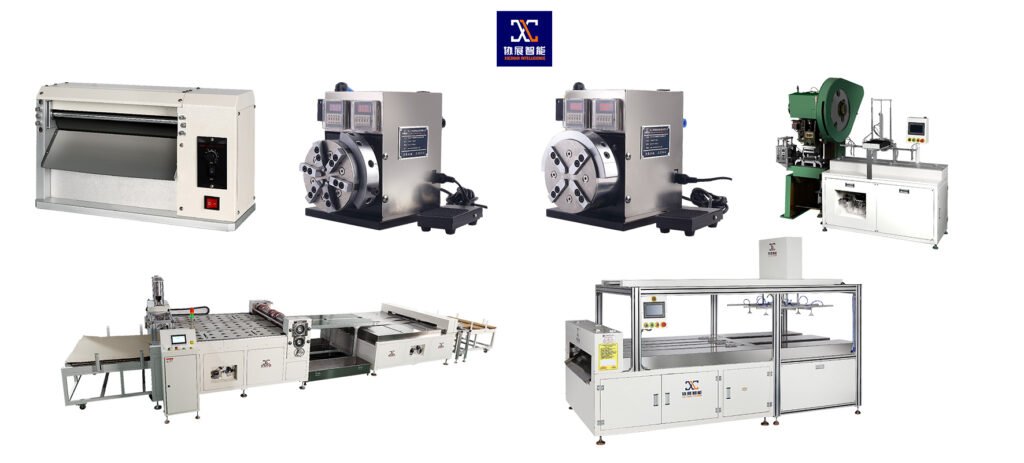
Why Production Efficiency Depends on More Than Machine Speed
Many factory owners initially assume production efficiency is mainly about faster machine movement. In actual mica insulation manufacturing, the situation is far more complicated. Real production efficiency comes from maintaining stable feeding, reducing material waste, minimizing downtime, controlling dimensional variation, and keeping production consistent across long operating cycles. This is exactly why automated mica board machine systems are becoming increasingly important in modern heating element manufacturing.
Over the past several years, manufacturers producing mica insulation components for heating systems have faced growing pressure from rising labor costs, tighter product tolerances, and increasingly diversified customer specifications. Factories still relying heavily on manual operations are finding it harder to maintain stable production quality at scale.
That shift is pushing more manufacturers toward mica processing automation and integrated industrial mica processing solutions capable of supporting continuous, high-volume production.
Insight
Factories that achieve the best long-term efficiency are usually not the ones running machines at maximum speed. They are the ones controlling production consistency, material flow stability, and downtime risk across thousands of repetitive cycles.
Common Misunderstanding #1: Faster Machines Always Mean Higher Productivity
This is one of the most common misconceptions in insulation material manufacturing.
A machine capable of high operating speed does not automatically create higher factory output if the surrounding production structure remains unstable.
In actual heater manufacturing environments, production efficiency is often reduced by:
- Manual feeding interruptions
- Frequent operator adjustments
- Material alignment inconsistency
- High rejection rates
- Downtime during specification switching
- Operator fatigue during long shifts
This is where automated mica board machine systems provide real manufacturing value. Instead of depending heavily on operator coordination, the production workflow becomes more predictable and repeatable.
In practical factory environments, stable repetitive processing usually creates more usable production output than unstable high-speed operation.
Why High-Volume Mica Handling Machines Matter in Modern Production
As heating element production volumes increase, manual material handling gradually becomes one of the biggest hidden production bottlenecks.
Mica materials present several manufacturing challenges:
- They can be brittle during repetitive handling
- Dimensional consistency must remain stable
- Material positioning affects downstream assembly
- Repeated manual transfer increases variation risk
A high-volume mica handling machine helps reduce these problems by creating more stable material flow throughout the production process.
This becomes especially important in factories producing:
- Mica heating elements
- Industrial insulation panels
- Band heater components
- Electrical insulation assemblies
| Production Area | Manual Processing Limitation | Automation Improvement | Factory Impact |
|---|---|---|---|
| Material Feeding | Operator interruption | Continuous automatic feeding | Stable cycle rhythm |
| Dimensional Stability | Manual positioning variation | Programmable control | Lower rejection rates |
| Labor Dependency | High | Reduced | Better scalability |
| Specification Changes | Slower adjustment | Faster switching | More flexible production |
Common Misunderstanding #2: Automation Only Benefits Large Factories
Many small and medium-sized manufacturers assume industrial mica processing solutions are only suitable for very large production plants.
That assumption is becoming increasingly outdated.
Today, even mid-sized factories are adopting mica processing automation because production consistency is becoming more important than factory size alone.
In fact, smaller manufacturers often experience faster operational improvements after introducing automation because they previously relied more heavily on manual coordination.
You can explore additional related equipment on our Mica Sheet & Mica Board Processing Machines page.
What Mature Buyers Actually Evaluate Before Purchasing Automation Equipment
Less experienced buyers often compare only initial machine pricing or peak operating speed. More experienced factory managers usually evaluate completely different factors.
In real industrial production environments, mature buyers focus more heavily on:
- Long-term operational stability
- Maintenance accessibility
- Servo system reliability
- Continuous feeding consistency
- Production repeatability
- Scalability for future orders
This is one reason experienced manufacturers increasingly prefer working directly with specialized mica processing machine manufacturers rather than general-purpose equipment traders.
A professional factory usually understands not only machine hardware but also insulation material behavior, production workflow coordination, and long-term production risks.
Advice
Do not evaluate automation projects only by labor reduction calculations. In many factories, the largest long-term benefit actually comes from lower rejection rates and more stable production planning.
Why Production Stability Is Becoming More Important Than Labor Cost Alone
Several years ago, many factories invested in automation mainly to reduce labor requirements.
Today, the manufacturing environment is changing.
Global buyers increasingly expect:
- Stable batch consistency
- Predictable lead times
- Lower production variation
- Reliable long-term product quality
That means factories can no longer depend entirely on manual adjustment methods that create excessive production variability.
Industrial mica processing solutions help manufacturers create more predictable workflows capable of supporting long-term production stability under growing output pressure.
How Guangdong Xiezhan Supports Industrial Mica Processing Projects
At Guangdong Xiezhan, equipment discussions with customers usually begin with production analysis rather than immediate machine recommendations.
Different factories face completely different manufacturing realities:
- Some require large-volume repetitive production
- Some focus on customized insulation structures
- Some prioritize export-oriented consistency standards
- Others need flexible production scheduling
A mature equipment manufacturer must understand not only the machine itself but also the surrounding production structure and long-term operational goals.
This is why many overseas customers prefer cooperating directly with specialized mica processing equipment factories capable of providing both technical support and workflow recommendations.
You can learn more about our engineering background and manufacturing capabilities on the About Us page.
Several international project references are also available in our Client Cooperation section.
Advice
Before purchasing an automated mica board machine, evaluate your expected production structure three to five years ahead rather than focusing only on current order volume. Production flexibility is becoming increasingly valuable in heater manufacturing.
Final Thoughts from a Manufacturing Perspective
Production efficiency in mica insulation manufacturing is no longer simply about machine speed. The real challenge is maintaining stable, repeatable production while handling growing customization demands and increasing quality expectations.
Automated mica board machine systems help manufacturers reduce production instability, improve material handling consistency, and build more scalable manufacturing workflows.
Factories that continue depending heavily on unstable manual operations may find it increasingly difficult to maintain competitive production consistency as global manufacturing requirements continue rising.
If you are currently evaluating high-volume mica handling machine solutions or planning a new mica processing automation project, you can contact our engineering team through the Contact Us page for technical consultation and production planning support.
Contact Our Team
Similar Posts
Automated Mica Processing Solutions for Heating Element Manufacturing
ByXiezhanWhy Automated Mica Processing Is Reshaping Heating Element Manufacturing For many heating element manufacturers, the biggest production problem today is no longer machine speed alone. The real issue is maintaining stable dimensional accuracy, reducing operator-dependent variation, and keeping insulation processing consistent across large production batches. That is why mica processing automation is becoming increasingly important…
Ring Coil Forming Machine for Heater Coil Shaping
ByXiezhanRing Forming / Coil Forming Machine The Ring Forming / Coil Forming Machine is specialized equipment designed to shape straight or spiral wire coils into precise circular structures. These ring-shaped coils are widely used in heating elements, industrial electrical components, and specialized coil assemblies. Ring coil structures are essential in many electric heating systems because…
Best Cutting Methods for High-Temperature Mica Boards
ByXiezhanHow Industrial Manufacturers Improve Accuracy When Cutting High-Temperature Mica Boards When buyers search for the best cutting method for high-temperature mica boards, they are usually trying to solve three problems at the same time: edge cracking, dimensional inconsistency, and production efficiency. In real manufacturing environments, the wrong cutting process can increase material waste, create unstable…
Heater Coil Winding Machine vs Resistance Wire Winder: Key Differences
ByXiezhanWhen comparing a heater coil winding machine with a resistance wire winder, the key question is simple: which one actually fits your production goal? On the surface, both machines wind wire. But in real manufacturing—especially for heating elements—the difference is not about winding itself, but about how precisely the machine controls geometry, resistance, and integration…
Winding Machine Requirements for High-Mix Production
ByXiezhanHow Manufacturers Choose Winding Equipment for High-Mix Production Environments When a factory produces dozens of coil types every week, the biggest challenge is not winding speed. It is changeover efficiency. In high-mix production, machines must switch quickly between wire sizes, coil geometries, and tension settings without causing excessive downtime or unstable product quality. This is…
What Determines Winding Speed Limits
ByXiezhanWhen evaluating a winding machine, most procurement managers initially ask: “What is the maximum speed?” In practice, the better question is: What determines the real winding speed limit in stable production? Rated RPM on a specification sheet rarely reflects sustainable output on a factory floor. True speed limits are defined by thermal behavior of the…