
Nichrome Wire Winding Machine for Heating Element Production
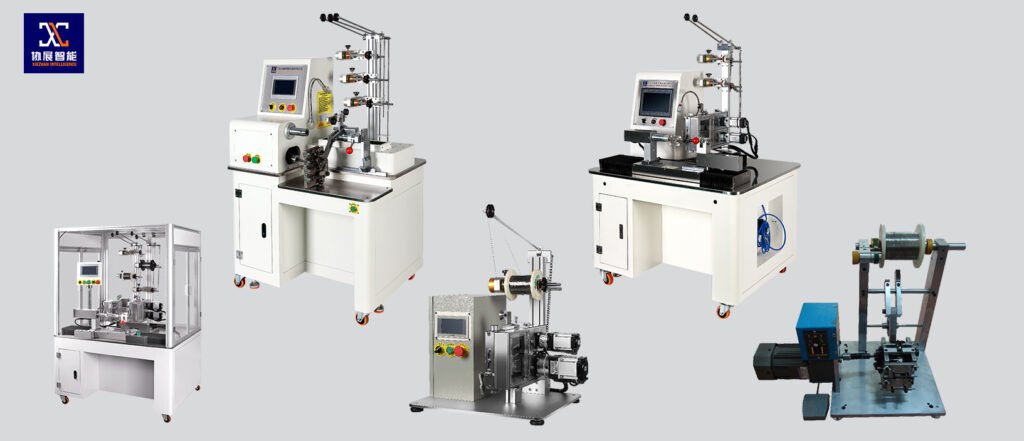
Choosing the Right Winding Setup for Stable Heating Element Production
If your heating element output is inconsistent, the problem is rarely the material—it’s usually the winding process. Nichrome wire requires precise control during forming. Without the right machine configuration, even high-quality wire will produce unstable coils, uneven resistance, and early failure in end-use applications.
If you’re still comparing equipment options, this nichrome winding machine manufacturer guide gives a clear overview of available suppliers and machine types.
Misconception 1: Any winding machine can handle heating element production
This is one of the most common assumptions in early-stage procurement. Many buyers believe that a standard resistance wire winding machine can process nichrome without issue.
In practice, this leads to three recurring problems:
- Coil pitch inconsistency
- Resistance deviation beyond tolerance
- High rejection rate during assembly
Why this happens
Nichrome behaves differently from standard copper or steel wire:
- Higher elasticity → causes spring-back after winding
- Thermal sensitivity → deformation under friction heat
- Surface oxidation → affects consistency if tension fluctuates
Misconception 2: Speed matters more than control
When scaling production, buyers often prioritize RPM and output rate. But in heating element manufacturing, speed without control leads to hidden losses.
Higher speed increases:
- Tension fluctuation
- Wire surface damage
- Coil deformation
A study published in the Journal of Manufacturing Processes shows that increasing winding speed beyond optimal thresholds can reduce coil consistency by over 20%.
Correction: What a proper nichrome winding solution looks like
Once you move beyond assumptions, the requirements become clearer. A proper nichrome winding machine is not defined by speed or price—it is defined by control, adaptability, and integration.
1. Machine types matched to application
Different heating elements require different machine configurations:
- Fully automatic machines → mass production (rice cookers, water heaters)
- CNC winding machines → complex geometry (medical, aerospace)
- Semi-auto machines → flexible production, prototyping
- Mica winding machines → flat wire on mica sheet (toasters, irons)
- Spiral winding machines → cable heaters, defrost systems
2. Key technical parameters that actually matter
| Parameter | Typical Range | Impact | Application |
|---|---|---|---|
| Wire Diameter | 0.05–2.0 mm | Strength & flexibility | Small to industrial heaters |
| Winding Speed | 200–800 RPM | Production efficiency | Mass production lines |
| Inner Diameter | 1–50 mm | Product compatibility | From sensors to furnaces |
| Resistance Accuracy | ±2–5% | Heating performance | Critical applications |
3. Integration with full production line
Experienced manufacturers don’t treat winding as a standalone process. It must integrate with:
- Mica sheet processing
- Assembly lines
- Testing and inspection systems
You can review real production integration examples here: client cooperation projects
Best Practice: How experienced buyers make decisions
Stable coil geometry reduces downstream assembly issues and improves product lifespan.
Machines proven in similar applications reduce risk significantly.
Single machines don’t solve production problems—integrated solutions do.
At Xiezhan, we approach projects from a full production perspective. As a manufacturer with experience in both winding and heating element assembly equipment, we help clients reduce trial-and-error time.
You can learn more about our manufacturing background here: about our factory capabilities
Final thought: stability defines real production efficiency
Heating element production is not about running machines faster—it’s about running them consistently. Nichrome wire amplifies every weakness in your process, so the right winding machine becomes a critical decision point.
If you’re planning a new line or upgrading your current setup, it’s worth discussing your specific product and output goals. Contact our engineering team for a tailored solution.