
Mica Sheet Insulation in Heating Element Applications
Why Mica Insulation Remains the Preferred Material for Modern Heating Elements
If you ask experienced heating element engineers what material sits between electrical safety and thermal performance, the answer is often surprisingly simple: mica. For manufacturers producing band heaters, hair dryer heaters, industrial heating systems, and electric appliance components, a mica sheet insulation board is not merely a supporting material. It directly influences insulation reliability, temperature resistance, product lifespan, and certification success. Choosing the wrong insulation material can increase failure rates, reduce heating efficiency, and create costly warranty claims.
After working with heating element manufacturers across Asia, Europe, the Middle East, and South America, I have noticed that successful factories rarely treat insulation materials as a commodity. They view insulation as a critical engineering component that determines overall product stability.
Insight
Many buyers spend months comparing resistance wire suppliers while paying little attention to insulation materials. In reality, field failures in heating elements are often linked to insulation degradation rather than resistance wire defects.
Where Is Mica Sheet Insulation Used Today?
A heating element insulation system must perform two jobs simultaneously:
- Provide electrical isolation
- Allow efficient heat transfer
Few materials can balance both requirements effectively. This is why mica remains one of the most widely used materials in electrical insulation processing applications.
Today, mica insulation manufacturing supports numerous industries:
- Hair dryers
- Fan heaters
- Band heaters
- Industrial ovens
- Laboratory heating equipment
- Packaging machinery
- Plastic processing systems
- Electric cooking appliances
In each of these applications, the insulation material operates under continuous thermal stress while maintaining dielectric integrity.
Why Do Heating Element Manufacturers Continue Choosing Mica?
Over the years, various insulation materials have entered the market. Ceramic fibers, fiberglass composites, and engineered polymers all offer specific advantages. Yet mica continues to dominate many heating element applications.
Excellent Temperature Resistance
Natural mica possesses exceptional thermal stability. Depending on grade and structure, mica-based insulation can withstand temperatures that would quickly damage conventional polymer materials.
High Dielectric Strength
Electrical insulation remains one of mica’s strongest characteristics. Even under elevated temperatures, properly processed mica sheet insulation boards maintain stable dielectric performance.
Mechanical Processability
Unlike many brittle insulation materials, mica can be punched, molded, formed, cut, and assembled into complex geometries. This flexibility supports customized heating element designs.
Cost-to-Performance Balance
From a procurement perspective, mica offers one of the most attractive performance-to-cost ratios among industrial insulation materials.
How Different Industries Use Mica Insulation Differently
| Industry | Application | Primary Requirement | Thermal Stress | Typical Form |
|---|---|---|---|---|
| Hair Dryer | Heating Core | Compact Design | Medium | Mica Roll |
| Band Heater | Insulation Layer | High Temperature | High | Mica Sheet |
| Industrial Heater | Internal Insulation | Long Service Life | Very High | Mica Board |
| Home Appliances | Heating Assembly | Safety Compliance | Medium | Stamped Parts |
What Happens When the Wrong Insulation Material Is Selected?
This is one of the most expensive mistakes I see among new heating element manufacturers.
Many procurement teams focus heavily on material price while overlooking operating conditions.
The result often includes:
- Insulation cracking
- Electrical leakage
- Certification failures
- Thermal instability
- Premature field failures
- Higher warranty costs
The problem is not always visible during initial testing. Many failures emerge after repeated thermal cycling, especially in products designed for continuous operation.
Advice
When evaluating insulation materials, request thermal cycling data whenever possible. Initial dielectric performance tells only part of the story. Long-term stability is usually the more important metric.
How Mica Shapes Influence Heating Element Design
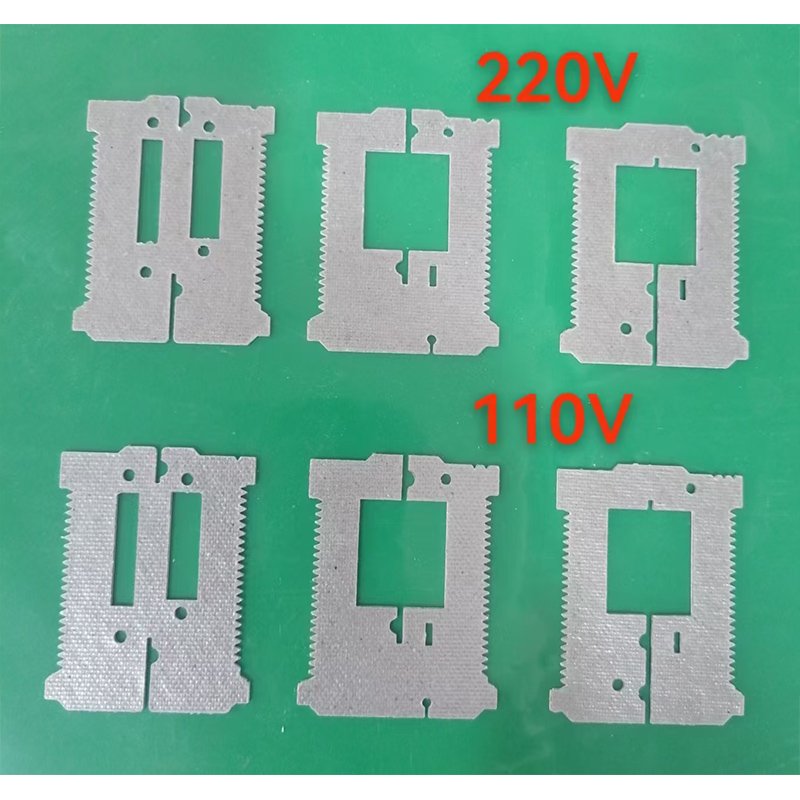
One misconception among buyers is that all mica materials are essentially interchangeable. In reality, geometry matters almost as much as material grade.
Different applications require different formats:
- Flat mica sheets
- Mica boards
- Rolled mica tubes
- Punched mica components
- Custom insulation structures
For example, hair dryer heating elements frequently use formed mica rolls. Industrial band heaters typically rely on flat heat resistant mica forming structures. High-power industrial systems often require thicker mica board constructions.
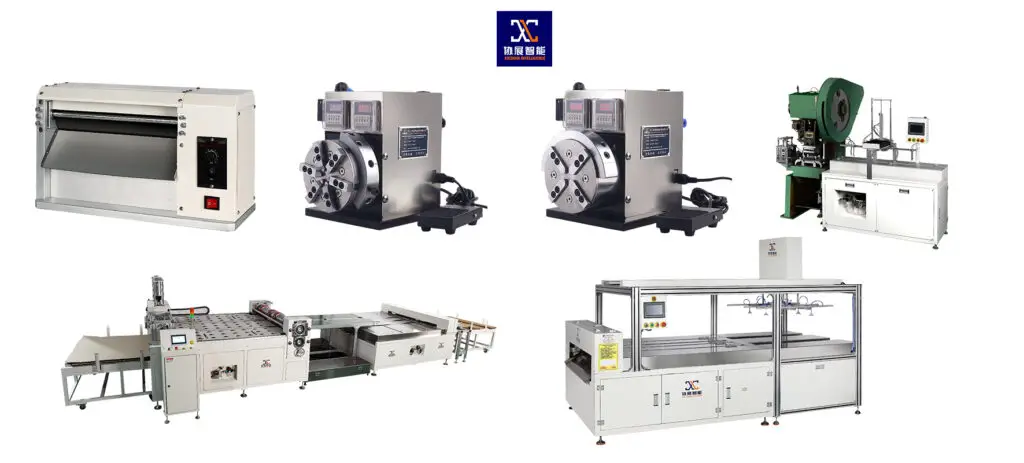
The ability to create these shapes efficiently depends on specialized processing systems.
Manufacturers can explore related processing technologies on our Mica Sheet & Mica Board Processing Machines page.
Why Material Consistency Is Becoming More Important
Global appliance brands increasingly demand tighter quality control throughout their supply chains.
As a result, material consistency has become a competitive advantage.
A mica insulation board that performs differently from batch to batch creates hidden manufacturing risks:
- Variable assembly quality
- Higher rejection rates
- Certification complications
- Field reliability concerns
Experienced manufacturers now evaluate suppliers based on consistency rather than lowest price alone.
How Mature Buyers Evaluate Mica Suppliers
The most successful procurement teams ask different questions than first-time buyers.
Instead of focusing exclusively on material pricing, they investigate:
- Production traceability
- Quality control procedures
- Thermal testing capability
- Dimensional consistency
- Export experience
- Engineering support
This approach reduces long-term operational risk.
At Guangdong Xiezhan, we often work directly with engineering teams during project development because insulation material decisions influence downstream processing, assembly, and final product reliability.
You can learn more about our manufacturing background through our About Us page.
Several overseas cooperation cases are also available in our Client Cooperation section.
Future Trends in Heating Element Insulation Materials
Looking ahead, several trends are becoming increasingly clear.
- Higher operating temperatures
- Smaller product footprints
- Stricter safety regulations
- Longer service life expectations
- Growing demand for customized insulation structures
These changes will place greater emphasis on stable mica insulation manufacturing and advanced electrical insulation processing technologies.
Factories that understand this trend early will be better positioned to support future appliance and industrial heating applications.
Advice
Do not evaluate insulation materials only against today’s product requirements. Consider future certification demands, operating temperatures, and product upgrades that may emerge over the next five years.
Final Thoughts from a Heating Element Manufacturing Perspective
Mica remains one of the most trusted insulation materials in the heating industry because it balances electrical insulation, thermal resistance, mechanical processability, and economic value better than most alternatives.
For manufacturers producing heating elements, insulation is not simply a supporting material. It directly affects product safety, operational stability, certification performance, and brand reputation.
The companies achieving the best long-term results are usually those that treat insulation engineering as a strategic decision rather than a purchasing exercise.
If your team is evaluating insulation materials, production methods, or customized heating element structures, feel free to discuss your project with our engineering team through our Contact Us page.
Contact Our Team
Similar Posts
Mesin Winding Kawat Pemanas vs Mesin Lilit Manual: Mana yang Lebih Sesuai untuk Produksi Anda?
ByXiezhanMemilih antara mesin winding otomatis dan mesin lilit manual bergantung pada volume produksi, variasi produk, dan biaya tenaga kerja yang benar-benar ditanggung pabrik. Untuk pesanan berulang dengan spesifikasi kumparan yang ketat, otomatisasi dapat mengurangi ketergantungan pada keterampilan tangan dan membantu mengulang parameter pembentukan. Namun, untuk sampel atau pesanan kecil dengan banyak perubahan desain, proses manual…
How to Evaluate Machine Stability in Long Shifts
ByXiezhanPractical Methods to Assess Equipment Stability During Continuous Production Factories rarely run machines for just a few minutes. In real manufacturing environments, equipment often operates for eight, twelve, or even twenty-four hours per day. This is why experienced procurement managers evaluate not only machine capability but also how stable the machine remains during long shifts….
ماكينات تصنيع وتجميع حبال التسخين للمصانع
ByXiezhanهل يحتاج المصنع إلى ماكينة واحدة أم إلى مسار تصنيع كامل؟ إذا كان المصنع ينتج حبل تسخين بكميات تجارية، فلا أنصح بأن يبدأ اختيار المعدات من سؤال «أي ماكينة أسرع؟». ابدأ بتقسيم المنتج إلى أربع حركات: winding → looping → copper wire riveting → end processing. السبب أن كل مرحلة تغير شكل السلك أو موضعه…
Hydraulic vs Pneumatic Mica Punching Machines
ByXiezhanHow to Select the Right Power System for Industrial Mica Punching One of the first questions engineering managers ask is whether a hydraulic or pneumatic mica punching machine will deliver better long-term value. The answer depends less on the power source itself and more on the relationship between punching force, material characteristics, production volume and…
What Makes a Winding Machine “Industrial Grade”
ByXiezhanWhat Makes a Winding Machine “Industrial Grade” Almost every quotation you receive will describe the machine as “industrial grade.” At this point, the phrase has been used so widely that it no longer tells a buyer much on its own — it’s become something suppliers write rather than something buyers can verify. The more useful…
Reducing Labor Costs with Automated Mica Processing Machines
ByXiezhanWhy Automation Creates Lower Manufacturing Costs Than Simply Reducing Labor Many manufacturers begin looking at automated mica processing machines because labor costs continue to rise. However, experienced factory managers usually discover that labor is only one part of the total production cost. The larger expense often comes from unstable quality, repeated adjustments, material waste and…