
How Industrial Heaters Use Precision Mica Components
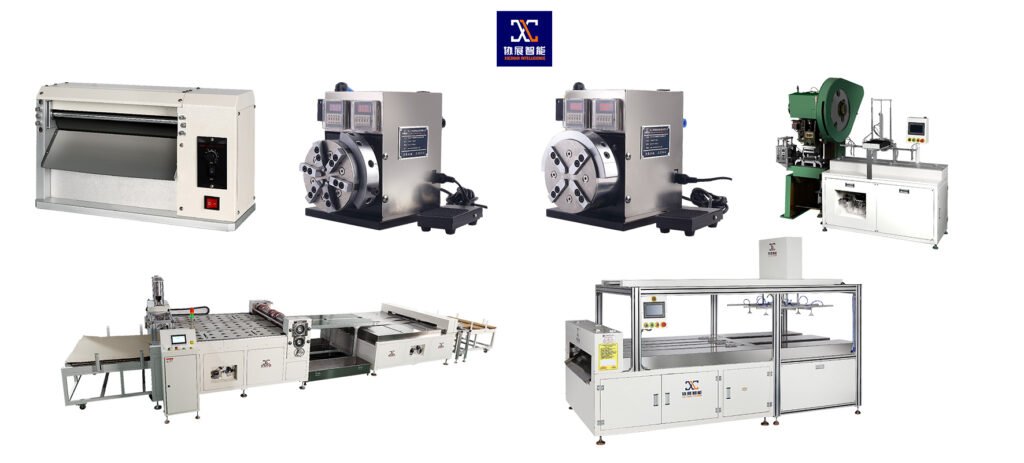
How Industrial Heating Systems Depend on Precision Mica Components
Choosing the right mica processing method is a critical decision for manufacturers producing industrial heating elements. The short answer is that reliable heaters require mica components with stable dimensions, consistent insulation performance and accurate forming quality. When mica parts are produced with uncontrolled cutting or shaping processes, the problem usually appears later as uneven heat distribution, insulation failure or shorter heater lifespan.
From a manufacturing perspective, mica is not simply an insulating material. It is a structural component that directly affects how heating elements transfer heat, maintain electrical isolation and survive repeated thermal cycles. This is why professional manufacturers increasingly invest in precision mica processing rather than treating mica fabrication as a secondary operation.
Why do industrial heaters require precision mica components?
The reason industrial heaters depend heavily on mica components is that heating systems operate under continuous thermal stress. The mica layer must maintain insulation performance while being exposed to high temperatures, vibration and repeated expansion cycles.
The mechanical principle behind this requirement is dimensional stability. When mica sheets are accurately cut and formed, the heating wire, resistance element or metal support can maintain its designed position. The insulation distance remains consistent, allowing electrical energy to convert into heat more efficiently.
In contrast, inaccurate mica processing creates small assembly deviations. These deviations may appear insignificant during production, but they can change the contact pressure between components. Over thousands of heating cycles, these small differences can accelerate material fatigue.
In actual production environments, improving mica component accuracy can reduce assembly adjustment work and improve consistency between heating units.
How should manufacturers select mica processing methods for heating elements?
The selection process should start from the final heater structure rather than the mica material itself. Different heating applications require different mica shapes, thickness tolerances and forming methods.
The reason is simple: a hair dryer heater, band heater or industrial cartridge heater may all use mica, but their mechanical requirements are completely different. The forming process must match the final assembly condition.
For example, band heaters usually require curved mica components that fit tightly around cylindrical heating structures. If the forming accuracy is insufficient, the mica layer may create uneven pressure distribution between the heater and the equipment surface.
For manufacturers producing flat heating elements, mica sheets may require precise cutting, punching or edge processing to achieve stable positioning during assembly.
| Heating Application | Mica Component Requirement | Recommended Processing Focus | Production Challenge | Quality Result |
|---|---|---|---|---|
| Band Heater | Curved mica insulation parts | Accurate shaping and stable thickness | Maintaining uniform contact during assembly | Better heat transfer consistency |
| Industrial Heating Element | Flat or customized mica insulation plates | Precision cutting and punching | Avoiding dimensional variation | Stable electrical insulation |
| Hair Dryer Heater | Small mica supports and formed parts | Fine forming accuracy | Reducing manual adjustment | Higher assembly efficiency |
From my experience working with industrial equipment buyers, the most common mistake is selecting mica equipment based only on current production volume. A factory may purchase equipment for today’s output but fail to consider future product variation.
A better approach is evaluating whether the machine can handle different mica thicknesses, shapes and production requirements. This is why many manufacturers review complete mica processing equipment solutions before making a final investment decision.
What manufacturing problems can precision mica processing solve?
Many heating manufacturers believe mica processing mainly affects appearance. In reality, it directly influences production stability.
The reason is that mica components act as positioning and insulation structures inside heating assemblies. When dimensions fluctuate, operators often need additional manual adjustments during assembly.
The mechanical effect is increased production variation. Manual correction introduces human differences between batches, while precision processing keeps component dimensions consistent.
The final result is a more predictable manufacturing process with fewer assembly interruptions and improved heater reliability.
How can manufacturers improve mica component consistency during heater production?
The biggest challenge in mica component production is not cutting the material once. It is maintaining the same quality level across thousands of repeated production cycles.
The reason is that industrial heating manufacturers usually operate with strict assembly requirements. A mica component that is acceptable in one batch may create problems if dimensional tolerance changes in the next batch. Since heating elements often work under high temperatures, even small variations in insulation distance can influence thermal performance.
The mechanical principle behind consistent mica processing is controlling every stage that affects the final geometry. This includes material positioning, feeding accuracy, cutting force, forming pressure and finished-part inspection.
When these factors are controlled by automated equipment, the production line reduces dependence on operator experience. The result is a more stable process where each mica component performs closer to the original engineering design.
A faster machine that produces unstable dimensions can increase downstream assembly costs. Professional manufacturers usually calculate the total production impact rather than only comparing output per hour.
Which mica processing technologies are suitable for industrial heater manufacturing?
Different heater structures require different processing approaches. Choosing the right technology depends on the relationship between mica geometry, production volume and assembly requirements.
The reason is that mica is a brittle insulation material. Excessive mechanical stress can damage edges, create micro-cracks or reduce the reliability of the final heating assembly.
The processing method must therefore balance accuracy, efficiency and material protection.
| Processing Method | Suitable Application | Mechanical Advantage | Production Limitation | Best Use Scenario |
|---|---|---|---|---|
| Manual Processing | Small volume customized parts | Flexible adjustment | Higher labor dependence and variation | Prototype production |
| Semi-Automatic Processing | Medium production batches | Balance between flexibility and efficiency | Requires operator involvement | Multiple heater models |
| Automatic Mica Processing Line | Large-scale heater manufacturing | Stable accuracy and repeatability | Higher initial investment | Mass production environments |
For manufacturers producing heating elements continuously, automation usually becomes more valuable when labor adjustment costs exceed machine investment costs.
For example, mica board cutting, punching and forming processes often involve repetitive positioning work. When operators manually align every piece, production speed may appear acceptable, but variation increases over long production periods.
Automated systems solve this issue by controlling movement and positioning through mechanical structures. The machine repeats the same action with controlled parameters, reducing unnecessary correction during assembly.
How do mica processing machines support different industrial heater designs?
A professional mica processing solution should not be evaluated only by whether it can cut mica sheets. The more important question is whether it matches the actual heater manufacturing workflow.
The reason is that industrial heaters are rarely based on one universal design. Manufacturers may produce band heaters, cartridge heaters, air heaters, hair dryer heaters or customized heating assemblies, each requiring different mica structures.
The mechanical requirement changes with the heater design. Flat insulation plates need precise dimensions, while curved components require controlled forming accuracy.
This is why experienced buyers usually analyze the complete production process before choosing equipment. They evaluate raw mica handling, forming requirements, assembly connection and final inspection together.
| Heater Type | Mica Processing Requirement | Recommended Equipment Focus | Expected Manufacturing Result | Key Quality Point |
|---|---|---|---|---|
| Band Heater | Curved mica forming | Mica shaping and forming equipment | Uniform heater contact | Shape accuracy |
| Hair Dryer Heater | Small precision mica parts | Fine cutting and molding equipment | Reduced manual assembly | Dimensional stability |
| Industrial Heating Element | Large mica insulation components | Automatic cutting and feeding systems | Higher production consistency | Insulation reliability |
Manufacturers that supply different heater industries usually benefit from working with equipment suppliers who understand the complete mica processing chain. Our experience with industrial manufacturing cooperation projects shows that equipment selection should always start from the customer’s final production target.
What quality control factors determine the performance of mica components?
For industrial heater manufacturers, mica component quality should not be judged only by whether the finished part matches the drawing. The more important question is whether the component can maintain stable performance throughout the heater’s working life.
The reason is that heating systems experience repeated thermal expansion and contraction. During operation, the mica insulation layer is exposed to temperature changes, mechanical pressure and electrical stress. Any weakness in processing quality can gradually become a reliability problem.
The mechanical principle is that precise processing creates predictable physical conditions. When thickness, dimensions and edge quality remain consistent, the heating element can maintain stable insulation distance and heat distribution.
The result is fewer failures caused by assembly variation and better consistency between different production batches.
| Quality Control Item | Reason for Control | Processing Influence | Potential Production Risk | Expected Improvement |
|---|---|---|---|---|
| Thickness Accuracy | Maintains insulation distance | Controls forming pressure and cutting consistency | Uneven heating or insulation weakness | Stable heater performance |
| Edge Quality | Prevents cracks and damage | Requires suitable cutting tools and parameters | Component breakage during assembly | Higher assembly reliability |
| Dimensional Repeatability | Ensures batch consistency | Depends on machine accuracy and feeding stability | Manual adjustment increases | Lower production variation |
How should manufacturers evaluate mica processing equipment investment?
A common purchasing mistake is comparing machines only by initial price or production speed. In industrial manufacturing, the lower purchase cost does not always create the lowest production cost.
The reason is that equipment affects many hidden factors, including labor dependency, material waste, maintenance frequency and production stability.
The mechanical principle is simple: a machine with better process control reduces repeated adjustments. Less adjustment means fewer interruptions, fewer rejected mica parts and more predictable production output.
Therefore, professional buyers usually evaluate equipment investment through the complete production cycle rather than the machine itself.
A stable machine that reduces waste and manual correction can create higher long-term value than a cheaper machine with inconsistent output.
A practical evaluation method for purchasing teams
Identify mica thickness range, component size, daily output and heater types before selecting equipment.
Check whether the machine can maintain stable cutting, forming and feeding accuracy under continuous production conditions.
Choose equipment that can support possible heater design expansion instead of only today’s product specifications.
For manufacturers expanding their mica component production capability, reviewing a complete range of mica sheet and mica board processing machines helps compare different production approaches.
What future trends will influence precision mica component manufacturing?
The next stage of mica processing is moving from isolated machines toward connected manufacturing systems.
The reason is that heating element manufacturers are facing increasing pressure from shorter product cycles, customized heater designs and higher quality expectations. Traditional manual processes become difficult to manage when product variety increases.
The mechanical change is the integration of automatic feeding, digital parameter control and repeatable processing steps. Instead of relying on operator judgment for every adjustment, manufacturers can create more stable production conditions.
The result is a manufacturing environment where quality becomes easier to maintain even when production requirements become more complex.
Manufacturers that control material handling, forming accuracy and inspection together will have stronger competitiveness in demanding heating applications.
When selecting mica processing solutions, many engineering teams also review material supply knowledge and industry experience. Understanding different mica material sources and processing requirements can help manufacturers make more practical equipment decisions. Our industry reference article about mica sheet manufacturers and material considerations provides additional background for evaluation.
For companies planning a new mica component production line or upgrading existing equipment, the best approach is to discuss actual production requirements with an experienced engineering team. You can contact our technical team through contact us to evaluate suitable processing solutions based on your heater application.
Final Consideration Before Choosing Precision Mica Processing Equipment
The right mica processing solution is not defined by the highest speed or the most complex machine configuration. It is defined by whether the equipment can consistently produce components that match the real requirements of industrial heating systems.
The reason successful manufacturers invest carefully in mica processing is that insulation components directly influence heater reliability, assembly efficiency and long-term customer satisfaction.
The mechanical relationship is clear: better control of cutting, forming and handling creates more stable mica components.
The final result is a stronger production process with fewer quality risks and better support for future heater manufacturing needs.