
Key Features of Precision Nichrome Wire Winding Equipment
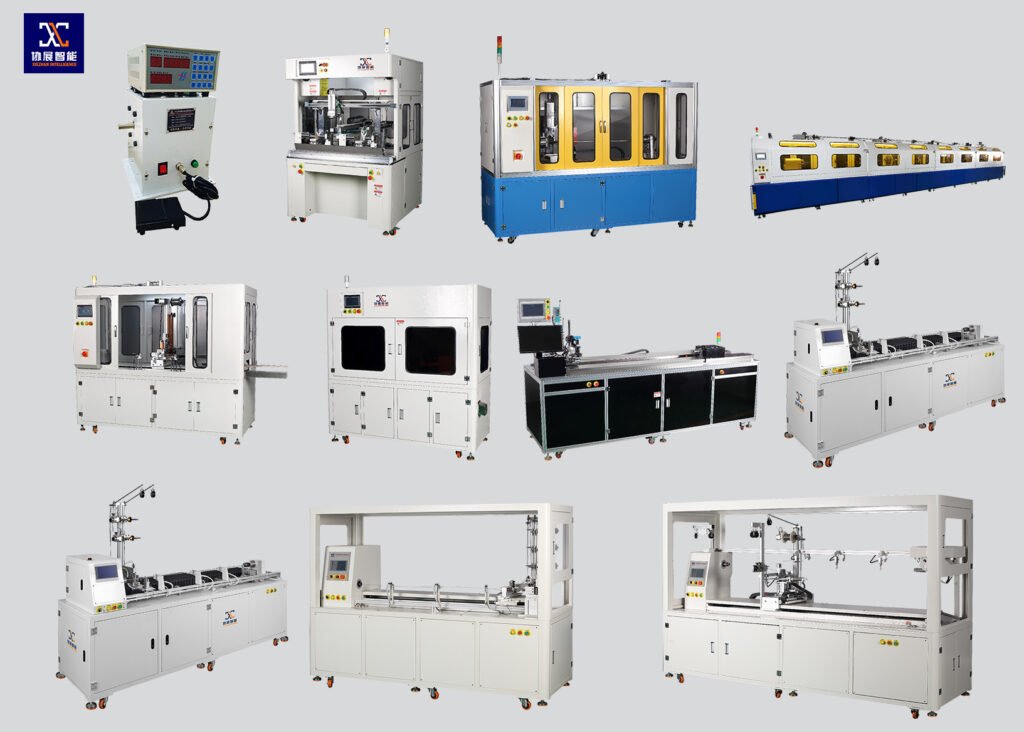
What Really Defines High-Precision Winding Performance in Production?
When buyers evaluate nichrome wire winding machines, the real question is not “what features are available,” but “which features actually affect production stability?” From experience, most issues—coil inconsistency, resistance deviation, and short product lifespan—can be traced back to a few critical machine capabilities that are often overlooked during selection.
If you’re still benchmarking suppliers, this nichrome winding machine supplier comparison helps you see how different manufacturers approach precision control.
Survey Question 1: What level of coil consistency do you actually need?
Most buyers initially answer “as precise as possible.” But in reality, acceptable tolerance depends on your application.
Different industries, different precision demands
| Application | Tolerance Requirement | Impact Level | Typical Risk |
|---|---|---|---|
| Household Appliances | ±5% | Medium | Uneven heating |
| Industrial Heaters | ±3% | High | Performance drift |
| Medical / Aerospace | ±1–2% | Critical | System failure |
Survey Question 2: Is your current tension control system stable enough?
Tension control is one of the most underestimated features in winding equipment.
In nichrome processing, unstable tension leads to:
- Pitch variation
- Surface damage
- Resistance inconsistency
According to data from the Journal of Materials Processing Technology, improper tension control contributes to over 40% of dimensional defects in high-resistance alloy winding.
What separates basic vs advanced systems
| System Type | Control Method | Stability | Application Fit |
|---|---|---|---|
| Mechanical Brake | Passive | Low | Basic production |
| Magnetic Tension | Semi-active | Medium | Mid-range |
| Servo Closed-loop | Real-time | High | Precision production |
Survey Question 3: Does your machine adapt to different coil geometries?
Nichrome heating elements are rarely uniform. Variations include:
- Flat wire vs round wire
- Spiral vs layered coils
- Mica-supported structures
Machines that cannot adapt will limit your product range.
Survey Question 4: Can the equipment integrate into your production line?
This is where many investments fail—not because the machine is bad, but because it cannot fit into the overall workflow.
Typical integration points include:
- Mica sheet processing machines
- Assembly stations
- Testing systems
You can review real integration cases here: client cooperation examples
A report by McKinsey on manufacturing efficiency indicates that integrated production lines can improve throughput by 20–30% compared to isolated equipment setups.
What experienced buyers prioritize after evaluation
Machines with fewer but well-designed control systems outperform feature-heavy but unstable models.
Suppliers with real heating element projects reduce uncertainty in setup and operation.
Post-installation support often determines long-term success more than initial machine quality.
As a manufacturer focused on winding and heating element equipment, Xiezhan works closely with clients to match machine configuration with real production needs.
You can learn more about our engineering background here: about our factory
Final thought: precision is built, not advertised
Precision in nichrome winding is not about specifications on paper—it’s about how well the machine performs under real production conditions.
If you are evaluating equipment or planning a new line, it’s worth discussing your exact requirements in detail. Talk to our team for a solution based on your application.