
Mica Board Manufacturing for Band Heater Applications
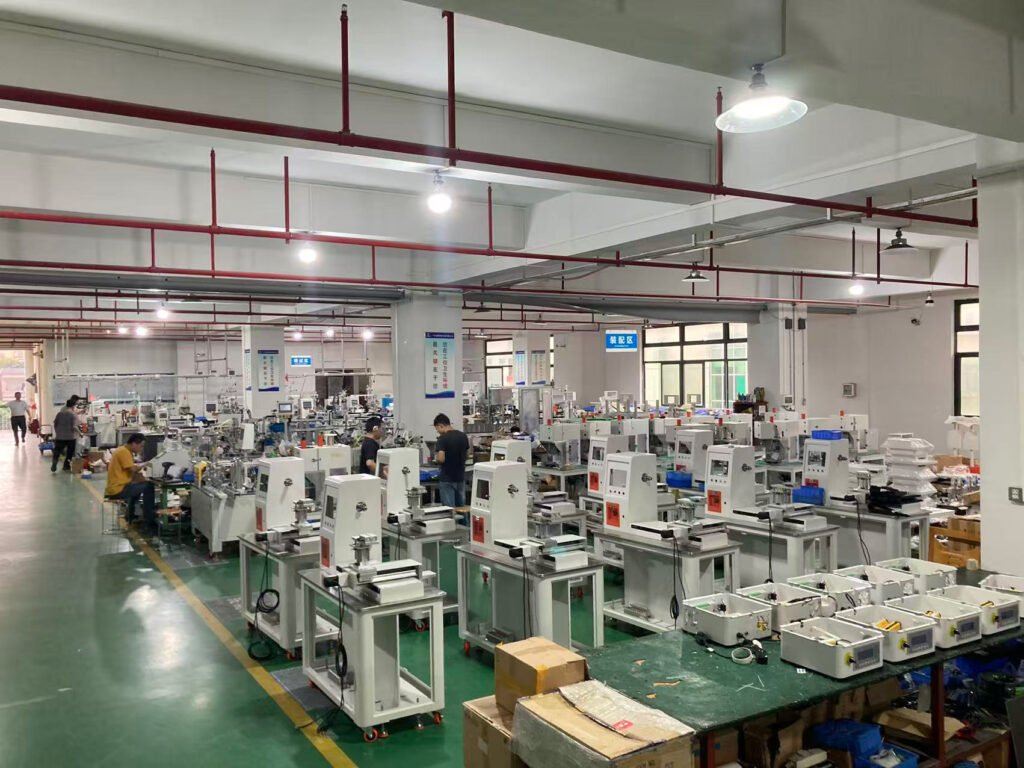
Building Reliable Mica Boards for High-Performance Band Heaters
If your band heater production suffers from poor fit, unstable heating performance or frequent assembly adjustments, the problem often begins long before final assembly. In many factories, the real issue is inconsistent mica board manufacturing. Selecting the right processing equipment is less about buying the fastest machine and more about controlling dimensional accuracy, repeatability and material stability throughout every production step.
Many manufacturers focus on punching speed when comparing machines. In practice, experienced engineering teams pay much closer attention to dimensional consistency after several thousand production cycles. Stable repeatability usually contributes more to long-term product quality than short-term production speed.
Why Does Mica Board Accuracy Matter More for Band Heaters Than Other Heating Elements?
Band heaters are mechanically different from flat heating elements because every component must follow a circular geometry. The mica insulation layer, resistance wire and stainless-steel sheath all need to remain concentric after assembly. Even a small dimensional variation can create cumulative positioning errors.
From a purchasing perspective, this explains why two suppliers using similar raw materials may deliver completely different product consistency. The deciding factor is rarely the mica itself. Instead, it is how accurately the processing equipment maintains hole locations, outside diameter, inside diameter and edge quality throughout continuous production.
The engineering logic is straightforward.
Reason
Band heaters rely on multiple circular components fitting together with minimal clearance.
Mechanical Principle
If punching or cutting introduces even slight positional deviations, each subsequent forming operation amplifies that error. The resistance wire no longer sits in the designed groove, mechanical stress becomes uneven and local heat concentration increases.
Result
Instead of a simple dimensional issue, manufacturers experience reduced heating efficiency, higher rejection rates and inconsistent product life.
One misconception I often hear from buyers is that a tolerance of ±0.2 mm automatically satisfies every application. In reality, acceptable tolerance depends heavily on heater diameter, operating temperature and required assembly precision.
| Band Heater Application | Recommended Tolerance | Board Thickness | Production Priority | Recommended Equipment |
|---|---|---|---|---|
| Small Band Heater | ±0.20 mm | 0.3–0.6 mm | Production Speed | Automatic Punching Machine |
| Plastic Extruder Heater | ±0.15 mm | 0.5–1.0 mm | Assembly Accuracy | Servo Punching System |
| Industrial High-Power Heater | ±0.10–0.15 mm | 0.8–1.2 mm | Dimensional Stability | Integrated CNC Processing Line |
Factories expanding into higher-watt-density heaters should evaluate processing accuracy before increasing production speed. Stable geometry almost always reduces downstream assembly adjustments and improves long-term product reliability.
What Causes Most Defects During Mica Board Manufacturing?
Many purchasing teams assume defective mica boards originate from low-grade raw materials. Material quality certainly matters, but production data collected across multiple heater manufacturers suggests that equipment setup and process control account for a larger share of finished-product variation than the mica sheet itself.
In my experience, four manufacturing defects repeatedly appear in band heater production:
- Edge cracking after punching
- Hole position deviation
- Uneven circular profile
- Burr formation affecting assembly
These defects are connected rather than independent. When punching clearance, die wear or feeding accuracy changes slightly, dimensional deviation begins at the first operation and continues throughout the remaining production process.
For example, excessive punch clearance increases localized stress instead of producing a clean shear surface. Microscopically, the mica layers separate rather than fracture uniformly. During rolling and forming, those weakened edges become the starting point for cracks, eventually reducing insulation integrity after thermal cycling.
This chain reaction is often overlooked because the finished heater may initially pass dimensional inspection. However, after repeated heating and cooling cycles, the weakened mica edges experience thermal expansion and contraction at different rates. Small cracks gradually propagate, reducing dielectric strength and increasing the likelihood of premature heater failure.
The purchasing implication is clear: machine stability directly affects product reliability, even if the defects are not immediately visible during final inspection.
When evaluating suppliers, ask for continuous production inspection reports rather than a few sample pieces. A machine that maintains dimensional consistency after 10,000 cycles is far more valuable than one that only produces accurate samples during initial testing.
How Does Equipment Selection Influence Total Manufacturing Cost Instead of Only Machine Price?
Many investment decisions begin with machine quotations, but experienced procurement teams usually calculate manufacturing cost from a much broader perspective. The purchase price is paid once, while production losses caused by unstable equipment continue throughout the entire service life of the production line.
The engineering relationship is straightforward.
Reason
Machines with inconsistent positioning generate small dimensional variations that require additional manual correction, quality inspection and occasional product rework.
Mechanical Principle
Each unnecessary adjustment interrupts material flow. Operators wait for inspections, assembly stations pause while replacement parts arrive, and downstream equipment no longer operates at balanced cycle times.
Result
The actual production cost increases through hidden labor expenses, lower equipment utilization and higher material consumption rather than through machine depreciation alone.
One of the most common bottlenecks I have observed in band heater factories is not punching capacity—it is synchronization between successive production stages.
A typical workflow looks like this:
Mica Sheet Feeding
↓
Precision Punching
↓
Manual Sorting
↓
Resistance Wire Assembly
↓
Band Rolling
↓
Electrical Testing
↓
Packaging
If the punching process occasionally produces edge defects or inaccurate hole positions, every downstream workstation slows down. Operators spend additional time checking dimensions, replacing rejected components or adjusting assemblies. Although the machine itself may appear productive, the complete production line gradually loses efficiency.
This is why experienced manufacturers increasingly invest in integrated processing solutions instead of evaluating individual machines in isolation.
For factories planning new production capacity, reviewing different processing configurations in the Mica Sheet & Mica Board Processing Machines category provides a clearer understanding of how cutting, punching and feeding equipment can be combined into a balanced manufacturing workflow.
Which Machine Configuration Fits Different Band Heater Applications?
No single machine configuration is suitable for every band heater manufacturer. Production requirements vary according to heater diameter, insulation thickness, production volume and the level of automation expected in the factory.
Instead of asking which machine is “best,” procurement managers should first determine which production environment the equipment will operate in.
| Production Scenario | Typical Heater Type | Production Volume | Recommended Machine Solution | Primary Selection Focus |
|---|---|---|---|---|
| Prototype Development | Custom Band Heater | Low | Flexible Punching System | Quick Die Change |
| OEM Production | Standard Industrial Heater | Medium | Automatic Feeding + Punching | Repeatability |
| Large Export Factory | Continuous Production | High | Servo-Controlled Processing Line | Automation Integration |
An interesting pattern has emerged across many successful heater manufacturers. As production volume grows, investment priorities gradually shift away from maximum machine speed toward production stability, preventive maintenance and process consistency. These factors often have a greater influence on annual output than adding a few extra strokes per minute.
According to market observations published by industrial manufacturing organizations such as the International Energy Agency (IEA) and industry reports covering electric heating equipment, global demand for efficient industrial heating systems continues to increase alongside manufacturing modernization. As a result, manufacturers are placing greater emphasis on process stability and production consistency rather than simply increasing equipment speed.
How Can You Future-Proof a Band Heater Production Line Instead of Solving Today’s Problems Only?
One purchasing mistake I frequently see is designing a production line around today’s order volume without considering how customer requirements may evolve over the next three to five years. In reality, successful heater manufacturers rarely keep the same product mix for long. New heater diameters, customized mounting holes, higher operating temperatures and shorter delivery times gradually become standard customer expectations.
Reason
As product diversity increases, production equipment must process more specifications while maintaining consistent dimensional accuracy.
Mechanical Principle
Machines designed with servo positioning, modular tooling systems and standardized interfaces allow die changes, feeding adjustments and future automation upgrades without rebuilding the entire production line.
Result
Manufacturers reduce future capital expenditure, shorten new product introduction cycles and maintain stable production quality as business expands.
This is one reason many factories no longer purchase isolated machines. Instead, they evaluate how each piece of equipment connects with upstream feeding, downstream assembly and inspection processes before making an investment decision.
During equipment planning, I also recommend reviewing reliable mica material suppliers before finalizing the production process. Material consistency and machine capability should always be evaluated together. Our overview of Top 13 Mica Sheet Manufacturers can serve as a useful reference when comparing different grades of industrial mica sheets for band heater production.
What Purchasing Indicators Should Be Evaluated Before Choosing a Mica Board Shaping Machine?
Many quotations emphasize motor power, machine dimensions or production speed. These specifications are useful, but they rarely determine whether a production line performs reliably over several years.
From an engineering standpoint, I encourage buyers to evaluate equipment using a broader checklist:
- Can the machine maintain positioning accuracy after long production runs?
- Is die replacement fast enough for multiple heater specifications?
- Does the feeding mechanism minimize material movement during punching?
- Can future automation modules be integrated without major reconstruction?
- Is preventive maintenance simple enough for operators to perform quickly?
- Can spare parts and technical support be supplied consistently?
These questions often reveal more about long-term production performance than comparing maximum punching speed alone.
Over the past decade, I have noticed that manufacturers achieving the lowest rejection rates generally share one characteristic: they build stable processes before pursuing higher production speed. Once dimensional consistency becomes repeatable, increasing capacity becomes much easier. Attempting the reverse usually creates additional quality problems and unnecessary operating costs.
Conclusion: Stable Mica Board Manufacturing Creates Better Band Heater Performance
Reliable band heater production is not determined by a single machine parameter. It is the result of coordinated control across material selection, punching accuracy, board shaping, dimensional stability and production workflow.
Factories that consistently deliver high-quality heaters generally follow the same decision path:
- Define heater application requirements before selecting equipment.
- Prioritize dimensional repeatability over maximum machine speed.
- Evaluate total manufacturing cost instead of equipment price alone.
- Reduce hidden production bottlenecks through balanced process planning.
- Select machines that support future production expansion rather than only current demand.
This approach reduces material waste, minimizes assembly adjustments, improves insulation reliability and helps maintain consistent heating performance throughout the service life of the finished band heater.
At Xiezhan, our engineering team works with manufacturers producing band heaters, cartridge heaters, fan heaters and other industrial heating elements. Rather than recommending a standard machine configuration, we evaluate production capacity, product structure, tooling requirements and long-term manufacturing objectives before proposing an appropriate processing solution.
Many practical production projects can be explored through our Client Cooperation page, where customers have implemented different mica processing solutions according to their own manufacturing requirements.
If you are planning to establish a new band heater production line, upgrade existing equipment or compare different mica board shaping solutions, our engineering specialists are available to review your drawings, production targets and factory layout. Feel free to contact us to discuss the most suitable manufacturing approach for your application.